PlayStation 4 notifications always pop up on whatever you are doing, which is especially obnoxious when you watch videos on Netflix , YouTube or your local library. With the PS4 system firmware update 5.0, you can now disable notifications while watching videos in any app easily.
Turn off pop-up notifications when watching videos
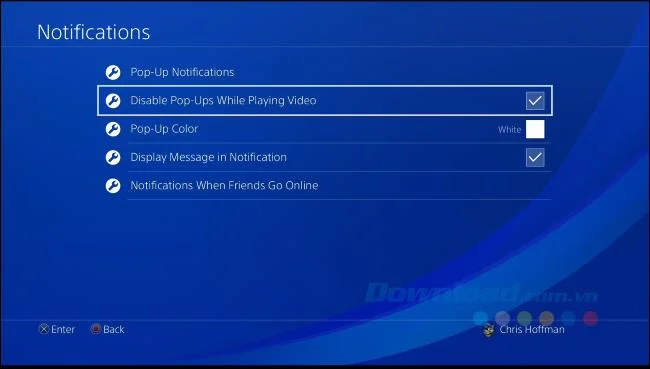
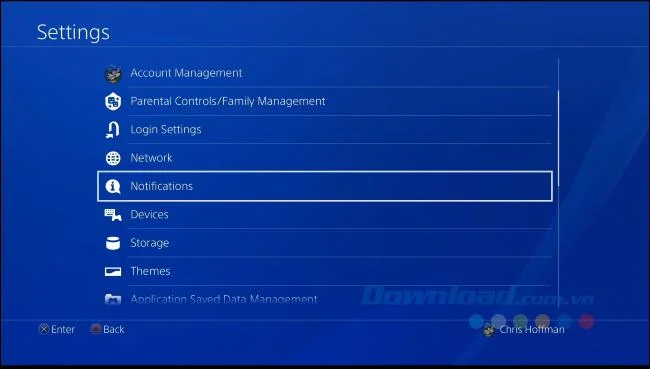
To change this setting, go to Settings> Notifications in your PS4. You can also access this menu by opening the Notifications screen , pressing the Options button in the control panel and selecting Notification Settings .
Put a checkmark in the Disable Pop-Ups While Playing Video . That's it

Turn off pop-up notifications completely
If you don't want pop-up notifications to appear on the screen at all times, such as during a game, you can turn them off completely.
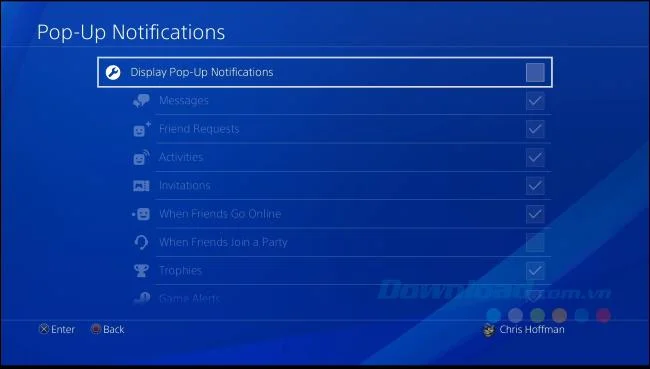
To do so, select Pop-Up Notifications and uncheck Display Pop-Up Notifications . You can also opt-out of certain types of notifications here. For example, you can turn off the notifications of upcoming messages, as well as turn off the notifications that appear when you earn a title in the game.

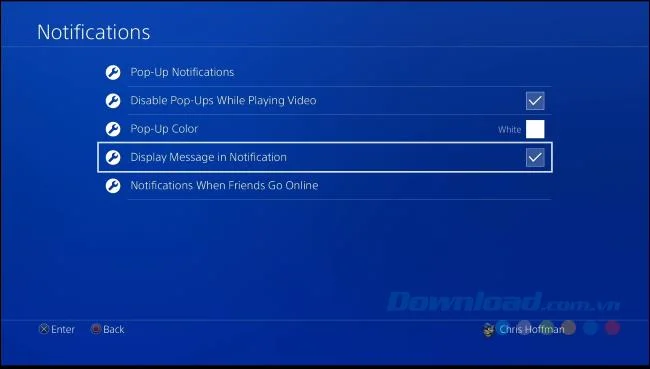
If you are concerned about sensitive messages appearing on the screen while others are present, you can uncheck Display Message in Notification on the main screen. Your PlayStation 4 will not display the actual content of the message in the popup.

No matter what you choose to change, you will continue to receive notifications. They just won't pop up on the screen right away. You can always check the notifications from the PS4's Notifications screen to see what's new when you're busy.