Home
» Wiki
»
Instructions on how to Recall, recall sent emails in MS Outlook
Instructions on how to Recall, recall sent emails in MS Outlook
With just one click, you can send an email message to someone else. However, sometimes that agility makes you miserable when you accidentally send unwanted email content, send important emails to someone else and cannot edit or retrieve them. But you do not have to worry, MS Outlook will help you solve that problem in a flash.
Conditions for implementing the email recall feature on Outlook
Emails sent using Microsoft Outlook can be deleted from the recipient's inbox or replaced with new emails that meet the following conditions:
Both the sender and recipient's e-mail readers must connect to a Microsoft Exchange server.
The email to be recalled must be sent to addresses within the same organization/business and must use the Outlook desktop application or Office 365.
The recipient has not opened the email.
If these three requirements are met, the email can be recalled without any problems.
Recall email on Outlook 2016, 2013 and 2010
To recall an email that was sent using Outlook 2016, 2013, or 2010, you need to do the following:
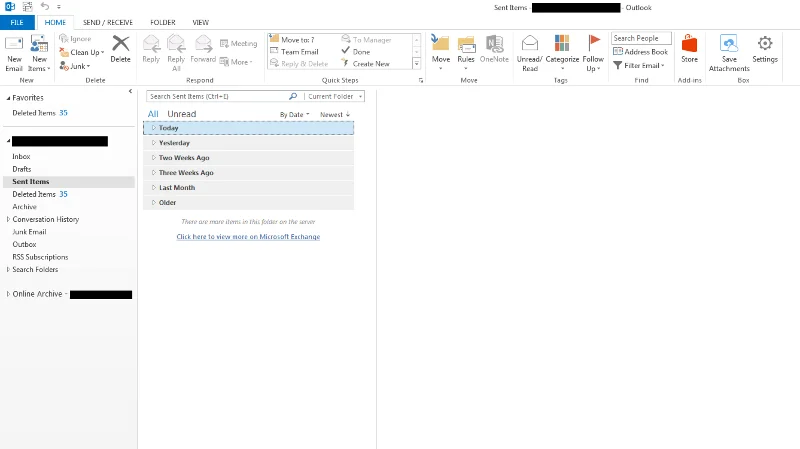
Step 1: Click the Sent Items folder located on the left side of the Outlook window.
All sent emails are automatically saved in the Sent Items folder.
All sent messages will be automatically saved in the Sent Items folder.
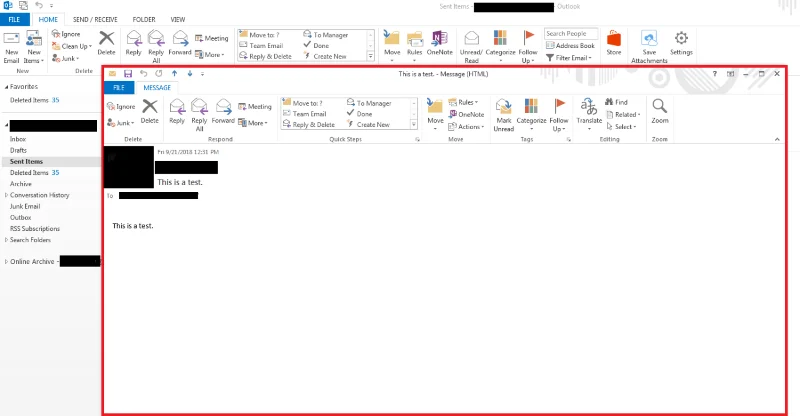
Step 2: Select the email you want to recall and double click to open in a new window
When opened, Outlook will provide a number of different functions such as forwarding, replying or moving emails right on the interface.
When opened, Outlook offers a number of different functions.
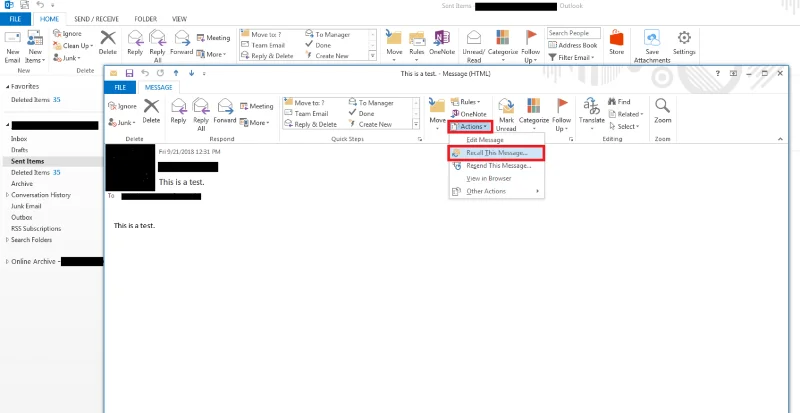
Step 3: Click the Actions button and select Recall This Message from the drop-down menu.
The Actions button is located next to Move
If you don't see the Recall This Message option, it means you're not using an Exchange account or the recall feature has been disabled by your Exchange server administrator.
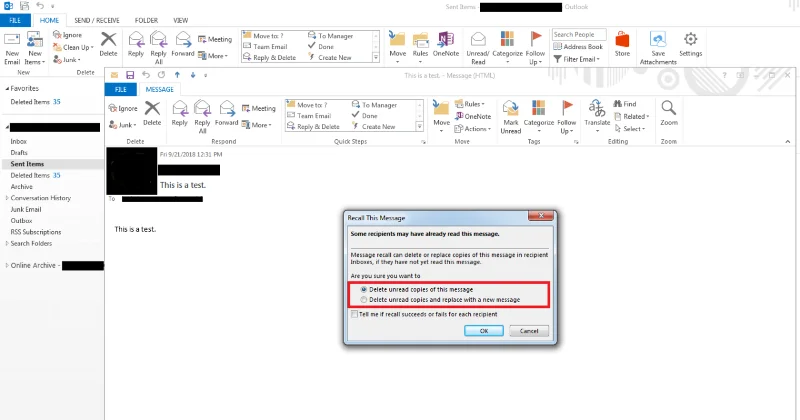
Step 4: Choose one of the two withdrawal options.
Delete unread copies of this message: the system recalls sent messages.
Delete unread copies and replace with a new message: the system recalls the sent message and replaces it with a new message.
However, not all emails can be recalled, MS Outlook currently only has the ability to recall emails that the recipient has not read. Therefore, you should set up the system to notify you in case the email has been recalled or not, by checking Tell me if recall succeeds or fails for each recipient .
Tell me if recall succeeds or fails for each recipient should be checked.
Step 5: Confirm your selection by clicking OK .
Step 6: To ensure that the recall was successful, Outlook will always notify you by email about the recall result. If you have activated the corresponding function, the recipient of the message will also be notified about the recall.
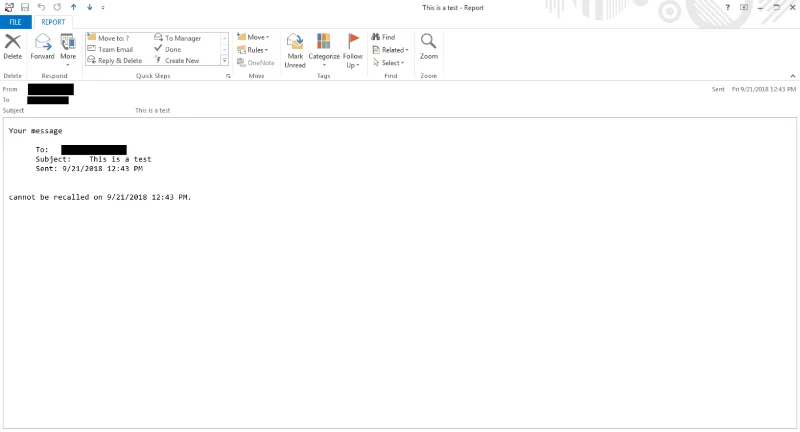
Recall Failed: The email about the failed recall includes the following information: recipient, subject, time, and the failed recall message.
Recall Failed Notification
Successful Recall: The email about a successful recall also includes the same information as when the recall failed, except that there will be a notification that the email was successfully recalled.
Recall successful notification
Is the email definitely recalled successfully?
Whether a sent email can be recalled and replaced with a new one depends not only on the requirements listed above , but also on the recipient's Outlook settings.
Case 1: The recipient's Outlook has the "Automatically process meeting requests and responses to meeting requests and polls" feature enabled.
In this case, both the original message and the recall message will be saved in the recipient's inbox. Whether the recall is successful or not depends on whether the message has been read or not:
If the recipient hasn't read the original email, it will be replaced with the recall email. The recipient will still be notified that you recalled the original email.
If an email is marked as read, you can no longer recall it, and it will remain in the recipient's inbox. However, the recipient will still be notified that you are trying to recall the email.
Case 2: The recipient's Outlook disables the "Automatically process meeting requests and responses to meeting requests and polls" feature
In this case, both the original email and the recall email will be saved in the recipient's inbox. Whether the recall is successful or not depends on which email is opened first:
If the recipient opens the recall email first, the original email will be deleted, meaning the recall was successful.
If the recipient opens the original email first, the recall will fail.
Case 3: The recipient uses rules that cause the original email to be moved to other folders in the Inbox.
If the recipient sets up rules in Outlook so that similar emails are always grouped together, meaning the original email and the recall email are stored in different folders, the recall will fail.
Case 4: The recipient uses the Rules but both the original email and the recall email are moved to different folders.
If the recipient sets up a rule in Outlook that both emails are stored in the same folder, it depends on which email is opened first.
If the recipient opens the recall email first, the original email will be deleted, meaning the recall was successful.
If the recipient opens the original email first, the recall will fail.
So Quantrimang.com has just guided you how to recall/recall sent emails on Outlook. It is not complicated but depends on many other factors not only from the sender.