Microsoft Edge Workspaces is a collaboration-focused feature available on Windows and macOS. You can create a Workspace and open all the necessary websites you want the other members to browse in real time. Moreover, you can communicate with them by using comments on each tab.

So, instead of remotely sharing your PC for a few browser tabs, you can share a separate browser window with many open tabs. Curious about how to create and manage Microsoft Edge Workspaces? Let’s begin.
What Are Workspaces in Microsoft Edge?
Microsoft introduced Edge Workspaces to help teams collaborate more efficiently. The system seamlessly allows organizations to share tabs, browser history, and filly. When you add a tab to your workspaces, everyone else in the team can access it.
Furthermore, organizers can lock workspaces to ensure no one else adds or closes tabs. The concept is quite brilliant. For example, if you’re working on a project and need to give updates to your team, you can quickly share your Workspace instead of sharing multiple items.
How to Join and Use Workspaces in Microsoft Edge
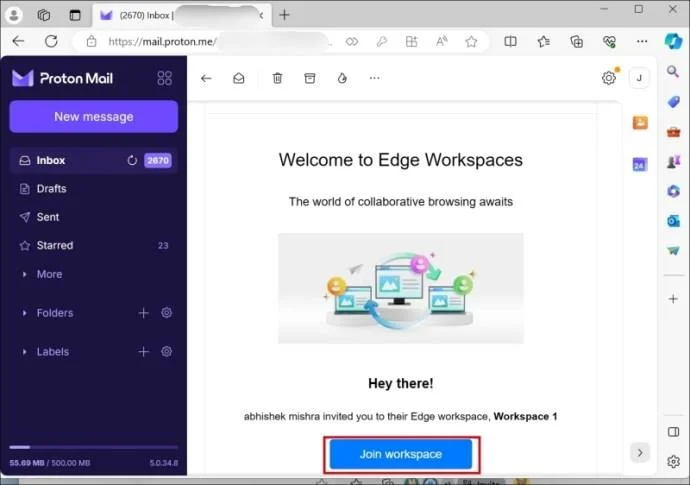
Other collaborators must also sign in to Microsoft Edge to use a Workspace. They can use the invite link received via email to join the Workspace. Click the Join workspace button to open the Workpace in a new window.

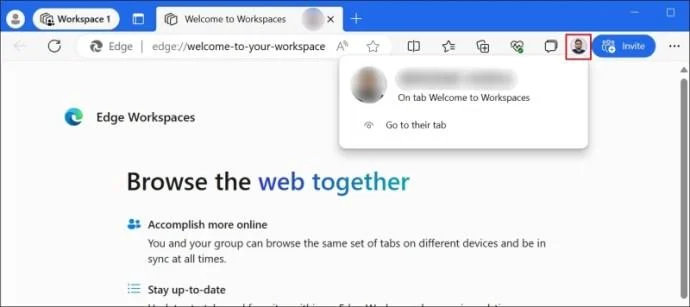
Alternatively, paste the invite link in the URL bar and press Enter to access the Workspace. A display picture of all the collaboratorinof the Workspace will appear next to the Invite button. You can click on it to view more details or switch to the tab they are using.

As a collaborator, you can use most browser features, such as manipulating tabs (pining, grouping, closing), accessing browser history, inviting others, and using the Edge sidebar.
You can join multiple Workspaces at once and use them in real-time. Edge lets you move tabs between multiple open Workspaces and personal browsing sessions. Either drag and drop a tab or use the right-click context menu to shift the tab to another open Workspace or your personal browsing session.
All user changes to a tab (opening, closing, pinning, etc.) are reflected in real time. If you close a tab, all the collaborators on that tab, including you, move to another tab. However, closing the last open tab will close the Workspace session for everyone.
You can lock tabs to prevent other members from accidentally closing them. However, the Workspace owner can unlock any tab and then close it. Collaborators can keep using the Edge workspace even after the Workspace owner or anyone else exits. The Workspace’s browsing history is accessible to each collaborator and remains so until the creator deletes the Workspace.
Remember that if you have disabled autoplay videos from playing in Microsoft Edge, it will also reflect in your Workspace browsing session.
How to Enable Comments in Microsoft Edge Workspaces
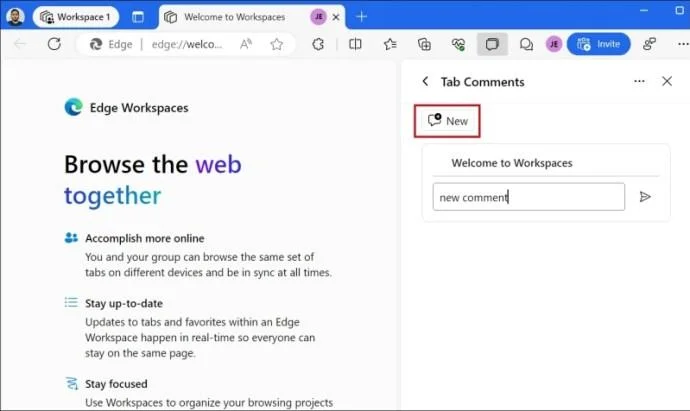
Comments are useful in communicating with other collaborators in a tab. You can guide them on how to handle a task or how to do a step correctly. The comment feature is not publicly available yet, but you can enable it by tweaking a flag in Microsoft Edge.
Remember that you must repeat this method on all devices linked to the Workspace to show the comments icon. Here’s how to do so:
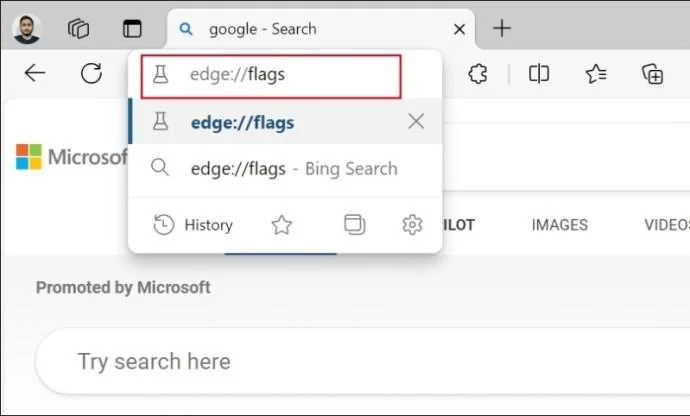
- Type edge://flags in the URL bar and press Enter.

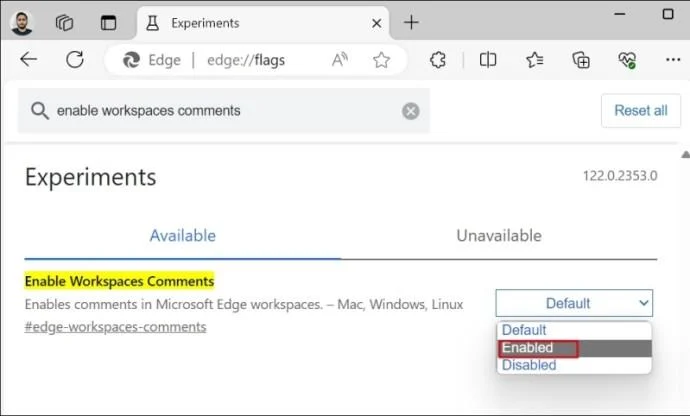
- Search for the enable workspaces comments flag.
- Select the Enabled option.

- Click on the Restart button.
- A comments icon will appear on the menu bar. Click on it.
- Select the Add option. Type the comment and press Enter.

When other collaborators switch to that tab, they will see the comment you added. There is no notification pop-up or warning sound when you add a comment.
How to Leave or Delete Workspaces in Microsoft Edge
After your work is finished, you can leave the Workspace. But your browsing history and favorites will remain public for other participants. So, it is recommended to delete a Workspace in Edge when you no longer need it.
-
-
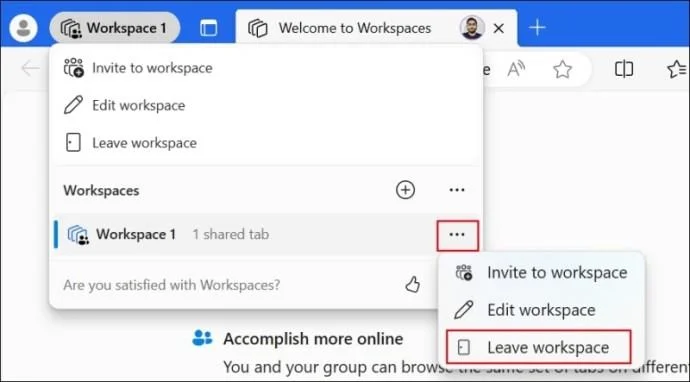
- Click on the Workspaces icon from the toolbar at the top in Edge.
- Select the Leave workspace option. If you are working with multiple Workspaces, they will all appear here instead. Click the three-dot menu next to the one you want to leave.

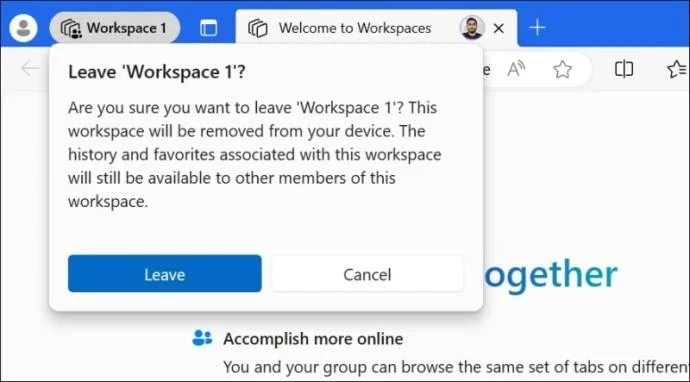
- Click on Leave.

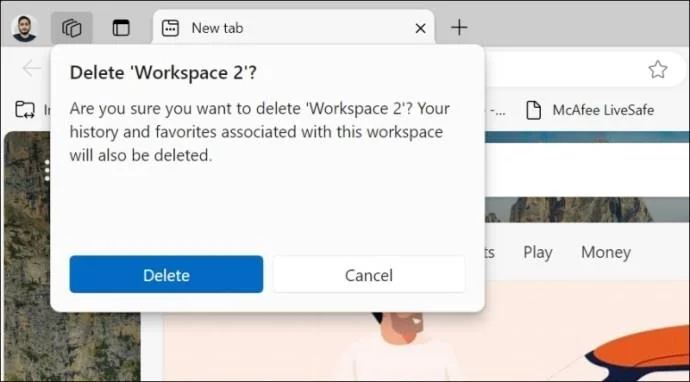
Only the Workspace creator can delete it. This action is permanent and will wipe out all the browsing history and favorites. Here’s how to do so:
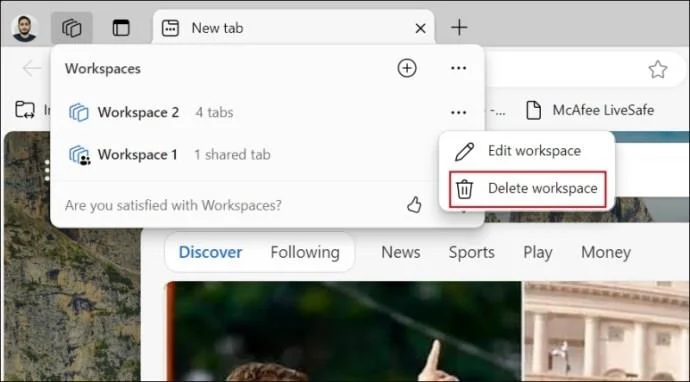
- Click on the Workspaces icon.
- Select the three-dots button next to a Workspace.
- Choose the Delete workspace option.

- Click on Delete.

Collaborate Easily With Workspaces
Settings up Workspaces in Microsoft Edge is easy. It makes collaborative browsing with your team members easy, which can come in handy when you are working on a project. Another benefit of this mode is that your personal details, like email account login details, are not shared.
If you are a new Edge user, you might want to learn how to make Google the default search engine in Microsoft Edge.
FAQs