Podcasting Trends You Need to Know in 2026: A Beginner’s Roadmap
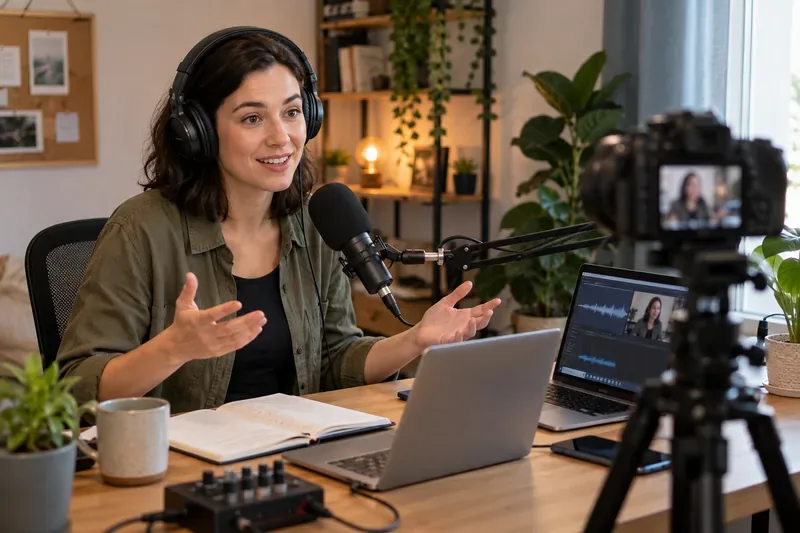
New to podcasting? Learn the 2026 trends shaping video, discovery, transcripts, AI, analytics, monetization, and a practical launch plan.
Starting a podcast in 2026 is less about buying the perfect microphone and more about understanding how people now discover, watch, listen to, share, and measure shows. The medium is still built around compelling conversations and useful stories, but the surrounding ecosystem has changed quickly. Video is now a mainstream part of podcast consumption, discovery increasingly happens inside large recommendation platforms, transcripts make episodes searchable and accessible, and creators have more ways to turn one recording into clips, memberships, sponsorships, and other audience touchpoints.
For a beginner, the useful question is not “Which trend should I copy?” It is “Which changes affect the way I should design my show from day one?” The answer starts with a few verified shifts in audience behavior and platform tools, then turns those shifts into a practical launch plan.
The biggest change is that podcasting is now a dual-format medium. Edison Research at SSRS reported in The Infinite Dial 2026 that 58% of Americans age 12 and older had listened to or watched a podcast in the previous month, while 45% had done so in the previous week. Its June 2026 Podcast Consumer study found that 82% of weekly podcast consumers actively watched video podcasts and 78% listened to audio-only podcasts. Those groups overlap, so the result does not mean audio has disappeared. It means many people move between watching and listening depending on the situation.
YouTube reported in May 2026 that podcasts on the platform had more than one billion monthly active viewers. Spotify said in May 2026 that more than 500 million users had streamed a video podcast, up nearly 50% year over year. For a new creator, the practical implication is simple: plan a show that remains understandable when someone is only listening, but can gain extra value from video when a viewer chooses to watch.
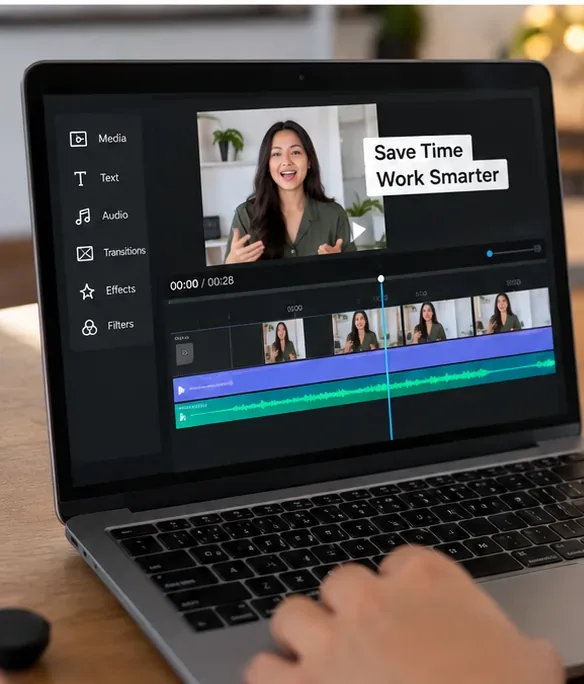
A video podcast is a podcast episode that includes a visual track rather than audio alone. You do not need a television-style studio to participate. A single well-framed camera, stable lighting, and clean audio can be enough. YouTube also allows eligible audio-first creators to deliver episodes through an RSS feed, and it can create static-image videos from show artwork. An RSS feed is a standardized XML feed that carries your show information and episode links from your hosting provider to podcast platforms.
The beginner mistake is assuming the trend requires an expensive multi-camera setup. It does not. Start with excellent audio because every viewer still hears the episode. Add video only when it supports your topic, guest chemistry, demonstrations, or discoverability. YouTube’s official RSS delivery documentation is useful if you want an audio-first workflow that still reaches YouTube.
Podcast discovery increasingly behaves like broader creator discovery: search, recommendations, clips, charts, and shares can all introduce a show to someone who has never subscribed to it. In May 2026, Spotify described new personalized podcast experiences and said video had become a core part of its podcast product. In the same month, Spotify began rolling out listener-created podcast clips, allowing people to save and share specific moments from episodes. The feature is not necessarily available for every show or market at the same time, so creators should treat it as an expanding platform capability rather than a universal guarantee.
For a beginner, this means each episode should contain clearly identifiable moments: a useful answer, a strong story, a surprising example, or a concise takeaway that can stand on its own. Do not record only for a 60-minute linear experience. Record with the full episode in mind, but make it easy to extract short, truthful pieces that accurately represent the conversation. See Spotify’s May 2026 podcast clips announcement for the current feature direction.
A transcript is a text version of the spoken audio. It can improve accessibility, help listeners jump to a specific passage, and make it easier to reuse accurate quotations or create show notes. Apple Podcasts automatically generates transcripts for supported languages and lets listeners search text and tap a word or phrase to play from that point. Apple also allows creators to provide their own transcript files in supported formats.
This is a low-cost opportunity for a new show. Add speaker names, review proper nouns, and correct important technical terms when your workflow allows. Do not assume automated transcription is perfect, especially with cross-talk, accents, music, or specialized vocabulary. Apple documents current support and limitations in its transcript guidance.
Generative AI can help with topic research, brainstorming, rough outlines, transcript cleanup, title variants, clip suggestions, and production administration. The 2026 Podcast Consumer study found a nuanced audience response: 69% of weekly podcast consumers approved of AI being used for research and the same share approved of brainstorming, while 62% viewed AI as a threat to podcast credibility and 59% viewed it as a threat to creativity.
That gives beginners a sensible boundary. Use AI to reduce repetitive work, not to erase the reason people chose your show. Verify facts, keep editorial control, and do not fabricate guests, quotes, experiences, or expertise. If your show depends on trust, a distinctive human point of view is more valuable than producing more generic episodes.
A play sounds like a simple metric, but platforms can define it differently. Spotify changed its podcast play count on June 11, 2026 so that a play reflects an episode watched or listened to for at least 30 seconds. Spotify also added clearer views of first-time audiences, returning fans, episode comparisons, and engagement activity.
For a new creator, the lesson is to avoid judging a show by one number. Track several signals together: whether people start an episode, how long they stay, whether they return, which topics earn saves or shares, and whether a growing percentage of the audience becomes repeat listeners or viewers. The current definition is documented in Spotify’s June 2026 analytics update.
Podcast income can come from advertising, host-read sponsorships, memberships, subscriptions, affiliate relationships, events, products, or services. Platforms are adding more tools around these models. Spotify expanded its Partner Program in 2026 and introduced additional sponsorship and membership options, while YouTube continues to connect eligible podcasts to its broader creator monetization system.
Do not build your first episodes around revenue projections. Eligibility rules vary by platform and market, and they can change. A more durable first milestone is evidence that a specific audience returns because the show consistently solves a problem or provides an experience they value. If monetization becomes relevant later, review the latest platform requirements before making a business forecast. Spotify’s January 2026 Partner Program update is one example of how quickly thresholds and tools can evolve.
Begin with the show concept, not the equipment. Write one sentence that names the audience, the recurring problem or interest, and the kind of episode you will deliver. “Weekly interviews with small-business owners about practical customer-retention experiments” is more actionable than “a business podcast.” A narrow promise makes guest selection, titles, thumbnails, clips, and analytics easier to interpret.
Then choose your production format. Audio-only is the simplest. Audio plus one camera gives you more visual distribution options without much extra complexity. A remote interview format can reduce logistics but requires reliable recording from both sides. A highly edited narrative show can be powerful, but it demands more research, scripting, sound design, and production time.
Your minimum technical preparation should include a microphone you can position close to the speaker, headphones for monitoring, a quiet room with limited echo, recording software, and a hosting provider that can publish a valid RSS feed. If you submit through RSS, Apple requires a technically valid feed with required tags, at least one episode, and artwork; its RSS feed requirements explain the current specification.
Record two or three pilot episodes before publishing. This gives you enough material to discover recurring problems with pacing, microphone technique, editing time, guest preparation, or visual framing. Listen once on headphones and once on an ordinary phone speaker. If you are using video, watch a segment with the screen muted to see whether framing and lighting remain comfortable, then listen with the screen off to confirm that the episode still makes sense without visual cues.
Publish through a host that gives you control of your RSS feed, then submit the show to the directories and platforms that matter to your target audience. Treat YouTube as a separate distribution surface even if your host helps automate delivery, because titles, thumbnails, comments, retention, and search behavior can differ from traditional podcast apps.
After publishing, create a repeatable post-production routine: finalize the episode file, review the transcript, write a clear description, mark chapters if your platform supports them, identify two or three strong moments for sharing, and log a small set of metrics. Consistency matters more than using every feature.
| Trend | What it means for a beginner | Best first action |
|---|---|---|
| Audio and video convergence | Many people switch between watching and listening | Make audio complete on its own; add simple video if useful |
| Platform-led discovery | Search, recommendations, and clips can introduce new audiences | Build episodes around clear topics and shareable moments |
| Transcripts | Episodes are easier to search, scan, and access | Review names, terms, and speaker labels |
| AI production tools | Routine work can be faster, but trust still matters | Use AI for assistance, then verify and edit |
| Engagement-focused analytics | Raw starts tell only part of the story | Track retention, returning audience, saves, and shares |
| Broader monetization | More revenue paths exist, but eligibility varies | Prove repeat audience value before optimizing income |
Buying a studio before proving the format. A better camera will not fix a vague concept or weak host preparation. Upgrade after you know which limitation is actually holding the show back.
Designing only for one platform. Platform-specific features are useful, but your show should retain a portable identity: consistent name, artwork, episode metadata, rights ownership, and an RSS-based distribution path when appropriate.
Confusing reach with loyalty. One clip can attract a large number of casual viewers without creating a durable audience. Compare discovery metrics with repeat consumption and episode completion signals.
Publishing unreviewed automated text. Transcripts, summaries, and AI-assisted research can contain errors. Review anything that affects factual accuracy, names, legal claims, medical claims, financial claims, or a guest’s meaning.
Chasing every new feature. Spotify’s May 2026 update includes interactive and personalized podcast functions that are limited by plan, market, or rollout stage. You can read the current details in Spotify’s official feature announcement. Treat new features as experiments, not as requirements for a viable show.
By episode 10, you should know more than whether the show is “growing.” You should be able to identify which topics attract first-time consumers, which episodes create returning listeners or viewers, how long production takes, whether video adds enough value to justify its cost, and which parts of your workflow can be standardized.
If those answers are still unclear, simplify. Narrow the topic, shorten the production cycle, improve the opening minutes, or reduce visual complexity. If the answers are clear, scale what works: better guests, stronger research, more deliberate clips, more consistent publishing, and eventually a monetization model that matches the audience rather than distracting from it.
The most important podcasting trend in 2026 is not any single platform feature. It is the expansion of podcasting from an audio file into a flexible, searchable, watchable, shareable media format. Beginners do not need to master every part of that ecosystem immediately. They need a strong show idea, clean production, control of their distribution, and a habit of learning from real audience behavior.
New to podcasting? Learn the 2026 trends shaping video, discovery, transcripts, AI, analytics, monetization, and a practical launch plan.
A practical UGC masterclass for sourcing, permissioning, briefing, publishing, and measuring customer and creator content without losing authenticity.
Community building can deepen trust, retention, feedback, and advocacy, but it is not a replacement for every marketing channel. Compare the tradeoffs and choose the right model.
Learn what major social platforms have actually confirmed about ranking changes in 2026, what depends on context, and how to adapt without chasing myths.
Learn how to make brand storytelling feel credible, human, and specific—using proof, real tension, ethical customer stories, and a practical authenticity check.
Build a smarter Q4 email strategy by balancing reach, frequency, discounts, automation, deliverability, and measurement for profitable holiday growth.
Learn how to create short-form video that converts by balancing hooks, format, authenticity, CTA, platform fit, and testing across TikTok, Reels, and Shorts.
Why are brands testing KOCs instead of relying only on influencers? Learn what KOCs are, why social commerce favors them, common myths, and how to run a measurable pilot.
Learn a practical TikTok SEO workflow for 2026: find real search demand, match search intent, optimize each video, and measure what improves visibility.
Prepare your e-commerce store for Black Friday with a practical checklist for offers, site speed, checkout, inventory, fulfillment, analytics, security, and support.