Podcasting Trends You Need to Know in 2026: A Beginner’s Roadmap
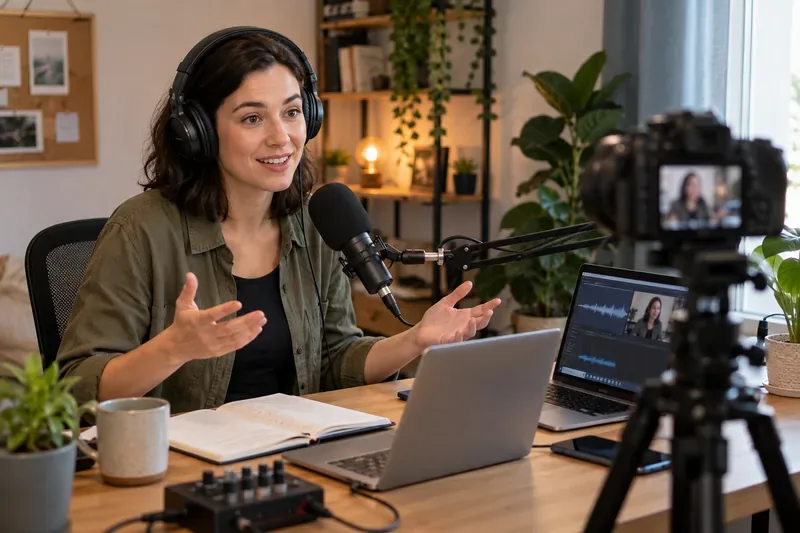
New to podcasting? Learn the 2026 trends shaping video, discovery, transcripts, AI, analytics, monetization, and a practical launch plan.
If you want a TikTok video to rank in 2026, start with one principle: make one video the clearest, most useful answer to one specific search query. TikTok’s own documentation says Search can be influenced by past user behavior, user information, and content information, but for most users the content match to the specific search term is generally weighted more heavily than the other categories. That is different from the For You feed, where user interactions such as watch time are generally weighted more heavily.
This distinction matters because TikTok SEO is not traditional web SEO squeezed into a short-form video. You still need topic relevance, but you also need a video people actually choose to watch, keep watching, and interact with. A clip that repeats a keyword ten times but disappoints the viewer is unlikely to become a durable search result.
As of September 2026, TikTok does not publish the exact ranking formula or a fixed list of keyword placements that guarantees a position. The platform also says the importance of ranking factors can change over time. Treat the process below as a practical optimization system grounded in TikTok’s published guidance, not as a promise of a specific ranking.
Primary sources: TikTok Help Center: How TikTok recommends content, TikTok Help Center: Creator Search Insights, and TikTok Newsroom: Creator Search Insights.
The strongest TikTok SEO workflow in 2026 is simple:
This approach works for creators, local businesses, educators, product-led brands, and publishers. It is especially useful for topics with explicit intent: tutorials, reviews, comparisons, recipes, troubleshooting, travel planning, definitions, shopping research, and “how do I” questions. It is less useful when the content is intentionally abstract, purely comedic, or built around a fleeting sound with no stable search intent.
TikTok continues to invest in search discovery. In its TikTok Next 2026 Trend Report, the company says billions of searches happen on TikTok every day and cites internal global data from 2025 showing search volume up more than 40% from the prior year. TikTok also reports that search behavior often starts soon after users open the app.
That does not mean every creator should chase the highest-volume phrase. Search visibility comes from matching the right query with the right audience. A small creator can sometimes compete more effectively on a narrow, high-intent query than on a broad term dominated by thousands of generic videos.
For example, “coffee” is too broad to guide one useful video. “How to make cold brew without a scale” gives you a clear viewer, a clear problem, a clear answer, and a clear way to evaluate whether the video delivered.
Start with TikTok’s own search data rather than guessing. Creator Search Insights is designed to show creators what people are searching for. TikTok says the tool can surface frequently searched topics, categories, recommended topics, and “content gap” opportunities where demand is strong relative to the number of videos available.
Access can vary by account or region. TikTok has previously instructed creators to search for “Creator Search Insights” inside the app, and the Help Center remains the best place to confirm current availability for your account.
If you run a business account or create commercially oriented content, TikTok’s public Creative Center can also help with trends and creative research. TikTok updated its Creative Center help documentation in July 2026 and describes it as a free public resource with trend, ad, keyword, and creative tools.
Do not start with a list of ten keywords. Start with one primary query and one outcome.
Suppose you are a fitness creator. Instead of targeting “leg workout,” define the video as: “20-minute apartment leg workout with no jumping.” The viewer’s job is not to hear those words. The viewer’s job is to find a routine that fits a small space, a time limit, and a noise constraint.
A useful planning sentence is:
Someone searching for [query] should finish this video knowing or being able to [specific outcome].
If you cannot fill that sentence cleanly, the video may be too broad for search.
Searchers decide quickly whether a result matches what they need. Your opening should confirm the topic before you introduce yourself, tell a long story, or ask for a follow.
For a query such as “how to clean white sneakers,” a stronger opening is: “Here’s how to clean white mesh sneakers without putting them in the washer.” A weaker opening is: “You guys kept asking me for my secret, so today I’m finally sharing it.”
The first version reduces uncertainty. It tells the viewer what the video is, who it is for, and one important condition.
This is also good recommendation strategy. TikTok says watch behavior, including whether people watch in full or skip, is part of the interaction data that can influence recommendations, and watch time is generally weighted heavily in the For You feed for most users.
You will often see advice telling creators to put the exact keyword in the spoken audio, on-screen text, caption, username, filename, first comment, and every hashtag. TikTok’s public ranking documentation does not say that every one of those placements is a separate ranking factor, and it does not publish a formula assigning a weight to each placement.
Use a simpler rule: make the topic obvious to humans everywhere it is naturally useful.
TikTok specifically identifies query match, hashtags, and sound as examples of content information that can influence Search results. It does not say that using more hashtags automatically creates more visibility.
For the “cold brew without a scale” example, a useful caption could be: “Cold brew without a scale: an easy coffee-to-water method using measuring cups, plus steep time and storage tips.”
That is more useful than repeating “cold brew” eight times or adding unrelated discovery tags.
TikTok includes hashtags among the content signals that may influence both Search and recommendation feeds. The practical implication is relevance, not volume.
Use hashtags that accurately describe the subject, category, location, audience, or format. A local restaurant video might use a city or neighborhood hashtag plus a specific cuisine tag. A software tutorial might use the product name and the task being solved.
For current trend research, TikTok’s Creative Center Trends documentation, updated in July 2026, says creators and marketers can filter trending hashtags by industry or time frame and review trendlines, related videos, regional popularity, audience insights, and related hashtags.
Do not force a trending hashtag into a video just because it is popular. A trend can help discovery when it overlaps with your topic and audience. When it does not, it can make the content less coherent.
Ranking in Search and spreading in For You are connected but not identical problems. TikTok says content match is generally more important in Search, while user interactions are generally more important in For You. The best videos satisfy both.
A search-optimized video should therefore answer the query efficiently while still giving the viewer a reason to continue.
Do not stretch a 20-second answer into 90 seconds simply because longer content can hold more keywords. Searchers who feel stalled can skip, and skipping is one of the behaviors TikTok says its systems can consider.
One useful video can rank, but a coherent library is easier for viewers to understand and easier for you to improve.
If your core topic is “home espresso for beginners,” build a cluster:
Each video should answer its own query. The cluster helps you build depth without making every video a general overview.
This also gives you more opportunities to learn which intents produce strong watch behavior, comments, saves, profile visits, and follow-up searches.
SEO is not finished when you post. TikTok provides analytics through TikTok Studio, including account and content performance. The platform’s TikTok Studio help documentation describes overview, content, viewers, and follower analytics, though the exact metrics available can vary by location and account.
Creator Search Insights also includes search analytics in supported experiences. Use those tools to evaluate whether a topic is actually attracting the audience you intended.
Do not evaluate a strategy from one post. Compare a small series built around similar intent, changing one major variable at a time: the query, hook, format, length, example, or angle.
| Check | What good looks like |
|---|---|
| Search intent | One specific question or problem, not a vague topic |
| Opening | The viewer knows the subject and benefit immediately |
| Answer quality | The video actually solves the query instead of teasing it |
| Topic language | Natural wording in the explanation and caption, without stuffing |
| Hashtags | Relevant labels that describe the content, audience, or location |
| Retention | No unnecessary intro, repeated point, or filler before the answer |
| Cluster | The post fits a broader set of useful related videos |
| Measurement | You know what metric or search behavior you will review afterward |
Not supported by TikTok’s public documentation. Relevance matters, but the company does not publish a checklist saying the exact phrase must appear in every surface.
TikTok names hashtags as one content signal. It does not say that more hashtags are better. Use relevant ones.
No. Search puts more emphasis on content information and query match for most users. For You generally puts more emphasis on interactions such as watch time. A video can perform strongly in one surface without dominating the other.
No. A narrower query with a clear intent and a content gap can be more practical, especially for a smaller account or a specialist business.
After several posts, you should be able to see a clearer relationship between the query you target and the audience behavior you receive. The best sign is not simply “more views.” It is more qualified discovery: people arriving with the right question, staying for the answer, and engaging in ways that show the content solved a real problem.
Run a simple self-check after every five to ten search-focused videos:
If the answer is mostly yes, keep the topic cluster and improve execution. If search visibility is weak, first revisit demand and intent before changing hashtags or chasing tricks. If people find the video but leave early, the problem is more likely the hook, pacing, or usefulness of the answer than “SEO.”
TikTok SEO in 2026 is not about gaming a hidden formula. It is about reducing ambiguity. Choose a query with real demand, create the clearest answer you can, label the content naturally, and then earn continued distribution with strong viewer response.
TikTok’s own guidance gives creators a useful framework: query match and other content information matter heavily in Search, while interaction signals such as watch time matter heavily in recommendation feeds. Build for both. That is a more durable strategy than keyword stuffing, trend chasing, or relying on a single hashtag to do the work.
New to podcasting? Learn the 2026 trends shaping video, discovery, transcripts, AI, analytics, monetization, and a practical launch plan.
A practical UGC masterclass for sourcing, permissioning, briefing, publishing, and measuring customer and creator content without losing authenticity.
Community building can deepen trust, retention, feedback, and advocacy, but it is not a replacement for every marketing channel. Compare the tradeoffs and choose the right model.
Learn what major social platforms have actually confirmed about ranking changes in 2026, what depends on context, and how to adapt without chasing myths.
Learn how to make brand storytelling feel credible, human, and specific—using proof, real tension, ethical customer stories, and a practical authenticity check.
Build a smarter Q4 email strategy by balancing reach, frequency, discounts, automation, deliverability, and measurement for profitable holiday growth.
Learn how to create short-form video that converts by balancing hooks, format, authenticity, CTA, platform fit, and testing across TikTok, Reels, and Shorts.
Why are brands testing KOCs instead of relying only on influencers? Learn what KOCs are, why social commerce favors them, common myths, and how to run a measurable pilot.
Learn a practical TikTok SEO workflow for 2026: find real search demand, match search intent, optimize each video, and measure what improves visibility.
Prepare your e-commerce store for Black Friday with a practical checklist for offers, site speed, checkout, inventory, fulfillment, analytics, security, and support.