Podcasting Trends You Need to Know in 2026: A Beginner’s Roadmap
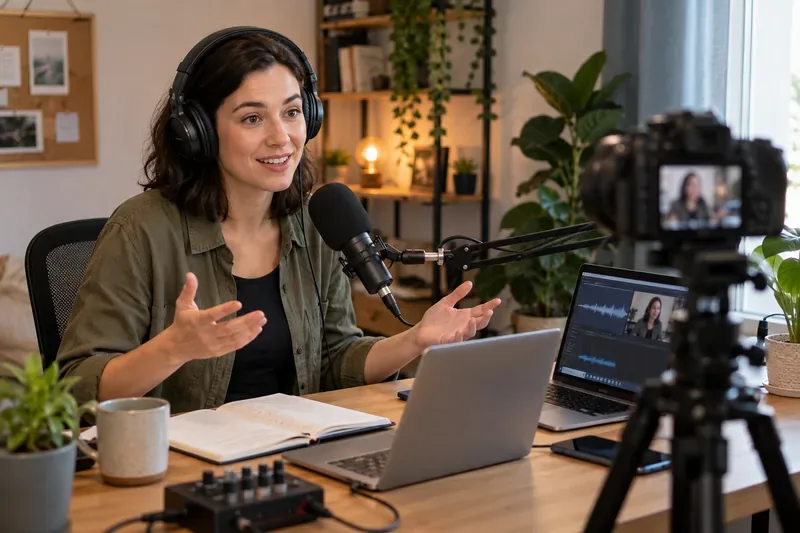
New to podcasting? Learn the 2026 trends shaping video, discovery, transcripts, AI, analytics, monetization, and a practical launch plan.
A familiar creator-marketing problem looks like this: a brand pays for a polished influencer post, gets a large view count, then watches the campaign struggle to generate meaningful product questions, qualified clicks, or sales. At the same time, smaller creators and ordinary customers may be posting detailed demonstrations, comparisons, and “would I buy it again?” reviews that attract fewer views but more useful discussion.
That gap helps explain the growing interest in Key Opinion Consumers, usually shortened to KOCs. The term is most established in Asian social-commerce markets, and it is still not a standardized global marketing category. In practice, KOC marketing describes a creator strategy that treats credible product users, niche reviewers, and highly relatable consumers as persuasion partners rather than simply buying the biggest possible audience.
As of September 2026, the shift is better understood as a change in the creator mix, not the death of influencer marketing. Large influencers can still be excellent for awareness, launches, entertainment, and cultural reach. KOCs are more useful when the commercial problem is trust at the consideration stage: “Does this actually work for someone like me?”

Reach and persuasion are different jobs. A creator can be excellent at attracting attention while being a poor match for a specific product, price point, or buyer question. The larger the audience, the more heterogeneous it often becomes. That can make a post highly visible without making it highly relevant to the people most likely to buy.
KOC-style content attacks the problem from the opposite direction. Instead of asking, “Who can expose this product to the most people?” it asks, “Whose experience would reduce uncertainty for the right buyer?” A niche skincare user who explains texture, routine fit, irritation concerns, and who should skip a product may be more useful at the decision stage than a famous lifestyle account that mentions it briefly.
Research is still emerging, so marketers should avoid turning the KOC label into a magic formula. A 2025 study in the International Journal of Internet Marketing and Advertising examined 350 young consumers in Vietnam and linked KOC characteristics such as expertise, trustworthiness, usage similarity, source dynamism, and cognitive effort with online customer engagement. Product–KOC fit also mattered. The study is useful evidence for the mechanism, but it does not prove that every small creator will outperform a larger influencer in every category. See the original 2025 KOC study published by Inderscience.
A KOC is best thought of as a consumer-first opinion source. The creator’s persuasive value comes primarily from product experience, relevance, similarity to the audience, and practical credibility. Follower count may be small or moderate, but there is no universal follower threshold that officially turns someone into a KOC.
| Dimension | Traditional influencer/KOL emphasis | KOC emphasis |
|---|---|---|
| Primary asset | Reach, personality, cultural visibility | Relatability, product experience, niche credibility |
| Typical content | Aspirational, entertainment-led, campaign-led | Review, demo, comparison, problem-solving, use case |
| Best fit | Awareness, launches, broad attention | Consideration, product discovery, conversion support |
| Compensation | Often negotiated flat fee | Samples, flat fees, affiliate commissions, revenue share, or combinations |
| Useful metrics | Reach, impressions, video views, brand lift | Qualified clicks, saves, comments, conversion rate, orders, CPA, revenue |
| Main risk | High cost or weak audience-product fit | Hidden incentives, weak quality control, fake “organic” reviews |
The categories can overlap. A successful KOC can become a large creator, and a large influencer can create highly credible product-review content. The useful distinction is not fame versus obscurity; it is what kind of trust is being purchased and what job the content is meant to do.
Social platforms are increasingly productizing the operational work that once made small-creator programs difficult. Brands no longer need to manage every creator relationship through spreadsheets, email, and manual coupon codes.
TikTok’s official TikTok One update from May 2026 describes Creator Marketplace as a system for creator discovery, collaboration, scaled campaign workflows, and unified reporting. It also introduced Creator AI Search to help advertisers find creators based on campaign fit and past partnership signals. That does not mean TikTok officially defines those creators as KOCs, but the infrastructure makes a distributed, niche-creator model much easier to run. See TikTok’s May 2026 TikTok One announcement.
YouTube has moved in a similar commerce direction. Its Shopping affiliate program lets eligible creators tag products and earn commissions, while merchants can track metrics such as clicks, orders, sales, and commission rates. The program is available in multiple markets, including the United States and Vietnam. See YouTube’s official Shopping affiliate overview and Google Merchant Center’s program documentation.
The structural change is important: creator marketing can now behave more like a measurable portfolio. A brand can test many relevant creators, attribute transactions, keep the winners, and stop spending on weak fits. That is the operating environment in which KOC strategies make the most sense.
Cost is part of the appeal, but treating KOCs as discount inventory misses the point. A creator with 8,000 followers who has never used the category and publishes generic sponsored clips is not automatically a strong KOC. Meanwhile, someone with a larger audience can function like a KOC if their authority comes from repeated hands-on product experience and a highly specific community.
What to do instead: rank creators by evidence of fit. Look for category depth, useful comments, repeated product use, clarity about pros and cons, audience similarity, and the ability to explain who a product is—and is not—for.
Authenticity is a perception created by consistent behavior, not a follower-count feature. Small accounts can copy scripts, overstate results, hide sponsorships, or recommend products they barely tested. Large creators can be transparent and rigorous.
What to do instead: review a creator’s last 20 to 30 relevant posts. Do they discuss limitations? Do they answer skeptical questions? Is every product “amazing,” or do they distinguish good fits from bad fits? Consistency is more informative than a single viral post.
This is one of the most dangerous misunderstandings. In the United States, the Federal Trade Commission says material connections between an endorser and a brand should be disclosed clearly and conspicuously. A material connection can include payment, free products, discounts, employment, or other benefits. The FTC also says disclosures should be hard to miss and placed with the endorsement itself. See the FTC’s disclosure guidance for social media endorsers.
The FTC’s Consumer Reviews and Testimonials Rule took effect on October 21, 2024. Among other things, it addresses fake or false reviews and prohibits compensation or incentives that are conditioned on a review expressing a particular positive or negative sentiment. A brand can compensate a creator for work, but it should not turn “honest review” into “say something positive or you do not get paid.” See the FTC’s official rule Q&A.
Platform rules matter too. YouTube requires creators to identify branded content and paid promotions in Studio, and in September 2026 YouTube announced updated paid-partnership disclosure controls. See YouTube’s branded content policy.
The safest approach is progressive: begin with evidence you already have, then add operational complexity only when the economics justify it.
This is the easiest move because you are not guessing who might care about the product. Search tagged posts, review comments, support communities, affiliate data, and customer-submitted content for people who already demonstrate product knowledge.
Build a shortlist based on what they actually say, not just audience size. A useful first-pass scorecard can include category relevance, product experience, audience fit, content clarity, comment quality, disclosure behavior, and consistency.
A KOC campaign loses credibility when every participant repeats identical brand language. Instead of scripting enthusiasm, give creators the information needed to evaluate the product responsibly.
Ask for real-use structure: context, demonstration, pros, cons, fit, and conclusion. Do not require a positive conclusion.
Different creators respond to different economics. Product seeding can work when the item is genuinely desirable, but free product is still a material connection that may require disclosure. Flat fees compensate production effort. Affiliate commissions align payout with sales. Hybrid models combine a guaranteed creation fee with performance upside.
The tradeoff is control versus scale. Flat fees can secure deliverables but increase upfront cost. Pure affiliate programs lower fixed cost but may attract creators who prioritize high-converting products over brand fit. Hybrids often create a useful middle ground.
If the campaign goal is consideration or sales, view count alone is an incomplete score. Use trackable links, platform affiliate reporting, unique codes where appropriate, and landing-page analytics. Compare creators on normalized business metrics such as conversion rate, cost per acquisition, revenue per creator, and content-assisted sales.
Also inspect qualitative signals. Are viewers asking specific product questions? Are they saving the post for later? Are comments about use cases, sizing, compatibility, ingredients, durability, or price—not just the creator’s appearance? Those signals suggest the content is helping people decide.
Once you have winners, do not immediately replace them with a new creator list. Repeatability is part of the advantage. Build longer relationships with creators whose audiences continue to respond. Negotiate usage rights where needed, test paid amplification, and give successful creators early access to new variants or launches.
Meta’s creator marketplace and partnership ads illustrate the broader industry move toward this blended model: discover creators, run organic collaborations, then amplify strong creator content as paid media. See Meta’s official creator marketplace overview.
The harder part is not recruiting 100 creators. It is maintaining trust when you have 100 creators. Establish rules for disclosures, prohibited claims, evidence requirements, content rights, approval boundaries, fraud checks, and brand safety.
Do not optimize so aggressively for conversion that every creator begins to sound like the same advertisement. The KOC model works only while the consumer perspective remains believable.
KOCs are not the right tool for every objective. Choose a larger influencer, celebrity, or KOL when the main job is to create a cultural moment, introduce a new category, reach a broad audience quickly, or borrow status from a recognized personality. Choose KOCs when the main job is to answer buying questions, produce many use-case examples, support social commerce, or generate a steady stream of product-specific content.
Many strong programs use both. A large creator can create demand; a network of KOCs can help convert uncertainty into confidence.
Before scaling, run a self-check against the goal you set at the beginning. Do not declare success because one creator went viral.
If the answer is mostly yes, expand gradually. If reach is strong but conversion is weak, revisit product–creator fit before adding more creators. If conversion is good but operations are chaotic, invest in creator-management workflows before scaling. If the content only works when creators are told exactly what to say, you may have built distributed advertising rather than a genuine KOC program.
The most useful way to understand KOCs is not “small influencers are better.” It is that modern creator marketing is becoming more accountable to the buyer journey. Brands can increasingly recruit niche creators, track commerce, compare performance, and amplify proven content. That makes product relevance and consumer-like credibility more economically valuable than they were when creator marketing was mainly a reach business.
KOCs will not replace influencers, and the term itself may evolve. The durable lesson is simpler: when a purchase requires trust, the person who can explain the product credibly to the right audience may be more valuable than the person who can show it to the largest audience.
New to podcasting? Learn the 2026 trends shaping video, discovery, transcripts, AI, analytics, monetization, and a practical launch plan.
A practical UGC masterclass for sourcing, permissioning, briefing, publishing, and measuring customer and creator content without losing authenticity.
Community building can deepen trust, retention, feedback, and advocacy, but it is not a replacement for every marketing channel. Compare the tradeoffs and choose the right model.
Learn what major social platforms have actually confirmed about ranking changes in 2026, what depends on context, and how to adapt without chasing myths.
Learn how to make brand storytelling feel credible, human, and specific—using proof, real tension, ethical customer stories, and a practical authenticity check.
Build a smarter Q4 email strategy by balancing reach, frequency, discounts, automation, deliverability, and measurement for profitable holiday growth.
Learn how to create short-form video that converts by balancing hooks, format, authenticity, CTA, platform fit, and testing across TikTok, Reels, and Shorts.
Why are brands testing KOCs instead of relying only on influencers? Learn what KOCs are, why social commerce favors them, common myths, and how to run a measurable pilot.
Learn a practical TikTok SEO workflow for 2026: find real search demand, match search intent, optimize each video, and measure what improves visibility.
Prepare your e-commerce store for Black Friday with a practical checklist for offers, site speed, checkout, inventory, fulfillment, analytics, security, and support.