Nuclear Fallout Preparedness Checklist: Essential Supplies and Shelter Steps
Build a practical fallout preparedness kit in six steps, with sealed food and water, a radio, medical supplies and shelter guidance.
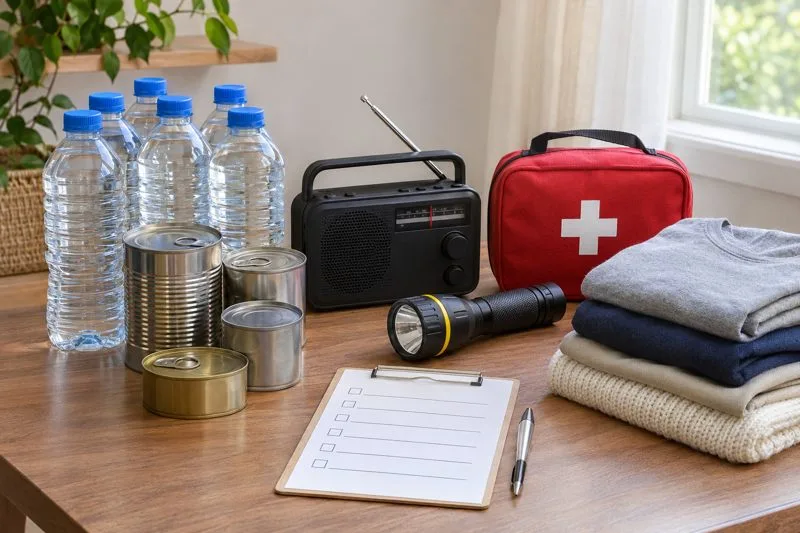
A practical emergency kit can help a household shelter indoors if officials warn of radioactive fallout after a nuclear incident. Start with sealed water and food, a battery-powered or hand-crank radio, essential medicines, flashlights and supplies for cleaning exposed skin. Many of these items also help during storms and ordinary power outages.
This checklist is general preparedness guidance, not a prediction that a nuclear attack will occur. In an actual radiation emergency, follow local emergency officials. The CDC’s basic guidance is to get inside a substantial building, stay inside and stay tuned for further instructions.
Begin with what you already have. Adjust quantities for household size, infants, older adults, disabilities, pets and specific medical needs. A kit is useful, but it is not a substitute for prompt shelter or official instructions.
Plan in advance where you could get inside quickly near home, work or other places you spend time. The CDC advises moving to the middle of a building or a basement, away from doors and windows, during a radiation emergency. A substantial building generally offers better protection than remaining outdoors or in a vehicle.
Keep your household kit in an accessible indoor location. Do not delay getting inside to collect supplies from outside. The CDC’s radiation-emergency guidance summarizes the three priorities: get inside, stay inside and stay tuned.
Include bottled water and foods in sealed containers that your household can eat without complex preparation. Add a manual can opener, utensils and any infant formula or feeding supplies needed. Plan for dietary restrictions and rotate supplies before their expiration dates.
During a radiation emergency, the CDC recommends bottled water and sealed food. Food or drinks that were outside and uncovered may be contaminated. Check public-health instructions before using a water supply that officials say may be unsafe. Wipe the outside of containers before opening them if contamination is suspected, following official advice.
Keep a flashlight with spare compatible batteries and a battery-powered or hand-crank radio. A radio can help you receive official information if phone or internet service is disrupted, although reception depends on functioning local broadcasts. Check equipment periodically and learn how to find local emergency stations.
Charge phones and backup power banks when practical, and keep charging cables where you can find them. Store paper copies of emergency contacts and a simple family communication plan. For an ordinary outage, FEMA recommends battery-powered lights and safe generator use; a generator must never be operated indoors or in a garage.
Include a basic first-aid kit, regular medications where possible, glasses, hearing-aid supplies and copies of important medical information. Check expiration dates and storage requirements. If someone depends on electricity for medical equipment or uses refrigerated medicine, ask their healthcare provider and equipment supplier for a power-outage plan.
Consider mobility, communication or sensory needs when selecting a shelter location and storage container. Arrange in advance how family members, caregivers and neighbors can contact one another without depending on a single device or network.
Keep soap, clean clothing, towels or damp wipes, plastic bags and household hygiene items. If you were outside during a radiation emergency, radioactive material may be on clothing or exposed skin. Once safely inside, follow official instructions to remove the outer layer, place it in a bag away from people and pets, and wash exposed skin or shower if possible.
FEMA’s nuclear-detonation response guidance discusses changing clothes and showering or using damp wipes. Avoid scrubbing the skin, and follow local guidance if running water or other supplies are limited.
Bring pets indoors when safe and keep pet food, water, any medication and cleaning supplies available. If an animal was outside, follow official advice for removing possible contamination. Do not leave shelter solely to retrieve an item when officials say it is unsafe.
Tell household members where the kit is kept and how to reach the planned shelter area. Practice using the radio and flashlight, check supplies twice a year or on a schedule you can remember, and update paper contact information. Make plans for household members who may be at school, work or another location when an emergency happens.
The CDC says staying inside for at least 24 hours can protect people during a radiation emergency, unless officials provide other instructions or a life-threatening situation requires urgent action. Listen for guidance on shelter, evacuation, water safety and medical help; 24 hours is not an automatic all-clear, and the time needed can vary.
Potassium iodide, or KI, can protect the thyroid from radioactive iodine in specific circumstances. It does not protect the whole body from radiation or from all radioactive materials, and it is not a substitute for shelter. The CDC advises taking KI only when directed by public-health or emergency officials or a healthcare provider.
For fallout following a nuclear detonation, the CDC says KI will not protect against the main radiation danger and should not be treated as a protective measure against fallout. Taking KI when it is not appropriate can cause harm. Do not substitute ordinary table salt or iodine supplements, and do not leave shelter merely to look for KI. Discuss individual medical questions with a healthcare professional before an emergency.
Check battery orientation and expiration, try fresh compatible batteries and test the hand-crank mechanism according to the manufacturer’s directions. If the radio works but cannot receive a station, reception or the transmitter may be unavailable; use another safe information source if possible.
Once safely inside, remove the outer layer of clothing and use damp wipes or a damp cloth on exposed skin if a shower is unavailable, following official guidance. Put potentially contaminated clothing in a bag away from people and pets. Continue listening for instructions.
Use the backup plan developed with their clinician and equipment provider. If the situation becomes life-threatening, seek emergency medical help and follow the guidance of emergency responders. Do not rely on an untested power source or bring a generator indoors.
No. It is general preparedness information for a hypothetical emergency and also contains supplies useful during other disruptions.
The CDC advises that staying inside for at least 24 hours can protect you during a radiation emergency. Follow official instructions, which may direct a different action, and seek urgent help for a life-threatening situation.
No. KI addresses radioactive iodine in the thyroid only. Take it solely when directed by officials or a healthcare provider, and use shelter as instructed.
Build a practical fallout preparedness kit in six steps, with sealed food and water, a radio, medical supplies and shelter guidance.
Use six steps to assess Middle East power shifts, test evidence, compare scenarios, and avoid mistaking short-term crisis moves for lasting alliances.
Use five steps to check claims about a hypothetical strike on Iran’s nuclear program, civilian risks, nuclear safety, and diplomacy.
Use 5 steps to assess missile-defense limits in a hypothetical Iranian nuclear counterstrike without treating defense as a guarantee.
Use this 5-step guide to assess AI target-prediction claims, check uncertainty, and keep human judgment central.
Use these 5 steps to choose a safer home shelter, prepare supplies, and respond to radiation alerts; no DIY shield replaces a solid building.
A five-step guide to checking official shelter access, FEMA listings and viral bunker claims, with practical radiation-emergency preparation.
Explore six steps to understand UN diplomacy, Security Council powers, vetoes and the limits of preventing nuclear use.
Understand six steps about tactical and strategic nuclear weapons, civilian harm, escalation risk and international humanitarian law.
Use this 5-step guide to separate Russia and China’s documented 2026 diplomacy from uncertain responses to hypothetical nuclear escalation.