October in Chicago can feel deceptively mild one week and sharply colder the next. The practical problem is not that every home needs to be “winterized” on the same date; it is that several maintenance windows overlap. Leaves are filling gutters and curb lines, heating systems are coming back into regular use, overnight temperatures are trending downward, and the first freeze becomes climatologically plausible before the month is over.
This checklist separates climate normals from the short-term weather forecast, then organizes the work by urgency. It is designed for Chicago, Cook County and northern Illinois, with notes for the rest of the state where timing can differ.
Quick October checklist
| Task | Do it when | Homeowner | Renter |
|---|
| Test the heating system | Early October, before a cold night forces the issue | Schedule service if fuel-burning equipment is due for inspection | Run the heat briefly and report problems promptly; do not service shared equipment yourself |
| Test smoke and CO alarms | Now, then monthly | Replace failed units or batteries as applicable | Test alarms and report missing or defective devices; follow lease/local rules for batteries |
| Clear gutters, downspouts and leaf buildup | After major leaf drops and before heavy rain/freeze cycles | Clean safely or hire a contractor | Usually report exterior drainage problems rather than climbing a roof; check the lease |
| Disconnect hoses and protect exposed plumbing | Before freezing nights arrive | Drain exterior lines where applicable and know the main water shutoff | Ask the property manager which outdoor fixtures you control |
| Build a winter outage kit | Before the first winter storm watch | Water, shelf-stable food, medications, flashlights, batteries/power banks, blankets, gloves and pet supplies |
| Check short-range weather | At least weekly in October | Use the National Weather Service forecast; do not treat the normal first-freeze date as a forecast |
First, understand Chicago’s October weather: normal does not mean forecast
The National Weather Service Chicago office lists October 19 as the normal first autumn date with a temperature of 32°F or lower at Chicago O’Hare, using the 1991–2020 climate-normal period. That is a long-term statistical benchmark, not a promise that Chicago will freeze on October 19 in 2026. Rockford’s normal first freeze is earlier, October 13, which is one reason Illinois homeowners should not use a single statewide date. See the NWS Chicago first-freeze climatology.
For broader context, Chicago’s 1991–2020 October normals are a 62.7°F average high, 45.4°F average low and 54.0°F mean temperature, with 3.43 inches of precipitation and 0.2 inch of snowfall for the month. Those figures describe the climate baseline, not this month’s exact conditions. The source is the National Weather Service Chicago climate normals.
By contrast, the short-range NWS forecast issued at 2:36 p.m. CDT on October 3, 2026 for Chicago runs through October 10. It calls for generally sunny to mostly sunny conditions with forecast lows roughly in the upper 40s to mid-50s during that period—well above freezing. That forecast says nothing reliable about the second half of October. Check the current NWS Chicago point forecast before doing weather-dependent work.
1. Test the heating system before you actually need it
Turn the thermostat to heat on a cool morning and confirm that the system starts, warm air or hot-water heat reaches the living space, and no unusual odor, rattling, short-cycling or error code appears. A dusty smell after months of inactivity can occur briefly, but a persistent burning smell, fuel odor, visible soot or repeated shutdown deserves professional attention.
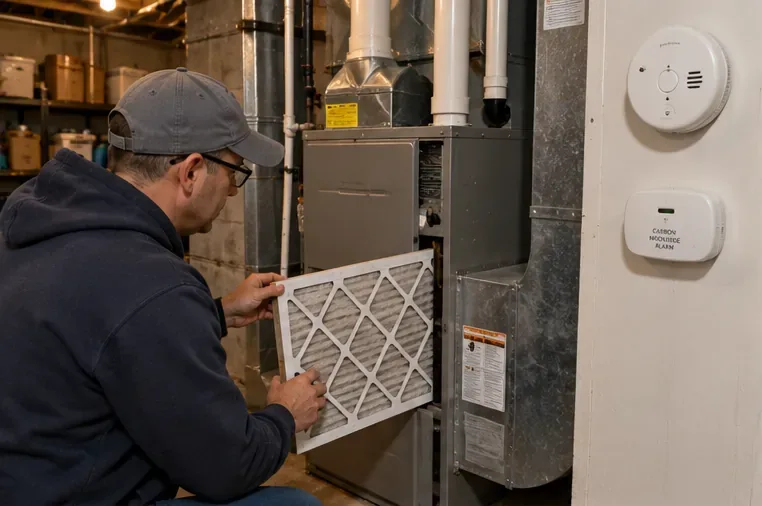
Caption: Early October is a good time to check the furnace filter and confirm the heating system operates before Chicago’s colder nights arrive.
The U.S. Consumer Product Safety Commission recommends a yearly professional inspection of fuel-burning heating systems, including furnaces, boilers, fireplaces, wood stoves, water heaters, chimneys, flues and vents. That is especially relevant before the heating season because carbon monoxide is colorless and odorless. See the CPSC home-heating safety guidance.
For homeowners: replace or inspect the HVAC filter according to the equipment maker’s instructions, keep return vents unobstructed, and hire a qualified professional for combustion, venting, burner, boiler or gas-line work.
For renters: test whether the heat actually works and notify the landlord or property manager quickly if it does not. In Chicago, city inspection records cite Municipal Code section 13-196-410 requiring adequate heat from September 15 through June 1. Do not open a shared boiler, modify gas equipment or attempt repairs that belong to building management.
2. Test smoke and carbon-monoxide alarms
Heating season raises the importance of working alarms. CPSC guidance says to test smoke and CO alarms monthly and to have working alarms positioned according to the product instructions and applicable code. Chicago inspection records also state that, where required, the owner is responsible for installing CO detectors and providing instructions, while the tenant is responsible for testing, maintenance and batteries. A specific lease or updated local code can add requirements, so renters should verify the current rules for their building.
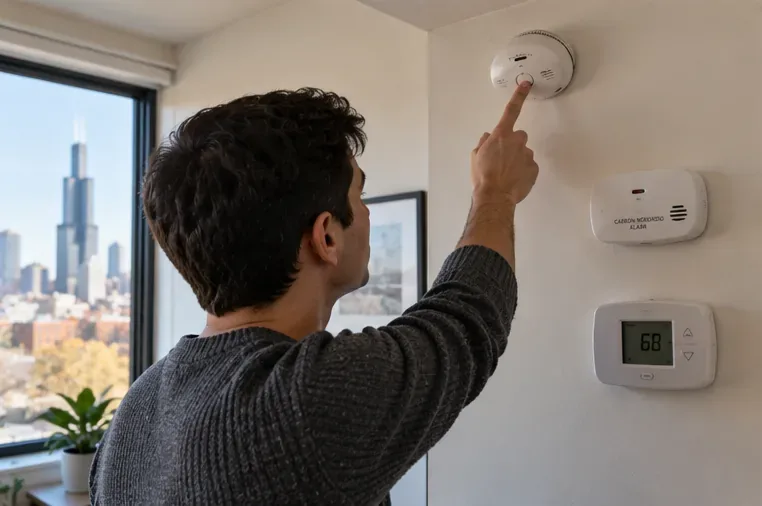
Caption: Test smoke and carbon-monoxide alarms before regular heating use begins; a working alarm matters more than a calendar reminder.
If an alarm chirps after a new battery, displays an end-of-life signal or fails its test, replace or report it rather than silencing it. Never use a gas oven, grill or charcoal appliance to heat a home. Illinois emergency guidance also warns against running generators inside homes, garages, basements or other enclosed or partly enclosed spaces.
3. Clear gutters, downspouts, leaves and storm-drain paths
October leaf drop can create two separate problems: roof drainage can back up when gutters are packed, and street-level drainage can be blocked by piles of leaves along curbs and catch basins. Illinois EPA guidance recommends keeping grass clippings and leaves out of streets because stormwater can carry them into waterways. IDOT also advises directing downspouts away from driveways and bare soil to limit sediment entering storm sewers.
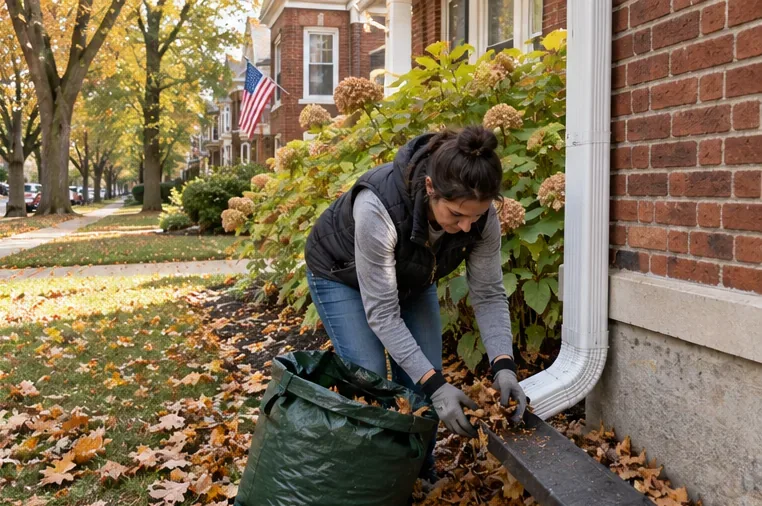
Caption: Keep leaves away from downspouts, gutters and drainage paths so fall rain can move away from the house instead of pooling near the foundation.
Homeowners should clear accessible debris, confirm downspouts discharge where water can move safely away from the foundation, and look for loose gutter sections, leaks or damaged extensions. If the work requires a steep roof, icy surface or unsafe ladder position, hire a contractor instead of improvising.
Renters should generally report clogged exterior gutters, loose downspouts, roof leaks and drainage failures to the landlord or property manager unless the lease clearly assigns routine exterior maintenance to the tenant. Ground-level leaf cleanup may be a tenant duty in some single-family rentals, but that is a lease question, not a statewide rule.
For disposal, do not assume every Illinois municipality follows the same leaf-bag, yard-waste or collection schedule. Check your city or village public-works page for 2026 rules.
4. Protect plumbing before freezing weather arrives
Do not wait for a freeze warning to find the shutoff valve. Identify the home’s main water shutoff and make sure an adult in the household knows where it is. Disconnect garden hoses before freezing conditions, drain exposed outdoor fixtures where the plumbing system is designed for that procedure, and protect vulnerable piping in unheated spaces.
Federal winter-storm guidance recommends insulating exposed pipes and knowing how to shut off water if a pipe bursts. During unusually cold weather, specific freeze-protection steps depend on the plumbing layout, so follow local utility or plumber guidance rather than blindly leaving every faucet running.
Renters should ask management which faucets, hose bibs and utility shutoffs they are authorized to operate. A tenant should not shut down a multi-unit building’s main supply without authorization except in a true emergency where immediate action is necessary to stop damage and it is safe to do so.
5. Prepare now for snow, ice and power outages
Chicago’s normal October snowfall is small, but winter preparation is easier before the first serious storm. Illinois Emergency Management guidance recommends stocking an emergency kit, preparing safe heat, having fire extinguishers available and winterizing the home. Ready.gov also advises gathering enough supplies to stay home for several days if utilities or roads are disrupted.
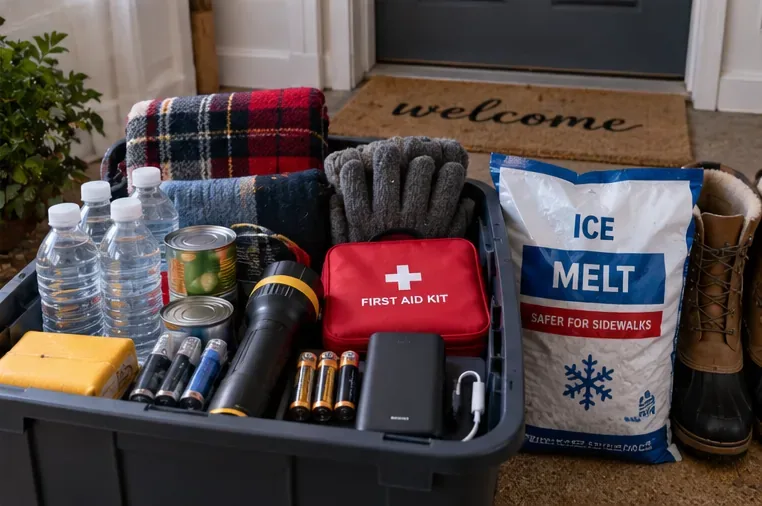
Caption: A basic winter outage kit should be assembled before a storm watch, not after shelves are crowded and travel becomes difficult.
A practical household kit can include drinking water, shelf-stable food, necessary medicines, flashlights, spare batteries, charged power banks, blankets, warm clothing, gloves, pet supplies and a first-aid kit. Homeowners may also want an appropriate ice-melting product and a snow shovel stored where they remain accessible after snowfall.
If you own a portable generator, learn the manufacturer’s operating instructions before an outage. Federal safety guidance says generators belong outdoors and away from openings; CPSC specifically advises at least 20 feet from the home. Never run one in a garage, even with the door open.
6. Seal obvious drafts, but do not block required ventilation
Weather stripping and caulk around appropriate door and window gaps can improve comfort and reduce heat loss. Check for damaged door sweeps and obvious air leaks before the first cold snap. However, do not seal combustion-air openings, furnace vents, dryer vents or exhaust systems. If you are unsure whether an opening is intentional ventilation, leave it alone and ask a qualified professional.
Apartment renters can usually handle simple removable draft-control products where the lease allows them, but damaged windows, failed seals, water intrusion and building-envelope repairs should be reported rather than permanently altered without permission.
7. Walk the property once before late-fall weather
From the ground, look for branches hanging over roofs or service lines, loose handrails, cracked steps, damaged exterior lighting, pooling water, missing downspout extensions and tripping hazards that could become worse under snow or ice. Do not attempt electrical-line tree work yourself; contact the utility or a qualified tree professional when branches are near power lines.
Also move hoses, planters, tools and furniture out of snow-removal paths. If you use a snow blower, review the manual and confirm it starts before the first storm rather than testing it in deep snow.
Renter versus homeowner: where the line usually falls
| Issue | Homeowner | Renter |
|---|
| Furnace/boiler professional service | Arrange qualified service | Report malfunction; do not service shared mechanical equipment |
| Filter replacement | Owner task unless service contract covers it | May be tenant task if the lease assigns it and the filter is safely accessible |
| Roof/gutter repair | Owner or contractor | Usually report; avoid roof work unless specifically responsible and properly equipped |
| Smoke/CO alarm testing | Test and maintain | Test and report defects; Chicago records identify tenant responsibility for testing/maintenance/batteries where applicable |
| Exterior plumbing winterization | Owner task | Follow property-manager instructions for fixtures assigned to the unit |
| Emergency supplies | Each household should maintain its own basic supplies and medications |
Outside Chicago, landlord-tenant duties can differ by lease, municipality and building type. If there is a conflict between a general checklist and your lease or local housing code, the governing rule is the one to follow.
How to check that your October prep is actually complete
A useful final test is functional, not cosmetic. The heat should start normally and warm the home; smoke and CO alarms should pass their test; gutters and downspouts should move water away from the structure; exterior hoses should be disconnected before freezing conditions; the main water shutoff should be identifiable; and winter supplies should be reachable without a shopping trip.
Then check the weather again. As of the NWS Chicago forecast issued October 3, 2026, no freeze is forecast for Chicago through October 10. That does not cancel the October checklist. It simply means there is time to prepare before the climatologically more freeze-prone part of the month. Use the latest NWS Chicago forecast for short-term decisions and the NWS first-freeze normals only as long-term context.
Official sources used