Kawaii Halloween Decor Without Gore or Jump Scares

Create a gentle Halloween look with pastel colors, friendly ghosts, easy no-carve accents, and practical safety tips for your home.
More and more people are turning to artificial intelligence (AI) to help them in their daily lives and careers. ChatGPT is one of the most popular and widely known AI tools. It provides reasonable, relevant answers to any question for free.
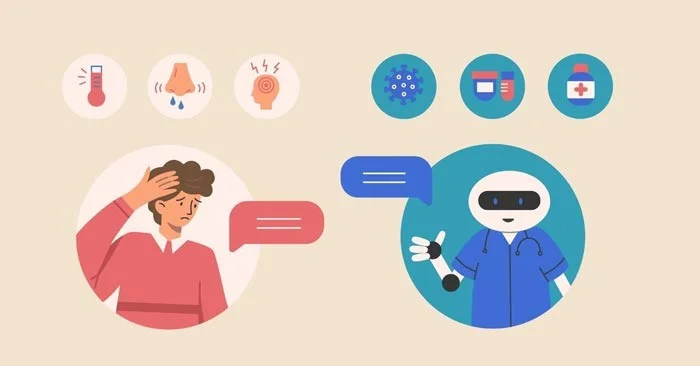
There is a lot of potential for Generative AI tools to help people learn about their health. But the answer is not always right. Relying solely on ChatGPT for health advice can be risky and cause unnecessary anxiety.
Generative AI is still a relatively new and constantly evolving technology. The latest new research provides the first Australian data on who is using ChatGPT to answer health questions, and for what purposes.
The results could help people learn how to use this new technology for health and the new skills needed to use it safely — in other words, to build “ AI health literacy .”
Who uses ChatGPT to ask about health? What do they ask?
In June 2024, the study asked more than 2,000 Australians whether they would use ChatGPT to answer health questions. One in ten (9.9%) asked ChatGPT a health question in the first half of 2024. On average, they reported “quite” trust in ChatGPT (3.1 out of 5).
The study also found that the proportion of people using ChatGPT to ask about health was higher for those with low health literacy, born in a non-English speaking country, or who spoke another language at home.
This shows that ChatGPT can support people who have difficulty accessing traditional forms of health information in Australia.
The most common questions people ask ChatGPT are related to:
More than half (61%) asked at least one question that required clinical advice. These questions were in the “riskier” category. Asking ChatGPT what your symptoms mean can help give you a rough idea, but is not a substitute for clinical advice.
People born in a non-English speaking country or who speak another language at home are more likely to ask these types of questions.

Why is this important?
The number of people using generative AI for health information is likely to increase. In the study, 39% of people who have not yet used ChatGPT for health information would consider using it in the next six months.
The total number of people using generative AI tools for health information is even higher if you consider other tools like Google Gemini, Microsoft Copilot, and Meta AI.
Notably, in this study, the team of scientists found that people from culturally and linguistically diverse communities may be more likely to use ChatGPT for health information.
If they ask ChatGPT to translate health information, that adds another layer of complexity. Generative AI tools are often less accurate in other languages.
We need to invest in services (whether human or machine) to ensure that speaking another language is not a barrier to high-quality health information.

What does 'AI health knowledge' look like?
Artificial intelligence (AI) presents both opportunities and risks for those who use it to find health information.
On the one hand, this technology appeals to people who already face significant barriers to accessing health care and health information. One of its main benefits is the ability to provide health information that is immediate and easy to understand.
A recent review of studies found that generative AI tools are increasingly able to answer general health questions in plain language, although they are less accurate on complex health topics.
This has obvious benefits because most health information is written at a level that is too complex for the general population, even during a pandemic.
On the other hand, people are turning to general-purpose AI tools for health advice, which is riskier for questions that require clinical examination and a deeper understanding of the patient.
There have been many case studies showing the dangers of using general-purpose AI tools to decide whether to go to the hospital or not.
We need to help people think carefully about the types of questions they are asking AI tools for advice and connect them with the right services that can answer risky health questions.
This article was translated and summarized from The Conversation under a Creative Commons license.
Create a gentle Halloween look with pastel colors, friendly ghosts, easy no-carve accents, and practical safety tips for your home.
Create a spooky office cubicle with Halloween desk decor ideas that keep your workspace usable, tidy, and mindful of workplace safety.
Plan a recognizable Halloween 2026 look with pop culture costumes inspired by Spider-Man, Supergirl, Toy Story 5, Moana, Mario, and Wednesday.
Sort leftover Halloween candy safely, share or repurpose sealed treats, and choose food use or compost for pumpkins based on their condition.
Compare workplace Halloween costume choices by respect, dress code, mobility, and safety—and learn when a subtle accessory or a policy check is the better option.
Find a couples costume that fits your style, budget, and comfort level, from Addams Family classics to original inside-joke duos.
Need a last-minute high school Halloween costume? Compare 10 easy closet-based ideas by prep time, comfort, school-day practicality, and simple safety checks.
Use a simple 2026 Halloween decorating timeline for indoor décor, outdoor displays, and fresh pumpkins, with practical adjustments for weather and events.
Mix five vivid, approachable Halloween cocktails with measured recipes, simple prep tips, and an alcohol-free option for your party guests.
Find 15 office-friendly Halloween costume ideas for 2026, with practical checks for dress codes, respectful themes, comfort, and workplace safety.