Home
» Wiki
»
Simple way to fix computer suddenly shut down
Simple way to fix computer suddenly shut down
If unfortunately, you are using the computer and suddenly it turns off. You are wondering what is wrong with your computer? There are many reasons for this problem, the computer suddenly turns off due to overheating, insufficient power supply, virus infection, hardware problems,...
Windows is one of the most stable operating systems out there. But if you start experiencing unexplained random shutdowns, it's time to start ruling out some causes before considering the option of reinstalling the operating system.
Here are some solutions to fix this sudden computer shutdown error. Try each solution one by one until your computer stops suddenly shutting down. All the solutions listed below by Quantrimang.com are applicable to Windows 10, Windows 8/8.1 and Windows 7.
Your computer may suddenly shut down due to the power supply overheating (possibly due to a faulty cooling fan). Continuing to use a faulty power supply can damage your computer, so you should address this issue immediately.
Windows 10 can also shut down automatically due to driver incompatibility. Additionally, outdated BIOS, software bugs, and operating system issues can also lead to similar results.
What causes sudden computer shutdowns like this?
There are many reasons why your computer suddenly shuts down while you're working. The problem could be due to:
The temperature of the computer CPU is too hot.
Problem with graphics processing unit (GPU).
Power consumption and sleep mode settings.
Problems with drivers.
All of these problems can certainly be solved. However, you may need to try a few different approaches until you find one that works for you.
1. Try with another power supply
If the computer fails to turn back on after shutting down, the problem may be with the power supply. Try a different power supply and see if the problem is resolved.
2. Turn off Fast Startup
Fast Startup can be the cause of your computer shutting down unexpectedly. So check if it is enabled. If it is, disable it by following these steps:
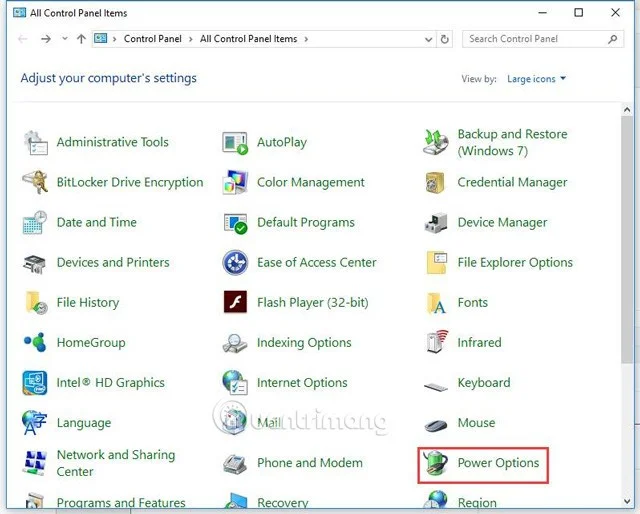
Step 2. View in Large icons mode and click on Power Options .
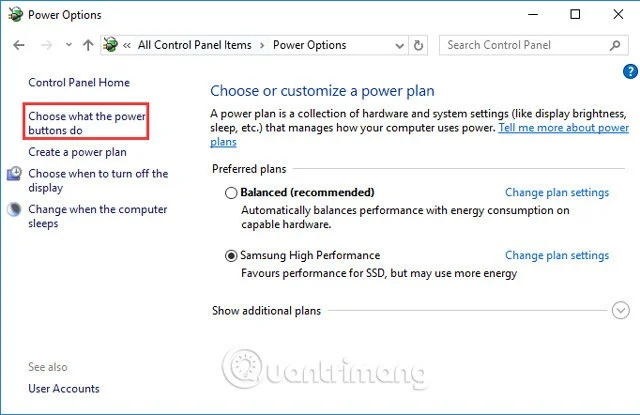
Step 3. In the left pane, select Choose what the power buttons do .
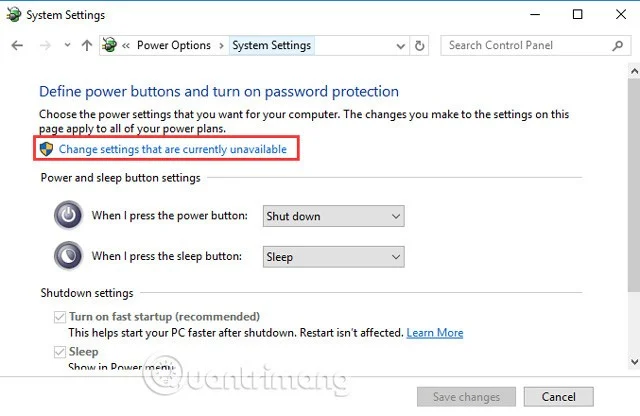
Step 4 . Click Change settings that are currently unavailable .
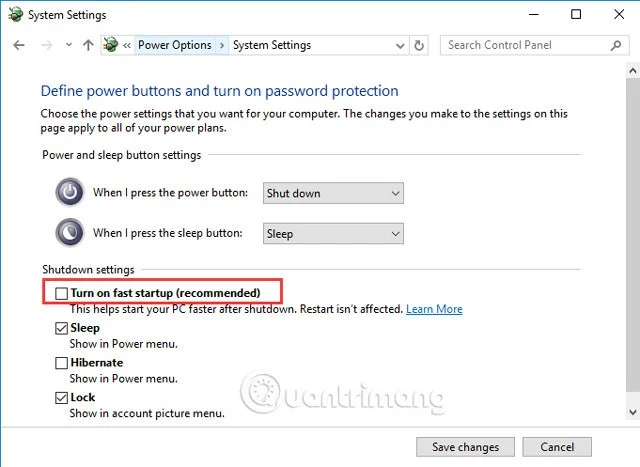
Step 5 . Scroll down to the Shutdown settings section. If you see the Turn on fast startup option selected, uncheck it and click the Save changes button .
See more: Start Windows 10 "as fast as the wind" with Fast Startup
3. Turn off Sleep Mode
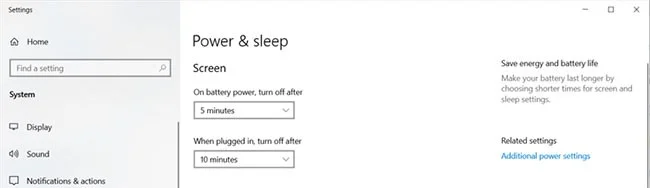
Windows can go into sleep mode to save power when you don't use your computer for a few minutes. Sleep mode is a necessary feature that helps save power if your computer is inactive for a long time. However, this feature has become a problem with Windows 10. Some people have reported that sometimes the computer may shut down instead of going to sleep. The best way to avoid this random shutdown of Windows 10 is to disable Sleep Mode.
Go to Power and sleep settings . Under Sleep , click the drop-down button under On battery power, PC goes to sleep after and change it to Never. Do the same for the When plugged in, PC goes to sleep after drop-down menu . Sleep mode is now disabled.
Turn off Sleep Mode to prevent your computer from shutting down unexpectedly
4. Update motherboard driver
To fix the problem, you can try updating your motherboard drivers. There are two ways to get the appropriate motherboard drivers: perform a manual update or an automatic update.
Manually update drivers : You can update your motherboard drivers manually by visiting the manufacturer's website and searching for the most recent appropriate driver. Make sure to choose a driver that is compatible with your version of Windows.
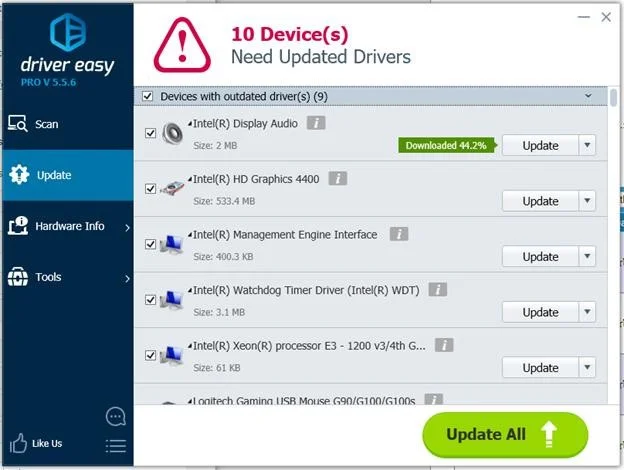
Automatic Driver Update : If you don't have the time, computer skills, and patience to update your motherboard drivers manually, you can perform an automatic update using Diver Easy. Driver Easy will automatically recognize your system and find the correct driver for your motherboard, then download and install it correctly.
Step 2 : Run Driver Easy and click the Scan Now button . Driver Easy will scan your computer and detect problematic drivers.
Step 3. Click the Update button next to the device to automatically download and install the correct driver version (you can do this with the free version).
Or click Update All to automatically download and install the correct version for all outdated drivers on your system (This requires upgrading to the Pro version with full feature support and a 30-day money-back guarantee. You will be prompted to upgrade when you click the Update All button ).
Most computers today are designed to automatically shut down if any of their internal components get too hot. Typically, heat-related problems occur when the computer is being used intensively, such as playing a graphics-intensive computer game.
You should check your computer fan to see if it moves quickly and smoothly. If you hear noise from the fan, it means it is working overtime to cool other parts of the computer. Open the computer case to check inside, see components such as the processor (heat absorber), video card and computer case fan.
Note: If your problem is on a laptop you should not open it and instead check the fan next to the computer is running to see if hot air is blowing out. You should buy a heatsink to help reduce the temperature.
The safe temperature should be 45-50 degrees Celsius and the maximum temperature should not exceed 60 degrees Celsius. You can check the system temperature in the BIOS (Basic Input Output System). But note that not all BIOSes will display this information. If you are not sure how to access the BIOS, you can refer to the article How to enter BIOS on different computer models or search on Google with the keyword “brand name + access BIOS”. You should follow the steps on the manufacturer's website.
You can also use a free utility to view your system temperature. If you are not sure which utility to use, you can try HWMonitor. It is made by CPUZ and you can trust it.
If the temperature is high (above 60 degrees Celsius), you can do two things below.
For Desktop
Check the back of the machine and remove any parts that are blocking the fan assembly.
Open the case cover and check to see if the cables inside are blocking the machine's ventilation slots.
Blow out dust inside with a blower specifically designed for computers.
One last check is to turn on the computer while keeping the case open and make sure the fans are still working properly. If the fans stop working, the temperature will be higher than normal. So open the computer case and make sure the fans are running, if the fan is broken, replace it with a new one.
For Laptop
Check your laptop's placement: Never place it on a pillow or blanket as this will block the machine's ventilation slots.
Consider adding a cooling pad to your laptop to increase airflow and cool the base of your laptop. However, if you’re on a budget, a piece of cardboard can also help significantly with cooling your laptop base.
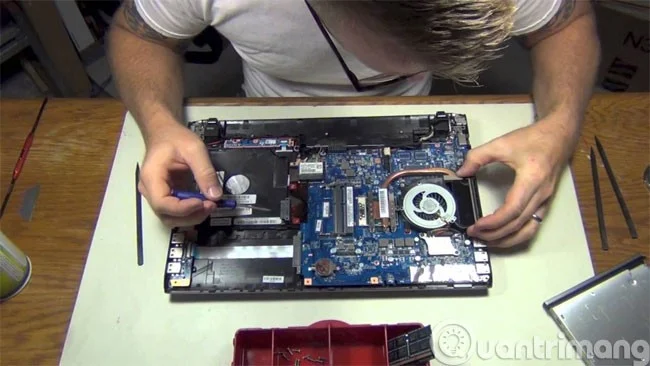
Too much dust can cause your computer to overheat. So clean your computer, especially the fans, filters, and vents on the base. But you should avoid these taboos when doing this job.
If you want to clean your device more thoroughly but are not "brave" enough to open it, bring it to the warranty center so that technical experts can clean the internal parts.
6. Tweak Additional Power Settings
There are many problems with Windows 10 power settings. You change some settings in the default power plan. Your problem of sudden shutdown will be solved forever.
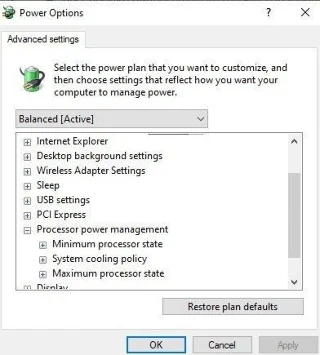
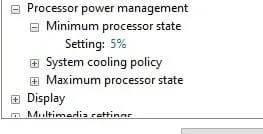
In Additional Power Settings , you can modify a few things, including changing the value in Minimum processor state . Reduce the number until the message Never appears. This setting applies to both plugged-in and battery-powered computers.
Access Power options by right-clicking on Start.
Change Plan Settings after selecting Additional Power Settings .
Click on the “Change when the computer sleeps” option on the left side.
Click “Change advanced power options” by opening the menu.
Click “Change advanced power options”
Select “Processor power management” from the drop-down menu.
Select “Processor power management” from the drop-down menu
The minimum processor state should be set to 100 , as you can see. Set it to 0 .
Then go to Hard Disk and find Turn off Hard Disk . Decrease the value until the message Never appears.
Close Settings and save your changes.
7. Update BIOS
You can download and install a new BIOS utility from your PC manufacturer's website. The steps to update the BIOS are complex. You can find detailed steps on the manufacturer's website or refer to the article How to Upgrade Your BIOS .
Updating the BIOS incorrectly can cause your computer to become unbootable. If you are not computer savvy, you should take it to a repair shop.
8. Check if your computer is infected with a virus
Check if your computer is infected with a virus
Your computer may be infected with a virus or other type of malware that is designed to shut down your computer under certain conditions. If your computer shuts down when running a certain program at certain times of the day, it may be infected with a virus.
If you think your computer may be infected with a virus, download a reliable scanner. If you have one installed, make sure the virus definitions are up to date , then run a full scan.
9. Check if there are any problems with the operating system
If after following each of the above recommendations your computer continues to unexpectedly shut down, you may have an operating system-level problem. To see if this is the case, try the steps below.
Step 1: Restart the computer and enter BIOS settings while the computer is booting.
B2: Once you have loaded your computer into BIOS setup, leave your computer alone.
If your computer does not shut down after going into standby mode in the BIOS, your operating system settings may be corrupted. The article recommends restoring Windows to a date before the computer automatically shut down for no apparent reason, or erasing everything and reinstalling Microsoft Windows .
10. Change Power Plan
If Windows 10 is acting erratically and shutting down without notification, try changing the Power Plan:
Search for a default power plan. Then select Edit power plan from the search results.
Make sure "Put the computer to sleep Plugged in" is set to Never on the power plan settings modification screen. Then, select Change advanced power settings from the drop-down menu.
Next, expand the hard drive section. For both “On battery” and “Plugged in”, change “Turn hard disk off after” to 0 . When you’re done, both options should say Never.
Expand the Sleep section. Then, under both “On battery” and “Plugged in”, change the “Sleep after” setting to 0 .
When done, both options will display Never. Apply the same logic to "Hibernate after".
Click OK to save the changes.
After deploying this update, you can wait and see if it fixes Windows 10 random shutdowns.
If you’ve followed the troubleshooting steps above and even reinstalled Windows 10 and your computer is still randomly shutting down, it’s likely a hardware issue. The fix will help you find the faulty device so you can repair or replace it if necessary. But if one of the solutions above works for you, hopefully your Windows 10 machine will be up and running again without the fear of random shutdowns.
Some frequently asked questions
Why does my Windows 10 computer randomly shut down?
If your computer shuts down without warning, there's likely a problem with Windows. On Windows 10, sleep mode can force your computer to shut down randomly. Changing advanced power settings should quickly resolve this issue.
Why does my computer randomly shut down?
Your computer may suddenly shut down. This is due to the power supply overheating due to a faulty fan. Continuing to use a faulty power supply can damage your computer. You should replace it immediately. Software programs such as SpeedFan can also be used to monitor the health of your computer's fans.
Why does my computer suddenly restart?
The cause could be an overheating graphics card or driver issues, viruses or malware, etc. But power supply issues are a common cause of random computer reboots. The first thing you should do is check your RAM. A faulty RAM module could also be the source of the problem and luckily this is easy to identify.
Why does my laptop shut down after a few seconds?
Overheating is one of the first and most common reasons why your computer or laptop shuts down (usually when you’re playing a game). Take a look at your computer’s GPU fan, case fan, and CPU fan. If they’re clogged with dust, take some time to properly clean them.