Home
» Today
»
Snakebite First Aid in Australia: What to Do While Waiting for Emergency Help
Snakebite First Aid in Australia: What to Do While Waiting for Emergency Help
Australian first-aid guidance checked October 25, 2026. If someone may have been bitten by a snake in Australia, treat it as an emergency even if the bite is painless, hard to see, or the person feels well. Call Triple Zero (000) for an ambulance now. Keep the person still and reassured. For a bite on an arm or leg, apply pressure bandaging and immobilize the limb while help is on the way. Do not wait to identify the snake or watch for symptoms.
Quick sequence: call 000; lie the person down and keep them still; apply a broad pressure bandage over a limb bite and then up the limb; splint the limb; stay and monitor breathing and responsiveness. Follow the emergency operator’s instructions. The steps below summarize current Australian and New Zealand Committee on Resuscitation (ANZCOR) guidance for bystanders; they are not a substitute for emergency dispatch or hands-on first-aid training.
Snakebite first aid: what to do in order
1. Call Triple Zero (000) for an ambulance
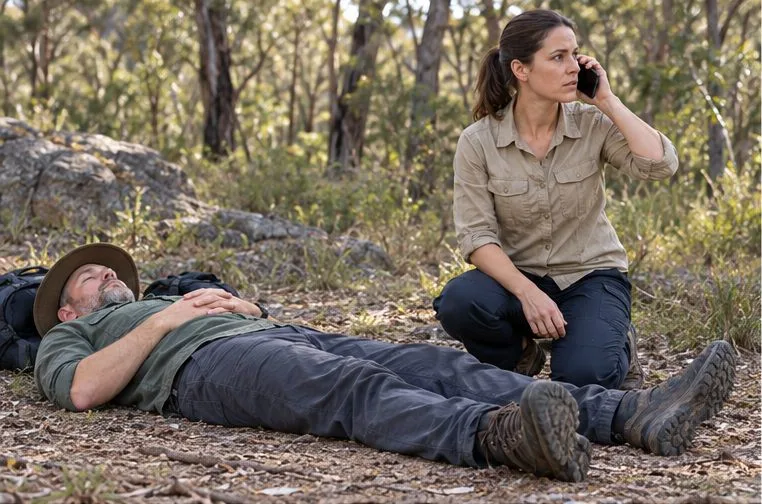
Call 000 as soon as a snakebite is suspected. Put the phone on speaker if you need both hands free, give the operator your exact location, and explain that it is a suspected snakebite. In a remote area, provide the nearest road, property entrance, trail marker, or other access point you can identify. Ask someone else to meet responders if that is safe and practical. Do not make the injured person walk to a vehicle or drive them yourself when an ambulance can come to them.
Do not delay the call to inspect the wound, search for the snake, or decide whether the species is venomous. ANZCOR recommends an ambulance for any suspected Australian snakebite. If the person is alone, they should call for help first and follow the operator’s instructions while keeping movement to a minimum.
2. Lie the person down and keep them still
Have the person lie down and remain as still as possible. Reassure them and keep them under continuous observation. Movement can increase the spread of venom through the lymphatic system, so bring help and transport to the person rather than asking them to walk. If the snake remains nearby, move other people away; do not approach, catch, or kill it.
A bite may leave no obvious marks, and symptoms may not appear immediately. St John Ambulance Australia notes that signs can be absent or delayed for an hour or more. Treat the bite as urgent even if the person says they feel normal. A photograph of the snake may help clinicians only if it can be taken from a safe distance without delaying first aid; never risk another bite to get one.
Call Triple Zero while the person stays lying still and reassured.
3. Apply pressure bandaging to a bitten arm or leg
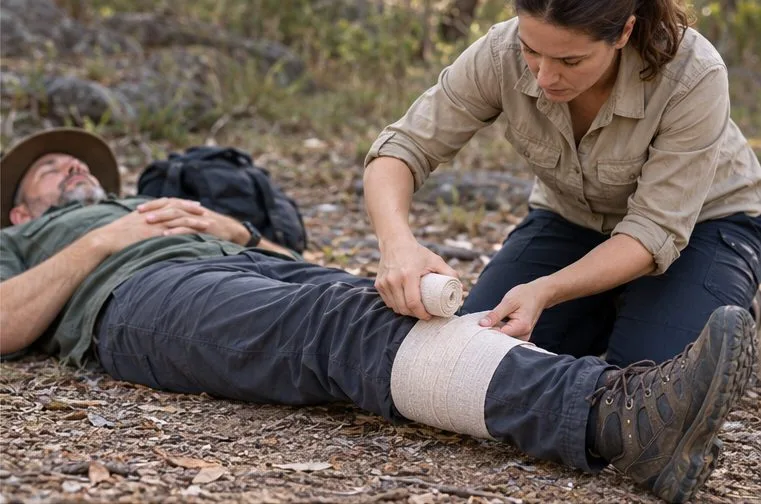
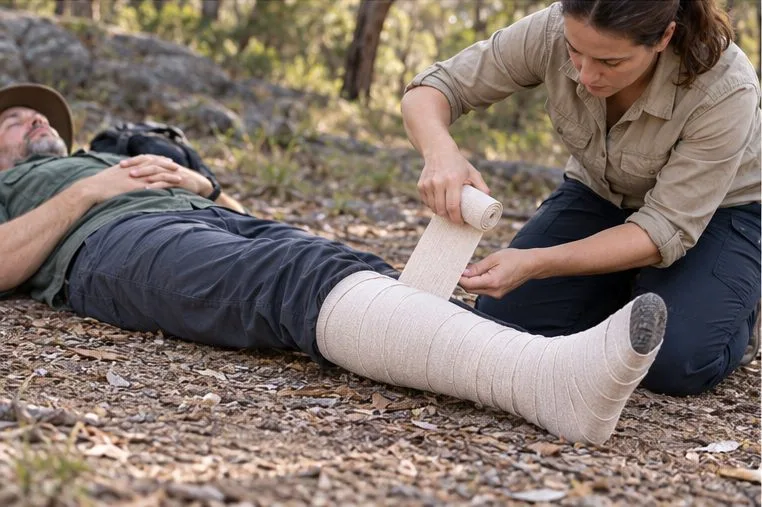
For a limb bite, use a broad elasticized roller bandage, ideally about 10–15 cm (4–6 inches) wide. If possible, leave clothing in place and bandage over it. First cover the bite site with a firm bandage. Then apply a second bandage, starting at the fingers or toes and wrapping upward over as much of the limb as possible. The pressure should be firm and tight; you should not be able to slide a finger easily between the bandage and skin. If you have only one long bandage, ANZCOR describes using it to cover the bite and continue up the limb.
Place the first firm bandage over the suspected bite site, over clothing when possible.Continue pressure bandaging from the toes upward, covering as much of the limb as possible.
Pressure immobilization is recommended for suspected bites from Australian venomous snakes, including sea snakes. ANZCOR notes that the technique can be difficult to apply correctly and that evidence for its exact effect in field conditions is limited; it nevertheless remains the recommended Australian first-aid approach. Do not delay the ambulance call while trying to make a bandage perfect. If no proper roller bandage is available, use suitable clothing or other material to apply pressure as best you can while maintaining the person’s stillness.
4. Splint the bandaged limb
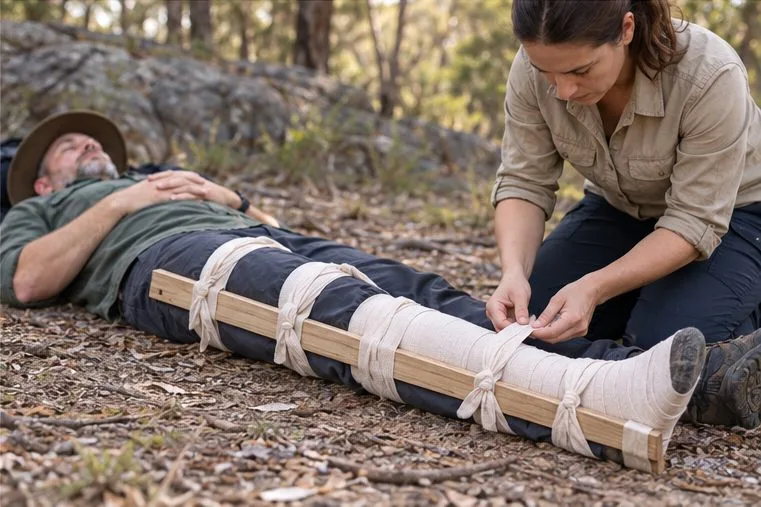
Secure a straight splint alongside the bandaged limb so it cannot bend or move easily. Include the joints above and below the bite when possible. For an arm, support it in a sling. Keep the limb and the person at rest. Do not loosen or remove the pressure bandages or splint before medical staff assess the patient at the hospital.
Splint the bandaged limb to reduce movement, including the joints above and below the bite.
If the bite is not on an arm or leg
The usual pressure immobilization bandage is designed for a limb. For a bite on the trunk, firm direct pressure at the site may be useful if it can be applied safely, but do not wrap the chest in a way that restricts breathing or movement. Do not apply firm pressure to the head or neck. Call 000 and follow the emergency operator’s instructions for the bite location.
While emergency help is on the way
Stay with the person and keep checking whether they are responsive and breathing normally.
Write down the suspected bite time and when the bandage and splint were applied. Note any new symptoms or changes to responsiveness.
Do not wash the bite or clothing, cut or incise the skin, suck venom, or apply an arterial tourniquet.
If the person becomes unresponsive and is not breathing normally, start CPR and follow the 000 operator’s directions. ANZCOR says resuscitation takes priority over applying the pressure immobilization technique.
Possible symptoms include nausea or vomiting, headache, abdominal pain, dizziness, blurred or double vision, drooping eyelids, trouble speaking or swallowing, weakness, or difficulty breathing. Symptoms can vary and may be delayed, so their absence does not make a suspected bite safe to manage at home. Hospital assessment is still necessary.
Remote locations: a narrow exception
Keep the person still and arrange for an ambulance to reach them whenever possible. ANZCOR gives a limited exception for a situation where urgent help cannot be brought to the person: local pressure may be applied if possible, and the person may need to move to seek urgent care. Treat this as a last resort, not a reason to walk out when rescuers can come to you. If you can contact 000, ask the operator for location-specific instructions.
Final check while waiting
Before responders arrive, check that the 000 call has been made, the person is lying still and being watched, and a bitten limb has a firm pressure bandage and splint. Keep the bandage and splint in place. Record the bite and bandage times, and be ready to tell paramedics about any change in breathing, consciousness, vision, speech, or strength. If the person collapses or stops breathing normally, switch immediately to CPR and the operator’s instructions.