Would Europe Be Drawn into a Hypothetical U.S.-Israel-Iran Nuclear War? NATO Rules Explained
A guide to NATO Articles 4 and 5, UN self-defense rules, and why consultation does not mean automatic European entry into war.
The periodic table forms have different designs. This article will summarize for you periodic tables with real elements with unique shapes .
In 1869, a Siberian named Dmitri Mendeleev presented a completely new version of the periodic table of elements to his colleagues at the Russian Chemical Society.
He tabulated the elements in order of their atomic weight, forming the basis for a fascinating chart that revealed patterns between the main building blocks of matter. It has been 150 years since Mendeleev came up with this idea and created the beginnings of the periodic table as we know it.
But he was not the only one who could arrange the elements in a way that had deeper meaning.
Before Mendeleev, several scientists had attempted to arrange the 63 elements known at that time.
Since then, scientists have found a total of 118 elements and there have been numerous attempts to rearrange them, with charts shaped like everything from strange snails to three-dimensional flowers.
Original periodic table

This periodic table contains more elements than Mendeleev's version, adding nihonium (Nh), moscovium (Mc), tennessine (Ts), and oganesson (Og) in the seventh row, with the elements arranged according to their atomic number, based in part on the chemical properties of the elements.
The Tower - ADOMAH Periodic Table by Valery Tsimmerman in 2006

In this periodic table, the elements are arranged based on the four quantum numbers of electrons, which are used to describe the position and movement of electrons in an atom, instead of being ordered based on atomic number.
Before Valery Tsimmerman, Charles Janet, an engineer and biologist, also worked on this idea.
The Vortex - The Periodic Table by Theodor Benfey, 1964

In this unique periodic table, hydrogen is at the center, and the elements are arranged in order of atomic number, spiraling outward. In this table, chemist Theodor Benfey also left blank spaces for elements that have not yet been discovered by science.
3D flower

There is no hydrogen or helium in this periodic table. The teal (blue-green) section at the back contains the alkaline earth metals on the back and the alkali metals on the front. The other elements of the periodic table are arranged in the remaining two “petals,” divided according to their properties.
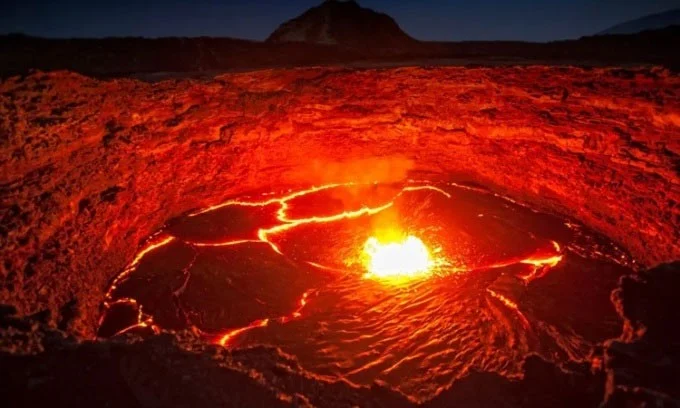
Rainbow Band - The Periodic Table was created by James Franklin Hyde in 1975

Hyde gave silicon the center of honor, because he was a scientist who specialized in silicon compounds. From there, he created lines to highlight how silicon connects to the rest of the elements on the table.
However, the table still starts with hydrogen - at the center of the right circle, the other elements are arranged in order in an outward spiral. Elements that are related to each other are colored separately.
A guide to NATO Articles 4 and 5, UN self-defense rules, and why consultation does not mean automatic European entry into war.
Assess claims about Iran in six steps, distinguishing uranium enrichment, weapons development and verified possession.
Understand nuclear decision authority in six steps, including US civilian control and the limits of public information about Israel.
A guide to official 2026 evidence on Hormuz shipping disruption, Iran-related claims, confirmed incidents, and what remains uncertain.
A source-based guide to nuclear escalation risks, UN Charter rules and NATO Article 5 in a strictly hypothetical Iran scenario.
Use five steps to prepare for an outage; nuclear and EMP scenarios are hypothetical, and official shelter instructions come first.
Use 5 defensive steps to verify a cyber disruption, protect household accounts, and avoid mistaking an outage for war.
Use these 5 steps to assess climate effects from a hypothetical Iran strike, compare model assumptions, and avoid unsupported predictions.
Explore six steps for reading research on climate, food and ecosystem recovery after a hypothetical nuclear conflict.
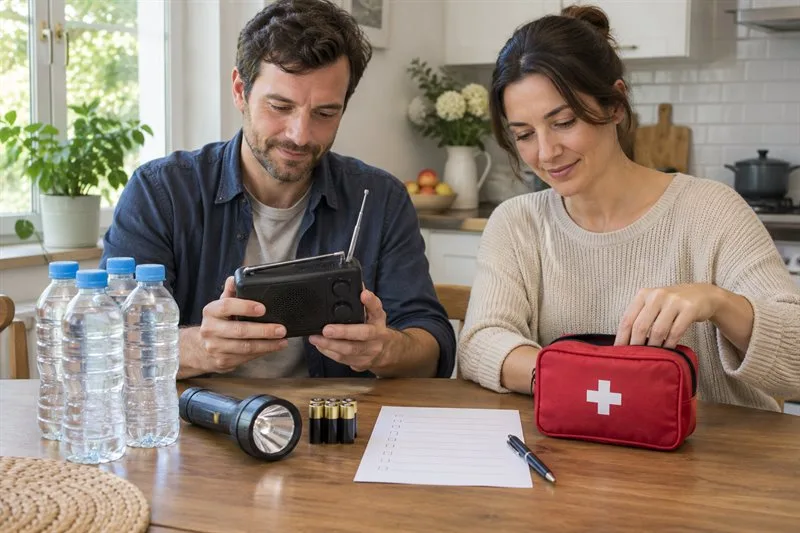
Build a practical fallout preparedness kit in six steps, with sealed food and water, a radio, medical supplies and shelter guidance.