Home
» How to
»
What to Plant in Chicago in October 2026: A Week-by-Week Garden Guide
What to Plant in Chicago in October 2026: A Week-by-Week Garden Guide
Short answer: For a Chicago garden in October, prioritize spring bulbs, a carefully timed garlic planting, harvesting and protecting crops already growing, and indoor microgreens or potted herbs. October is generally too late to count on new outdoor lettuce, spinach, radish, or other quick vegetables reaching harvest before cold and short days slow growth. Use the live forecast for frost decisions; use climate normals only as background, not as a prediction for October 2026.
Illustrative example: Maya is a fictional Chicago renter with a small raised bed, a few mature kale plants, and a sunny kitchen window. This example is only a planning scenario, not a gardener's testimonial or a reported trial. It shows how to choose among October options based on space, timing, and willingness to protect plants.
Chicago October: climate normals versus the 2026 forecast
The National Weather Service's Chicago daily normals use the 1991–2020 period. The normal high/low is 69.4°F/50.9°F on October 1, 62.3°F/45.0°F on October 17, and 55.9°F/40.1°F on October 31. Those averages show the month's cooling trend; they do not say what any particular night in 2026 will do, and they are not frost dates. The station is at O’Hare, while gardens near the lake, in the Loop, or in a sheltered yard can run warmer or colder. See the NWS Chicago October climate normals.
Current forecast checked September 29, 2026: the NWS point forecast for a location about four miles northeast of downtown had last updated at 4:16 p.m. CDT September 28 and was valid through 6 p.m. October 5. Its listed overnight lows stay above freezing during that window, declining to about 52°F Sunday night; that is a short-range forecast for the first days of October, not an outlook for the whole month. Forecasts change. Check the live NWS Chicago point forecast again before planting or deciding whether to cover crops. No forecast can reliably settle late-October frost risk this far ahead.
Frost is local: a sheltered bed against a building, a rooftop container, and an open suburban plot may not cool alike. Watch the point forecast and NWS frost or freeze notices, then protect tender plants before a predicted cold night. A forecast warm spell does not restore summer day length or guarantee enough growing time for a newly seeded crop. Use the normals to plan for a cooling month, and the current forecast to make near-term calls.
What is worth planting outdoors?
Garlic: possible in early October, but timing is tight in northern Illinois
Garlic is the clearest vegetable crop to plant for next year. Illinois Extension's regional planting chart places garlic in northern Illinois around mid-September, while its more general garlic guidance gives a broader September-to-mid-October window. Taken together, those recommendations make early October a reasonable catch-up attempt if the bed is workable, but not a reason to wait until late October. The cloves need time to root before the ground freezes. Use locally adapted seed garlic, keep cloves intact until planting, and follow the variety's spacing and depth guidance; Extension's chart gives 2–4 inches apart and 1–2 inches deep. Read Illinois Extension's planting calendar and its garlic timing guidance.
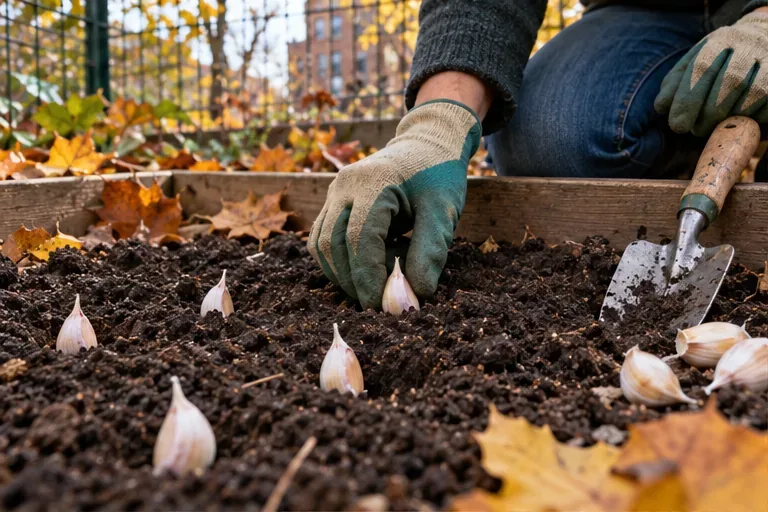
Garlic cloves going into a prepared bed; in northern Illinois, early October is already a late planting window, so do not postpone if you decide to plant.
Direct-sow vegetables: harvest now; do not expect a reliable new fall crop
For dependable outdoor harvests in Chicago, October is late for most direct-sown vegetables. Illinois Extension's northern Illinois calendar lists lettuce seed through September 15; its fall-garden guidance places spinach, leaf lettuce, and spring radish sowing by mid-September in central Illinois. Days shorten quickly, and cool-season plants need time to establish before cold weather. A warm October afternoon may tempt you to sow radishes, spinach, arugula, or lettuce, but treat that as an experiment with uncertain yield, not the main plan. If the garden already has established kale, collards, carrots, beets, or hardy greens, keep harvesting as needed and protect them when frost threatens. Extension notes that fall crops are planned weeks ahead so they have time to mature before season-ending frost; see its fall vegetable planting guidance.
Maya, in our illustrative example, has mature kale but no fall seedlings. Her practical choice is to harvest the larger leaves, leave the growing center intact, and keep row cover ready for a cold night. She does not sow a full bed of lettuce on October 10 and assume it will produce a crop. If she wants fresh greens in November, she can start a tray indoors instead.
Indoor sowing and herbs: choose a small, fast project
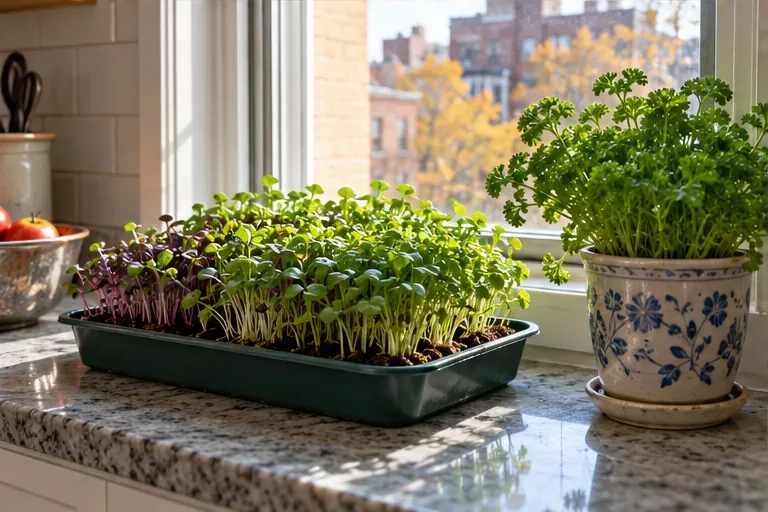
Microgreens are a useful October indoor sowing project because they are harvested young and do not need to overwinter in the garden. Use clean shallow containers, a seed-starting medium, and seeds sold for edible sprouting or microgreens; follow the supplier's directions and keep the medium evenly moist rather than waterlogged. A bright south-facing window helps, though Illinois Extension notes that herbs often grow more slowly indoors in winter and may need supplemental lighting. A sunny windowsill tray like the one in the illustration is a manageable first step; a tray of mature tomato, pepper, or other summer transplants started now is not useful for this year's outdoor season.
A small windowsill tray suits October indoor sowing better than starting summer vegetable transplants for this year's outdoor garden.
For herbs, prioritize moving an existing potted basil, rosemary, or other tender container herb inside before a damaging cold spell. Check for insects, rinse the foliage, and acclimate the pot to indoor light rather than carrying pests straight to houseplants. Parsley can also be dug and potted for winter use. Illinois Extension's indoor herb guidance notes the value of strong light and slower winter growth; its parsley guide describes growing parsley indoors. Starting new basil from seed is possible as a houseplant project, but do not expect outdoor planting until frost risk has passed next spring.
Flowers and transplants: bulbs fit October better than most new perennials
Hardy spring-flowering bulbs such as daffodils, tulips, and crocuses are a strong October choice while the soil is workable and unfrozen. Choose a well-drained location and plant at the depth on the package, since bulb depth varies by species and bulb size. Illinois Extension calls fall the prime planting period for hardy spring bulbs and says most can go in until the ground freezes. If the soil is waterlogged or frozen, wait for workable soil rather than forcing a poor planting. See Illinois Extension's bulb planting guide.
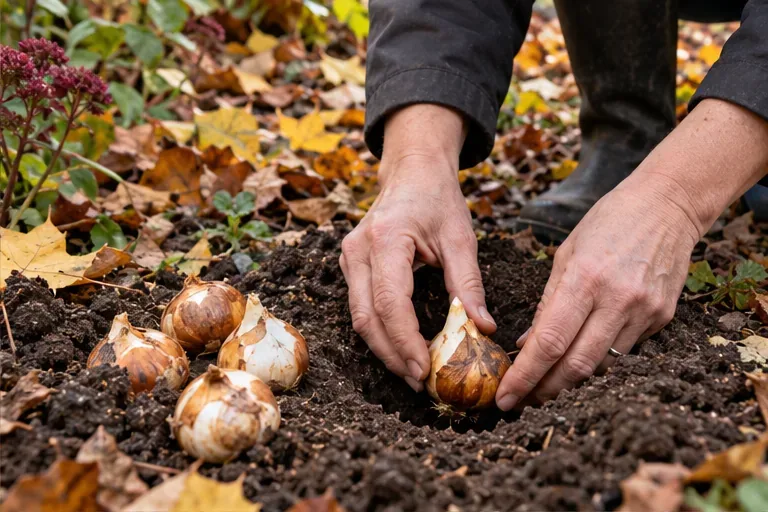
Plant spring bulbs in workable, well-drained soil and follow the package depth for the particular bulb.
Native prairie seeds are another option when the seed species and site are appropriate. Many native wildflower seeds need cold, moist stratification; Illinois Extension explains that fall sowing lets winter weather provide those conditions before spring germination. Use a reputable, regionally suitable seed mix and prepare the site so seed can contact soil; do not scatter seed over dense turf and expect the same result. Read the Extension instructions for starting a native prairie garden from seed.
New perennial plugs and shrubs need time to establish roots. Illinois Extension's general advice is to plant perennials about six weeks before the first frost, and it notes northern Illinois can frost earlier than southern Illinois. That makes October a conditional, often-late window for many new transplants, especially later in the month. If you already have a hardy, locally appropriate plant and can plant early in October, water it in and monitor soil moisture; for late October, bulbs or spring-sown native seed may be a better fit. Avoid fertilizing late-season transplants to push soft new growth.
Week-by-week Chicago garden checklist
Dates
Priorities
What changes the plan
October 1–7
Check the live forecast; harvest ripe tomatoes and tender herbs; plant garlic only if you can do it promptly; plant hardy spring bulbs in workable soil.
The NWS forecast checked September 29 covers through October 5 and shows no freezing overnight lows in that period. Recheck before acting; this forecast does not cover the rest of October.
October 8–14
Finish any planned garlic catch-up early in the week; pot up parsley or move tender container herbs indoors; water newly planted bulbs and perennials if soil is dry.
If the forecast approaches frost, harvest or protect tender crops first. Do not rely on a warm afternoon as evidence that the season has reset.
October 15–21
Focus on harvesting established crops, clearing diseased annual material, and sowing only appropriate native seeds. Cover leafy greens when a frost advisory is issued.
Late outdoor vegetable seed has little time to grow. Consider the actual forecast, garden exposure, and whether you can uncover plants on sunny days.
October 22–31
Plant bulbs only while soil remains workable; finish cleanup; water established trees and perennials if the ground is dry and not frozen; store tools and empty vulnerable containers.
As normal temperatures fall toward late-month averages near 56°F highs and 40°F lows, plan for cold nights, but use the current local forecast—not the normal—for a freeze decision.
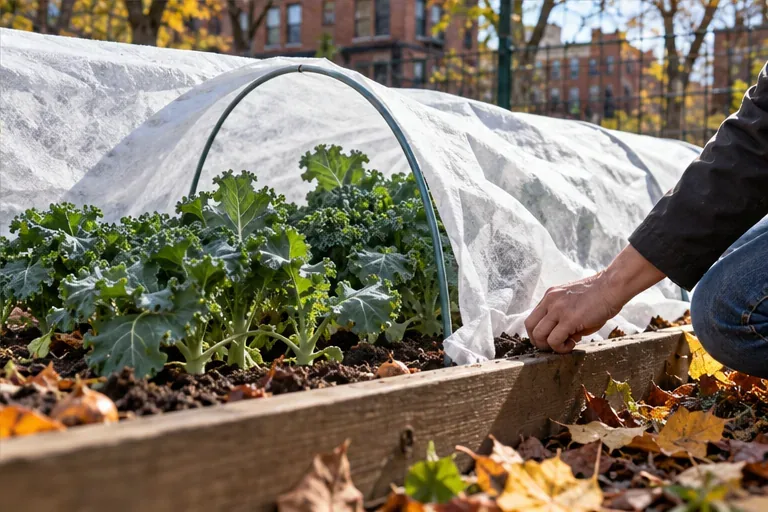
Row cover can buffer established greens against a light frost; secure it before the cold night and remove or vent it as conditions allow.
Match the October choice to your goal
Want next summer's harvest? Plant garlic in early October if you can, recognizing northern Illinois guidance places the ideal window earlier.
Want spring color? Plant hardy bulbs before the ground freezes; prioritize drainage and species-specific depth.
Want fresh leaves in winter? Sow a small microgreens tray indoors or bring suitable potted herbs inside; expect slower growth in short winter light.
Want another outdoor vegetable crop? In Chicago, rely on established fall crops and frost protection rather than a new October direct-sowing plan.
Want to add perennials? Plant early only when the species is hardy for the site and enough root-establishment time remains; otherwise schedule for spring.
For Maya's fictional raised bed and windowsill, the balanced plan is to protect and harvest the established kale, plant a modest row of garlic promptly if she accepts the late timing, tuck in daffodil bulbs, and start one microgreens tray indoors. The key decision is not whether October feels warm on a given afternoon; it is whether a plant has enough time, light, and protection for the job you want it to do.