Would Europe Be Drawn into a Hypothetical U.S.-Israel-Iran Nuclear War? NATO Rules Explained

A guide to NATO Articles 4 and 5, UN self-defense rules, and why consultation does not mean automatic European entry into war.
If you’re trying to lose weight or live a healthier lifestyle, you should be watching what you put into your body. Exercise is important, but it’s not the only thing you need to focus on. Other things like dieting, eating in moderation, and even counting calories are also important.
Counting calories may seem too complicated but if you make it a habit, we have smartphones that can help you live a healthier life.
Here are some of the best calorie counting apps on both Android and iOS mobile platforms.
Why should you control calories?
Counting calories is a subject that has divided opinion. Many people say it doesn’t help, but counting and tracking how much you eat can help guide you to gain or lose weight if necessary. Additionally, counting calories can help you understand your eating habits and help you live a healthier life.
1. MyFitnessPal
It's no surprise that you've heard of MyFitnessPal before. The calorie counting and diet tracking app is used by over 200 million members, and there's a reason it's so big.
MyFitnessPal has been around for over 10 years now and is still growing. You can count calories, track the nutrients in the food you eat, and log your daily eating habits.
You can create your own recipes, easily enter nutritional information. If you eat out, add information about your favorite places to eat so the app can accurately calculate your calorie intake.
2. Lose It!
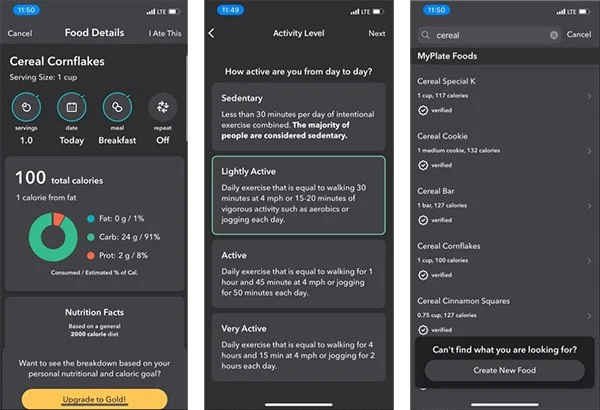
Lose It! is a very useful app to help you lose weight. This calorie counter app is very simple to use and extremely effective.
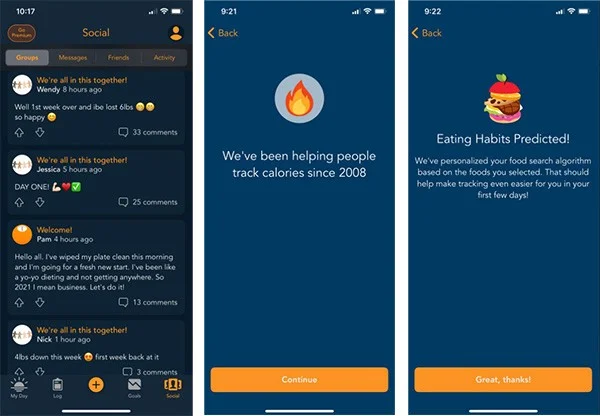
The great thing about the Lose It! app is that counting calories is easy right from the start. When you first open Lose It!, the app will ask you a few questions about your health and weight goals. Based on that information, Lose It! will predict your eating habits to create an algorithm to find foods that are tailored to you.
3. Cronometer
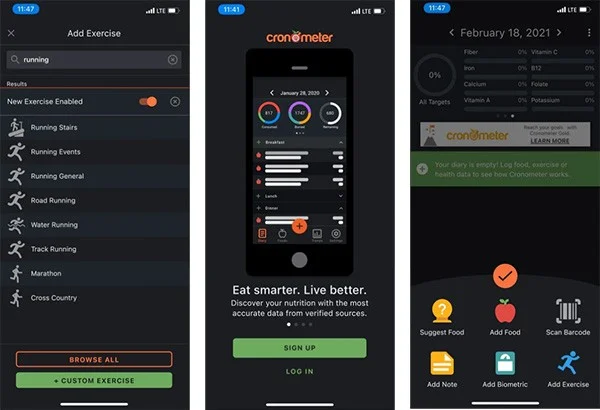
For those who regularly use these types of food diary apps, the free ones are definitely the most preferred. And Cronometer is the best free option. It has a bunch of free features, but you can still pay for the app to use more advanced features.
You can track your food manually or use the scanner to have the app count your calories. Cronometer also tracks your activity. You can use the built-in activities or create your own.
While Cronometers doesn’t have the largest database of food sources and recipes, it does allow you to create your own. When you create a recipe, others can access yours, and vice versa.
4. MyPlate
If you're looking for an app that not only tracks your food and activity, but also creates workout plans and recipes you can follow, try MyPlate.
MyPlate is a complete app that allows you to customize your goals as well as recipes and workouts if you don't know where to start. Once you've entered some personal information and goals, you can start adding all the foods you eat to track your calories.
If you still don't feel satisfied, you can choose from the activities available in the app. The app will have a list of training activities, their difficulty, and the time it takes to complete them.
If you don't have time to exercise, you can try out different recipes. These recipes are all suitable for your body type and they will help you achieve your desired weight goal.
5. HealthifyMe
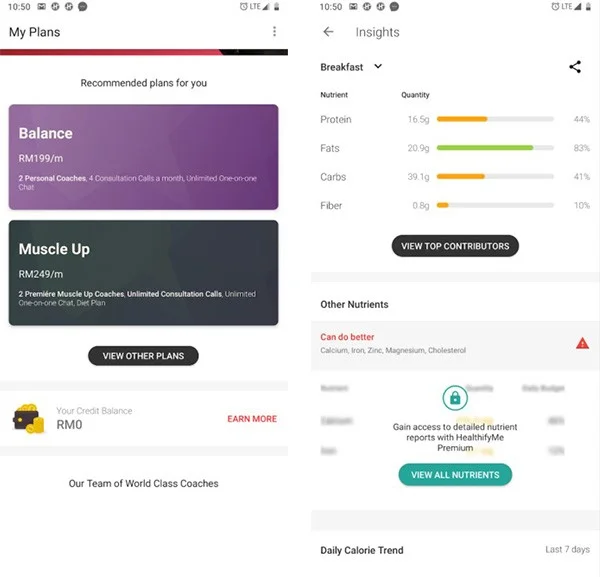
HealthifyMe is one of the best weight loss apps available today. It has a clean and easy to use user interface.
With HealthifyMe, you can easily track your calories and physical activities. Plus, you can choose from a variety of activities in the app and focus on different parts of your body. No matter what part it is, the app has the right workout for you.
What's special about HealthifyMe is that it uses a digestive system enhancement feature that helps you choose the right foods to eat to enhance your digestive system as well as track daily activities like sleeping and how many times you wash your hands.
A guide to NATO Articles 4 and 5, UN self-defense rules, and why consultation does not mean automatic European entry into war.
Assess claims about Iran in six steps, distinguishing uranium enrichment, weapons development and verified possession.
Understand nuclear decision authority in six steps, including US civilian control and the limits of public information about Israel.
A guide to official 2026 evidence on Hormuz shipping disruption, Iran-related claims, confirmed incidents, and what remains uncertain.
A source-based guide to nuclear escalation risks, UN Charter rules and NATO Article 5 in a strictly hypothetical Iran scenario.
Use five steps to prepare for an outage; nuclear and EMP scenarios are hypothetical, and official shelter instructions come first.
Use 5 defensive steps to verify a cyber disruption, protect household accounts, and avoid mistaking an outage for war.
Use these 5 steps to assess climate effects from a hypothetical Iran strike, compare model assumptions, and avoid unsupported predictions.
Explore six steps for reading research on climate, food and ecosystem recovery after a hypothetical nuclear conflict.
Build a practical fallout preparedness kit in six steps, with sealed food and water, a radio, medical supplies and shelter guidance.