How to Prepare for a Hypothetical EMP-Related Power Outage: 5 Civilian Steps
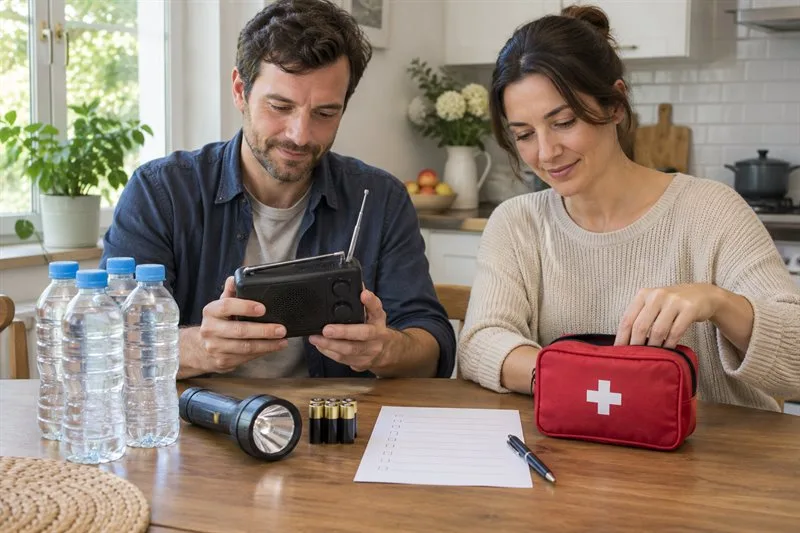
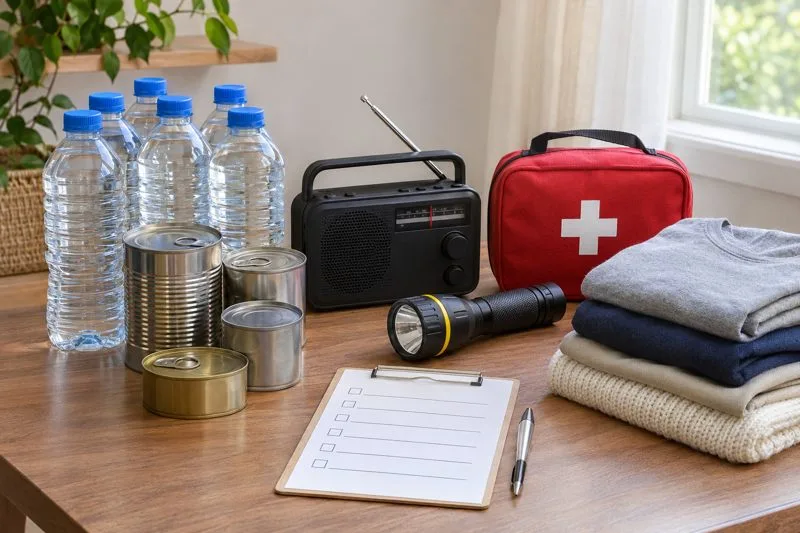
Use five steps to prepare for an outage; nuclear and EMP scenarios are hypothetical, and official shelter instructions come first.
Updated: November 5, 2026. “Nuclear winter after an Iran strike” is a hypothetical scenario, not a report that a nuclear weapon has been detonated in Iran. The word “strike” can refer to conventional military action or an attack on a nuclear-related facility; neither phrase by itself establishes nuclear weapon use. This guide explains how to assess a possible global climate pathway without turning a hypothetical into a forecast. The result is a five-step checklist for describing what climate models do—and do not—say.
In nuclear-winter research, the climate pathway usually begins with fires that produce black carbon and other smoke. If enough particles are lofted high into the atmosphere and persist, they can reduce sunlight at the surface and affect temperature and precipitation. Each link depends on assumptions. A detonation alone does not establish how much soot would be made, how high it would rise, or what climate response would follow.
| Preparation | Details |
|---|---|
| Sources | The 2025 National Academies consensus report and peer-reviewed climate studies that publish their scenario and model assumptions. |
| Time | About 20–30 minutes to review the summary, methods and limitations in several papers. |
| Difficulty | Intermediate. The key is to distinguish a model experiment from a prediction. |
| Working notes | Record the assumed event, fire emissions, soot amount and altitude, model used, results and limitations. |
Begin by writing the scenario in one precise sentence. Is it a conventional attack, damage to a nuclear facility, a radiological release, or the hypothetical detonation of one or more nuclear weapons? These are different events and do not have interchangeable climate pathways. This article considers only a hypothetical nuclear-use scenario and does not claim that one has occurred.
Also separate immediate local effects from a global climate response. Blast, heat, prompt radiation and radioactive fallout are direct hazards near a detonation. Nuclear-winter studies generally examine a different, indirect chain: widespread fires create smoke, some smoke reaches high atmospheric layers, and persistent particles alter how much sunlight reaches Earth’s surface. A facility attack or radioactive release is not, by itself, evidence that this chain occurred.
The National Academies’ 2025 consensus report organizes the problem as a sequence: weapon-use scenarios and effects; fire dynamics and emissions; plume rise, fate and transport; physical Earth-system impacts; ecosystem impacts; and social and economic impacts. Use that sequence as a checklist. If a report jumps from “a weapon was used” directly to a global temperature number, ask what evidence or model assumptions support the missing steps.
At the climate stage, light-absorbing black carbon can heat the air around it while reducing sunlight at the ground. The resulting response may involve temperature, precipitation, atmospheric circulation and stratospheric chemistry. Effects on crops and ecosystems are further steps and require their own models. A claim about global famine, for example, is not simply a climate measurement; it depends on assumptions about harvests, food systems, trade and how people respond.
Look for the number and type of weapons in the scenario, target locations, fuel available to burn, fire spread, season and weather. Then check the modeled amount and composition of emissions—especially black carbon—and the altitude at which smoke enters the atmosphere. These inputs strongly affect how long particles remain aloft.
Published research shows why plume height is a major uncertainty. A 2020 study by Wagman and colleagues found that in its modeled India–Pakistan case, smoke remaining in the lower troposphere was removed relatively quickly, while higher injection could carry more smoke into the stratosphere and produce longer-lasting global effects. Tarshish and Romps’ 2022 plume study found that moisture and latent heating can be important for firestorm plumes to reach the stratosphere, challenging some dry-plume assumptions. Neither result supplies a measured plume for an Iran scenario.
Ask whether the paper estimates emissions from a detailed fire model or inserts a chosen soot amount directly into a climate model. Both approaches can be useful, but they answer different questions. A prescribed soot injection tests how the climate model responds to that input; it does not prove that a particular event would create that amount of soot.
Read the scenario before repeating the result. The often-cited Wagman study modeled a regional exchange involving 100 simultaneous 15-kiloton weapons in India and Pakistan. A newer paper published in Earth System Dynamics on October 23, 2026, modeled 12–24 teragrams of black-carbon injection for hypothetical U.S.–Russia exchanges. Its Canadian Earth System Model simulations showed an early transient surface-warming response in some cases, followed by cooling. The authors say multi-model assessment is warranted. These are distinct model experiments, not forecasts for Iran or for one detonation.
Results can differ because researchers make different assumptions about fires, soot composition, vertical injection, aerosols, atmospheric chemistry, model structure and starting conditions. The National Academies identifies substantial data gaps and uncertainties across the full chain, and calls for model intercomparison to help reduce them. Compare what each study holds fixed, what it calculates and what it leaves outside the model instead of averaging unlike outcomes into one number.
Use language that connects every conclusion to its assumptions. For example: “Under the specified hypothetical scenario, this model simulates a possible change in sunlight, temperature and precipitation; it does not predict the outcome of an Iran strike.” Name the model and scenario, state important unknowns, and distinguish simulated climate effects from measured observations.
If no peer-reviewed study evaluates the scenario being discussed, say so. Do not estimate global cooling from the country name, the phrase “nuclear strike,” or an online plume map. Avoid definitive claims such as “one Iran strike will cause nuclear winter” or “there will be no global effects.” Current research supports conditional pathways and scenario comparisons, not a single Iran-specific forecast. A useful explainer can describe the mechanism while being clear about that limit.
Find the underlying paper and identify the assumed soot amount, injection altitude, event scenario and model. Check whether the number is an observation or a simulated result. If the chart does not disclose those details, do not present the value as a reliable Iran-specific projection.
Compare their methods rather than choosing the more dramatic headline. Fire behavior, plume rise, soot composition, atmospheric removal and climate-model physics can differ. Report the results as a range of model findings only when the scenarios are comparable; otherwise explain why the experiments cannot be directly compared.
No. It is a term for possible climate disruption from smoke and soot under specified nuclear-war scenarios. Its timing, geographic pattern, magnitude and duration depend on the scenario and model. Do not use “permanent” or “worldwide freeze” unless a source supports that exact claim.
The scenario would need to produce fires and emissions, and enough climate-relevant smoke would need to reach and persist in the upper atmosphere. Models would then assess possible changes to sunlight, temperature and precipitation. The word “strike” alone cannot establish any of those conditions.
Not directly. The studies cited here model specified exchanges in other regions or between different countries. Their results help identify mechanisms and uncertainties, but they are not an Iran-specific forecast and should not be scaled to one event without a validated scenario and model.
No. A facility attack could raise separate safety or radiological questions, but nuclear-winter climate studies focus on smoke from large fires following nuclear weapon use. One event does not establish the other; each claim needs evidence suited to that question.
This guide explains how to evaluate a hypothetical climate scenario. It is not a prediction, a weather forecast, or evidence that a nuclear detonation occurred in Iran.
Use five steps to prepare for an outage; nuclear and EMP scenarios are hypothetical, and official shelter instructions come first.
Use 5 defensive steps to verify a cyber disruption, protect household accounts, and avoid mistaking an outage for war.
Use these 5 steps to assess climate effects from a hypothetical Iran strike, compare model assumptions, and avoid unsupported predictions.
Explore six steps for reading research on climate, food and ecosystem recovery after a hypothetical nuclear conflict.
Build a practical fallout preparedness kit in six steps, with sealed food and water, a radio, medical supplies and shelter guidance.
Use six steps to assess Middle East power shifts, test evidence, compare scenarios, and avoid mistaking short-term crisis moves for lasting alliances.
Use five steps to check claims about a hypothetical strike on Iran’s nuclear program, civilian risks, nuclear safety, and diplomacy.
Use 5 steps to assess missile-defense limits in a hypothetical Iranian nuclear counterstrike without treating defense as a guarantee.
Use this 5-step guide to assess AI target-prediction claims, check uncertainty, and keep human judgment central.
Use these 5 steps to choose a safer home shelter, prepare supplies, and respond to radiation alerts; no DIY shield replaces a solid building.