How to Prepare for a Hypothetical EMP-Related Power Outage: 5 Civilian Steps
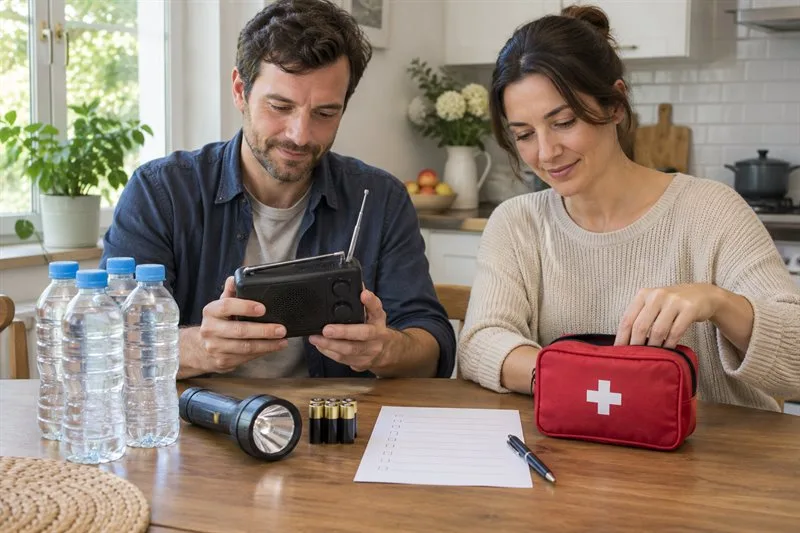
Use five steps to prepare for an outage; nuclear and EMP scenarios are hypothetical, and official shelter instructions come first.
Updated: November 6, 2026. A slow website, failed payment, or internet outage can be worrying, especially when news is already intense. It does not, by itself, show that a cyberattack occurred, that a state is responsible, or that a world war is underway. This guide offers five defensive steps for checking digital disruptions and protecting household accounts without amplifying claims about “WW3.” It does not predict a conflict.

Dated UN and OCHA reports describe military strikes and airstrikes during the 2026 conflict in Iran, and document resulting humanitarian effects. Those reports do not establish that a particular civilian outage was caused by cyber activity, nor do they confirm nuclear weapon use. Treat an outage, a confirmed cyber incident, attribution to a state, a conventional military attack, and a nuclear detonation as distinct claims, each requiring its own evidence.
| Preparation | Details |
|---|---|
| Useful tools | Your service provider’s official status or support channel, a trusted device, and account recovery details. |
| Time | About 10–15 minutes to verify a disruption and secure an important account. |
| Difficulty | Easy. You can complete the steps in order and ask your provider for help at any point. |
| Goal | Restore what you can, protect personal accounts, and share only information that an official source confirms. |
Write down what you can directly observe: which app or service is affected, what time it started, what error appears, and whether other people using the same provider report the same issue. A service may fail because of maintenance, a network problem, a software bug, equipment failure, human error, weather, or a malicious act. The visible symptom alone usually cannot distinguish among these causes.
CISA and FEMA’s planning guidance for cyber incidents notes that a disruption’s cause can be unclear at first and may take investigation to determine. It includes non-malicious causes as well as intentional attacks. This is why “my bank app is down” is a useful observation, while “a foreign government attacked the bank” is an attribution claim that requires additional evidence.
Keep the problem specific. If one account will not load, do not infer that the national power grid or financial system has been attacked. If a phone network is disrupted, do not infer that nuclear weapons have been used. Do not post personal account details, verification codes, or screenshots containing sensitive information while trying to get help.
Use the company’s official website or app, a verified customer-support channel, a local government notice, or your national cybersecurity authority. If the suspected service is unavailable, check from a separate connection or contact the provider using a phone number already printed on a bill, card, or official document. Avoid links in urgent texts or direct messages; open the provider’s known address yourself.
For a claim about who is responsible, look for a direct statement from a recognized authority and note its date and confidence. Early reports may confirm an outage without establishing whether it was caused by an attack, who carried it out, or whether it is connected to a conflict. CISA’s national cyber incident response plan treats forensic investigation and attribution as separate tasks and calls for confidence levels when assigning responsibility. It is reasonable for experts to say that the cause is still under investigation.
In an April 2025 alert about a power outage in parts of Southern Europe, ENISA described online claims falsely linking the outage to cyberattacks as disinformation and advised people to consult official sources. If a post has no named source, uses an alarming image without context, or claims that a local outage proves “WW3,” do not repost it as fact. Wait for a provider, local authority, or national cybersecurity agency to publish an update.
Use CISA’s basic “Secure Our World” habits: turn on multifactor authentication (MFA), use a password manager to create long and unique passwords, install software updates, and recognize and report phishing. Start with email, financial accounts, cloud storage, and social-media accounts, because access to one important account can expose other services.
When an email or text says your account will be closed unless you click immediately, do not use its link or attachment. Open the service’s official app or type its known web address yourself. Never share a one-time login code with someone who contacts you. A legitimate support agent should not ask you to send a security code or password in a chat.
Make sure your recovery phone number and email address are current. If the service offers passkeys or a security key as an MFA option, use a method you can keep available and recover if your phone is lost. Keep your phone and computer’s operating system, apps, and browser updated through their normal settings. These steps reduce common account risks but cannot prevent every incident.
If you suspect someone accessed an account, use a trusted device to visit the provider directly, change that account’s password, turn on MFA, and review its recovery methods and recent sign-ins if the provider offers that option. Contact the provider through its official support channel. If payment or bank information may be involved, contact the bank using the number on your card or statement and follow its fraud-reporting instructions.
If a device displays a ransom demand or security warning, do not follow contact details supplied in the warning and do not install a “fix” from a pop-up. Disconnect the affected device from Wi-Fi or its network if you can do so safely, then contact the device maker, your employer or school IT desk, or a qualified support professional. Do not try to investigate the source of an attack or access someone else’s systems. Save the message or a screenshot if it does not expose private information, and report the incident to the relevant service provider or national cybercrime/cybersecurity authority.
For an ordinary outage, use the provider’s status page, wait for its update, and avoid repeated password resets or factory resets unless the provider’s support team recommends them. An outage can be frustrating without being a security emergency. Follow official guidance and protect your account information while service is restored.
For services you depend on, keep a short list of support contacts and one alternative way to reach family, work, school, or your bank. Store an offline copy of important contact information in a safe place. Keep copies of important files using a reputable backup option, and check periodically that you can access them. Choose steps that match ordinary risks where you live rather than preparing for a world war based on an online rumor.
If a cyber incident is confirmed, describe only what the official statement says: the affected service, the time period, what users should do, and what is still under investigation. Do not name a country, military, or group unless an authoritative source does so with an explanation of its confidence. Do not claim a link to nuclear warfare unless officials provide evidence for that separate event. CISA, ENISA, and the relevant national authority are useful places to check for public cyber guidance; local emergency authorities remain the source for instructions that affect your safety.
You may not be able to tell from the symptom alone. Check the provider’s official status page or contact its support using a trusted route. If several services are affected, your internet provider or local authority may have relevant updates. Treat the cause as unknown until a qualified source confirms it.
Do not click the message’s link, open its attachment, or reply with a password or verification code. Go to the service directly using its known app or address, check account notices there, and report or delete the suspicious message. Use multifactor authentication and unique passwords on important accounts.
Do not forward the claim without evidence. Ask for the official source, date, and exact statement. A cyber disruption does not prove a military conflict, a nuclear detonation, or a particular actor’s involvement. If authorities have not confirmed the link, describe it as unverified.
No. An outage can have many technical or operational causes. It does not establish a cyberattack, responsibility, or a world war. Use provider and government updates for facts that affect you, and avoid treating speculation as confirmation.
No. Cyber incidents involve digital systems or services; nuclear warfare involves nuclear weapon use. One does not prove the other. A claim connecting a cyber disruption to nuclear use needs independent, authoritative evidence.
CISA recommends multifactor authentication, unique strong passwords stored in a password manager, software updates, and caution with phishing. Keep recovery information current and contact providers through official channels when something looks wrong.
This guide provides general, defensive information for households. It does not assess a specific incident or attribute a cyber operation to a state, conflict, or nuclear event.
Use five steps to prepare for an outage; nuclear and EMP scenarios are hypothetical, and official shelter instructions come first.
Use 5 defensive steps to verify a cyber disruption, protect household accounts, and avoid mistaking an outage for war.
Use these 5 steps to assess climate effects from a hypothetical Iran strike, compare model assumptions, and avoid unsupported predictions.
Explore six steps for reading research on climate, food and ecosystem recovery after a hypothetical nuclear conflict.
Build a practical fallout preparedness kit in six steps, with sealed food and water, a radio, medical supplies and shelter guidance.
Use six steps to assess Middle East power shifts, test evidence, compare scenarios, and avoid mistaking short-term crisis moves for lasting alliances.
Use five steps to check claims about a hypothetical strike on Iran’s nuclear program, civilian risks, nuclear safety, and diplomacy.
Use 5 steps to assess missile-defense limits in a hypothetical Iranian nuclear counterstrike without treating defense as a guarantee.
Use this 5-step guide to assess AI target-prediction claims, check uncertainty, and keep human judgment central.
Use these 5 steps to choose a safer home shelter, prepare supplies, and respond to radiation alerts; no DIY shield replaces a solid building.