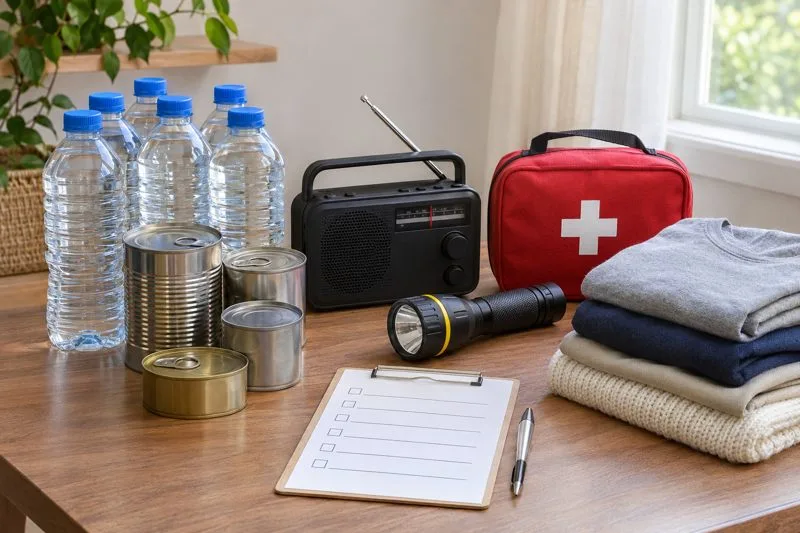
How to Prepare for a Hypothetical EMP-Related Power Outage: 5 Civilian Steps

Use five steps to prepare for an outage; nuclear and EMP scenarios are hypothetical, and official shelter instructions come first.
There is no single scientifically defensible date when Earth would “recover” from a hypothetical nuclear war. Researchers model different scales of conflict and track different measures, from atmospheric ozone to crop output and ocean temperatures. Those measures can recover on different schedules, and damage to people and ecosystems cannot be reduced to one global number.
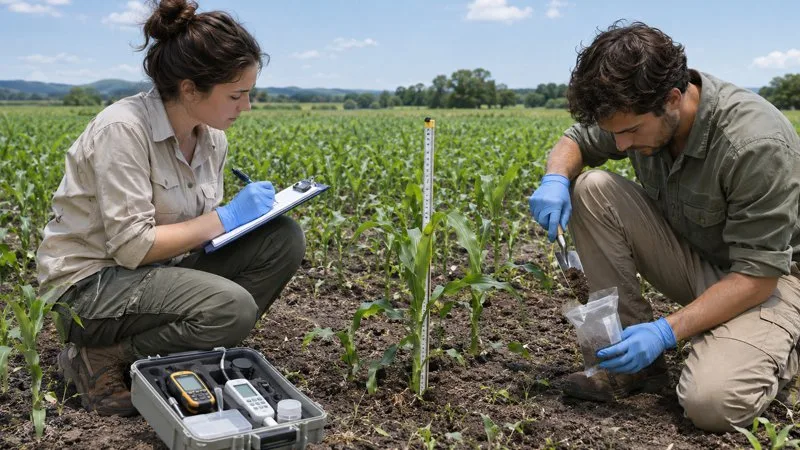
Some published simulations show climate disruption lasting around a decade, while a separate model found ozone recovery after roughly 12 years in a specific regional-war scenario. These are conditional model results, not observed recovery after such a conflict or a forecast for every use of a tactical nuclear weapon. No such event is being asserted here.
For atmospheric scientists, recovery might mean a modeled global average returning near a baseline. A farmer may instead need rainfall, growing-season length, functioning equipment, seed supply and market access. An ecosystem assessment could focus on species, soil, water or habitat. Returning one measured quantity to its previous level does not establish that all the others have recovered.
Consider both place and baseline. A global average can conceal severe local damage, while comparing a future result with prewar conditions ignores other ongoing changes, including climate warming. Studies often use a control simulation: a model run representing what would have happened without the hypothetical war. Recovery relative to that control is not the same as returning every community or habitat to its former state.
The label “tactical” generally describes the intended role of a weapon; it does not specify how many weapons are used, where fires occur, or how much smoke enters the stratosphere. Those details matter to modeled global effects. A single detonation, an exchange involving many weapons and an exchange involving large urban fires cannot automatically be assigned the same recovery time.
Climate studies often express the assumed mass of soot reaching the upper atmosphere in teragrams (Tg); one teragram is one million metric tons. That soot amount is an input to a scenario, not a guaranteed consequence of a particular weapon. Fire behavior, weather, targets and the height smoke reaches introduce uncertainty before the climate model is even run.
In the six soot-injection scenarios studied by Xia and colleagues in Nature Food, climate effects peaked during the first few years and lasted about a decade. Their simulations coupled changes in climate to crop and fish production. Those time frames apply to the scenarios modeled; they are not a universal rule for every nuclear event.
Food availability can fall quickly while the system is still far from a recovery phase. Production, stored food, distribution and trade interact, and damage to infrastructure or institutions could alter outcomes in ways a global crop model cannot fully represent. A return toward a climate baseline would not instantly replenish lost harvests, rebuild transport or restore household incomes.
A 2021 study in the Journal of Geophysical Research: Atmospheres simulated atmospheric chemistry for scenarios involving 5 Tg and 150 Tg of soot. In its 5 Tg regional scenario, modeled global column ozone fell by about 25% at its peak and recovered in about 12 years. In the much larger 150 Tg scenario, the authors described a 15-year reduction in the ozone column.
Ozone helps absorb harmful ultraviolet radiation. The modeled ozone timescale is a useful atmospheric example, not a promise that forests, food systems or cities would recover after 12 years. The scenarios represent assumed soot injections, and results depend on the model's chemistry and treatment of smoke. Other assumptions or models can produce different timings.
The Nature Food study estimates crop and marine food production across its scenarios. It found that the modeled effects varied substantially with soot loading; in the largest case, global average crop calorie production fell dramatically in the first several years. These modeled food-production changes are not the same thing as a precise prediction of how many people would be fed in every region, because distribution, adaptation, trade and conflict conditions matter.
Ocean processes can respond more slowly than the atmosphere. A peer-reviewed study in AGU Advances found that ocean temperature remained anomalous through the water column at the end of its simulations. That result does not prove that every marine species would recover on the same schedule; it shows why a single date for the entire planet is misleading.
Local ecosystem recovery would depend on the damage, contamination, species and habitat involved. Some changes could persist after a global atmospheric variable improves, and a lost population or species may not be restored merely because temperature returns toward a control value. The cited climate and food models do not provide a universal ecological restoration deadline.
When you encounter a claim such as “the planet recovers in 12 years,” ask: which planet-wide variable, which soot amount, which model and what baseline? Look at the end of the simulation as well: if a variable is still changing when a model run ends, the study has not established when it returns to baseline.
Compare independent studies and distinguish a peer-reviewed model from observed evidence. Researchers cannot experimentally reproduce a nuclear war on Earth, so models are indispensable but depend on assumptions about fires, atmospheric transport, climate and food systems. Their uncertainty is a reason to state conditions clearly, not to assume either zero harm or a certain worst-case outcome.
No. The studies discussed use particular hypothetical soot injections. Global consequences depend on what burns and how much smoke reaches the upper atmosphere; a universal decade-long outcome cannot be inferred from the word “tactical.”
No. That figure refers to modeled ozone recovery in one 5 Tg scenario. It does not set a recovery date for agriculture, ecosystems or human communities.
No. They simulated hypothetical conditions to examine possible consequences. Their results should not be reported as evidence that a nuclear conflict has occurred or is inevitable.
Use five steps to prepare for an outage; nuclear and EMP scenarios are hypothetical, and official shelter instructions come first.
Use 5 defensive steps to verify a cyber disruption, protect household accounts, and avoid mistaking an outage for war.
Use these 5 steps to assess climate effects from a hypothetical Iran strike, compare model assumptions, and avoid unsupported predictions.
Explore six steps for reading research on climate, food and ecosystem recovery after a hypothetical nuclear conflict.
Build a practical fallout preparedness kit in six steps, with sealed food and water, a radio, medical supplies and shelter guidance.
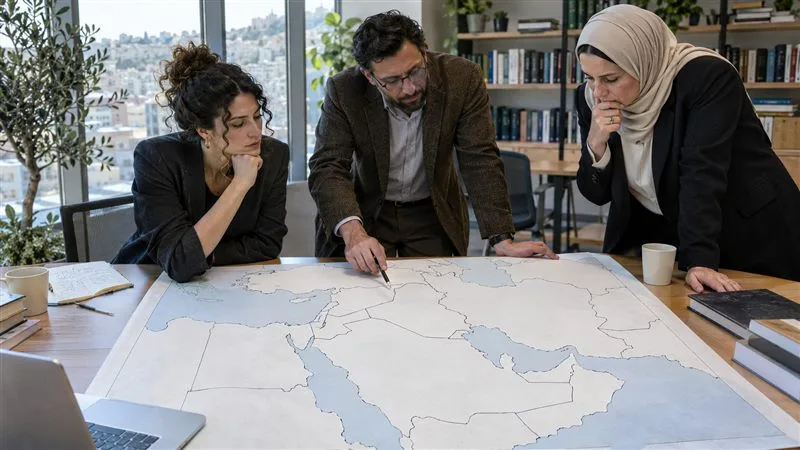
Use six steps to assess Middle East power shifts, test evidence, compare scenarios, and avoid mistaking short-term crisis moves for lasting alliances.
Use five steps to check claims about a hypothetical strike on Iran’s nuclear program, civilian risks, nuclear safety, and diplomacy.
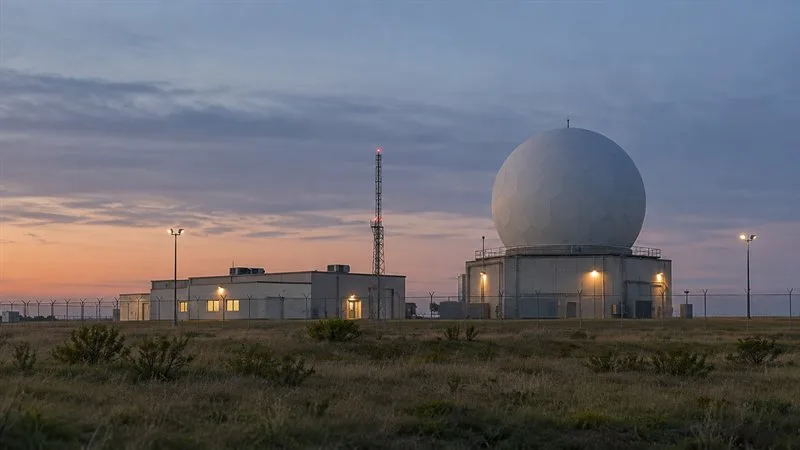
Use 5 steps to assess missile-defense limits in a hypothetical Iranian nuclear counterstrike without treating defense as a guarantee.
Use this 5-step guide to assess AI target-prediction claims, check uncertainty, and keep human judgment central.
Use these 5 steps to choose a safer home shelter, prepare supplies, and respond to radiation alerts; no DIY shield replaces a solid building.