US and Israel Nuclear Authority: What Public Sources Actually Explain

Understand nuclear decision authority in six steps, including US civilian control and the limits of public information about Israel.
Updated November 6, 2026. This guide reviews official reporting about shipping through the Strait of Hormuz during the 2026 Middle East conflict. The conflict and serious shipping disruption are documented. The sources cited here do not establish one continuous, formally declared blockade across all dates, or prove that any future blockade is certain.
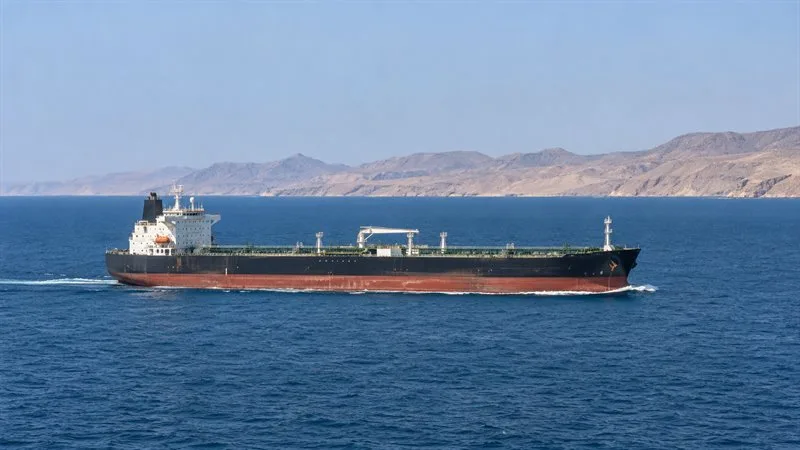
The word "blockade" can refer to a formal restriction, a period when officials describe the Strait as closed, or a severe fall in commercial traffic because of conflict, risk warnings, insurance limits, and operators delaying voyages. These conditions can overlap, but they are not identical. A careful account states what happened, who reported it, and when.
The International Maritime Organization (IMO) dates the conflict's start to February 28, 2026, and has described ongoing shipping and seafarer disruption. A dated Joint Maritime Information Center (JMIC) advisory said there was no formal closure communicated through recognized maritime safety channels at that time. Later, the U.S. Energy Information Administration (EIA) described a closure that significantly limited exports in the second quarter. That economic description documents severe disruption; it does not, by itself, verify that a formal legal closure or blockade was declared. On April 17, the United Nations welcomed Iran's announcement that the Strait would be open to commercial vessels for the remainder of the ceasefire. The record therefore needs to be read as a timeline, not as one unchanged status.
In this guide: distinguish a formal notice from disrupted traffic; build a dated timeline; read incident counts carefully; understand what energy-flow estimates show; and treat future blockade claims as uncertain scenarios.
Start with the precise claim and the date it concerns. In its February 28, 2026 advisory, JMIC reported media accounts and vessel-to-vessel communications that said transit had been banned. The advisory said that, at the time, no official closure had been formally communicated to the maritime industry through recognized safety channels. It also reported that commercial traffic had fallen but was still transiting.
This finding applies to that advisory's time and information. It should not be used to dismiss later disruption. Conversely, a sharp decline in traffic does not automatically prove that a formal closure notice was issued. The word "blockade" should not be used as a settled legal or operational finding unless a dated primary source establishes what was declared, by whom, and for what period.
The IMO says the conflict in the Middle East began on February 28. On March 11, the UN Security Council adopted Resolution 2817, reaffirmed that merchant and commercial vessels' navigational rights and freedoms must be respected, and condemned actions or threats by Iran aimed at closing or obstructing navigation through the Strait. The resolution records the Council's position and call for restraint. It is not a daily vessel count and does not, by itself, prove a complete closure.
On April 17, the UN Secretary-General's spokesperson welcomed Iran's announcement that the Strait would be open to commercial vessels for the remainder of the ceasefire. That announcement was time-limited. It cannot establish the status before the announcement or months later. Compare the February 28 JMIC advisory, the March 11 Security Council resolution, and the April 17 UN statement as separate points in the timeline.
The IMO says it validates commercial-ship incident data using information from flag States, coastal States, and credible, verified third parties. As of November 5, 2026, its confirmed-incident tracker listed 129 incidents and 24 seafarer fatalities. The IMO describes the tracker as covering the Persian Gulf, Strait of Hormuz, and Gulf of Oman regions, so those totals should not be presented as 129 events all occurring inside the Strait.
A confirmed incident count is a measure of documented harm and danger to crews. It is not automatically proof of who was responsible for every incident. Check each entry's date, location, and description before making an attribution. The IMO's confirmed-incident list and regional situation page provide the current scope and validation notes. The situation page was still describing ongoing instability when checked on November 6; its linked incident list was updated November 5.
EIA's October 6 Short-Term Energy Outlook estimated total oil flows through Hormuz at 21.6 million barrels per day in the fourth quarter of 2025, 14.9 million in the first quarter of 2026, and 4.9 million in the second quarter. The figures show a steep estimated reduction. They do not tell readers why an individual vessel sailed or waited, and they do not reveal a government's full strategy.
EIA cautions that Automatic Identification System (AIS) signals for ships transiting the Strait became especially unreliable after the end of February 2026. Its estimates use tanker-tracking information supplemented by additional analysis, and EIA says figures are revised as information changes. In a November 3 analysis, EIA reported a partial third-quarter recovery in refinery inputs as more Middle Eastern crude reached markets through increased Strait flows, alternative routes, and ship-to-ship transfers. It also said global refinery inputs remained about five percent below the same period in 2025. Read the EIA flow data and methodology notes alongside its November 3 refinery analysis. Quarterly flow estimates and real-time safety advisories answer different questions.
Conflict-related shipping disruption is established by official reporting. The IMO's current situation page describes continuing instability, and EIA documents a major effect on oil flows and refinery inputs. At the same time, the sources cited here do not establish a single, formally notified blockade that remained in place continuously through all of 2026. JMIC's February notice is historical; EIA's use of "closure" describes a severe economic and shipping constraint in the second quarter, not a legal determination of a formal blockade.
A future closure or blockade is a scenario, not a certainty. Past restrictions and threats do not prove a fixed plan to close the Strait again. Do not describe a specific "retaliation strategy" as established unless a dated, attributable primary source supports that claim. For current reporting, check the publication time on the latest IMO updates and UKMTO/JMIC products. Older advisories are useful for the historical record, not as live navigational guidance.
The sources cited here document conflict, serious shipping disruption, and official statements about restrictions and navigation. JMIC said on February 28 that no formal closure had been communicated through recognized maritime safety channels at that time. EIA later described a closure that limited exports in the second quarter, but that economic description does not by itself verify a formal legal declaration. State the date and kind of evidence instead of making a blanket claim.
The dated record does not establish one unchanged status for the full year. JMIC reported reduced but continuing transit on February 28; the UN reported Iran's ceasefire-period open announcement on April 17; and EIA later documented severe second-quarter trade effects. Each describes a different date or measure.
No. Official warnings and past disruption do not establish what Iran will decide in the future. Treat a possible future closure as an uncertain scenario unless a current, attributable source documents a specific decision.
Understand nuclear decision authority in six steps, including US civilian control and the limits of public information about Israel.
A guide to official 2026 evidence on Hormuz shipping disruption, Iran-related claims, confirmed incidents, and what remains uncertain.
A source-based guide to nuclear escalation risks, UN Charter rules and NATO Article 5 in a strictly hypothetical Iran scenario.
Use five steps to prepare for an outage; nuclear and EMP scenarios are hypothetical, and official shelter instructions come first.
Use 5 defensive steps to verify a cyber disruption, protect household accounts, and avoid mistaking an outage for war.
Use these 5 steps to assess climate effects from a hypothetical Iran strike, compare model assumptions, and avoid unsupported predictions.
Explore six steps for reading research on climate, food and ecosystem recovery after a hypothetical nuclear conflict.
Build a practical fallout preparedness kit in six steps, with sealed food and water, a radio, medical supplies and shelter guidance.
Use six steps to assess Middle East power shifts, test evidence, compare scenarios, and avoid mistaking short-term crisis moves for lasting alliances.
Use five steps to check claims about a hypothetical strike on Iran’s nuclear program, civilian risks, nuclear safety, and diplomacy.