Home
» Wiki
»
5 Features That Need to Change to Make Your Smart TV Perfect
5 Features That Need to Change to Make Your Smart TV Perfect
You love your Smart TV . You use it every day and it's great. But that doesn't mean it's perfect. In fact, Smart TVs are missing a lot of features to be truly perfect.
1. Perfect black levels, higher brightness and no risk of burn-in on OLED screens
Many consider OLED to be the best display technology. It has deeper blacks, better contrast ratios, faster response times (for gaming), and wider viewing angles than other display technologies. However, while it is considered the best, it is not perfect. One of the main concerns with OLED panels is the risk of burn-in, especially since most manufacturers do not cover this defect under warranty.
While there are ways to fix or avoid burn-in on OLED displays, they are not a perfect solution. Therefore, improving OLED to eliminate the risk of burn-in and improve longevity while retaining all the advantages of the technology would be a real breakthrough. Also, imagine if OLED could deliver the coveted peak brightness on an LCD panel. That way, we get all the benefits of OLED without the drawbacks.
2. Automatic calibration with contextual environment integration
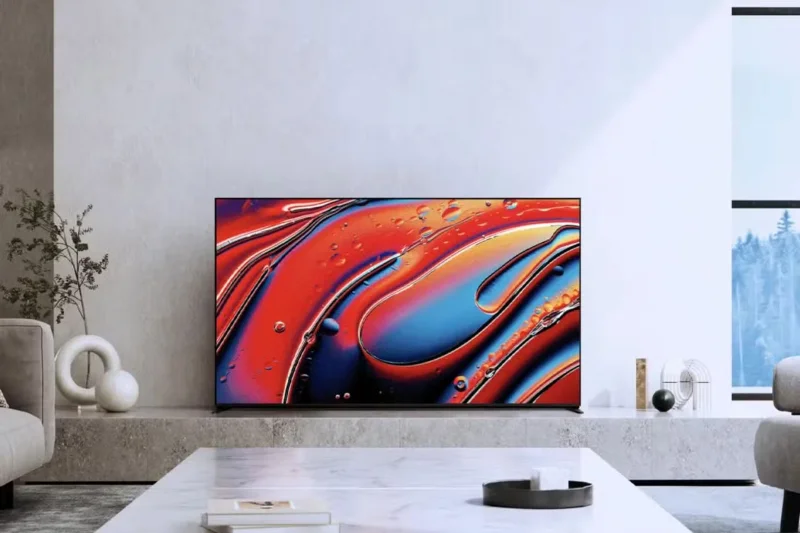
Sony Bravia 9 85 inch QLED 4K TV
When you buy a new TV, it is often not well optimized for the best picture quality. That is why some people seek the help of professionals to calibrate their TV. This process involves adjusting the brightness, contrast, black levels, gamma, temperature, tint, etc. With so many variables to adjust, calibration is not easy, which is why professionals exist.
The best thing TV manufacturers can do to help everyday users is to offer auto-calibration. So when you buy a new TV and put it in your living room, bedroom, or wherever you’ll be watching it, you can simply use the auto-calibration feature to adjust various variables for the best picture quality.
With a built-in light sensor, the TV can detect temperature and brightness throughout the day and automatically recalibrate for the best viewing experience. To be fair, Samsung Smart Calibration does offer this feature, but I’d like to see it become a universal option on all TVs. Then no one has to endure a bad viewing experience.
3. Excellent sound quality, no external speakers needed
One of the biggest issues with TVs today is built-in audio. You’ll often see manufacturers touting how their new TVs are getting even better built-in audio by including speakers from reputable audio brands like Bose. But don’t be fooled. If you want great sound from your brand new TV, regardless of price, you’ll need to buy a dedicated audio system.
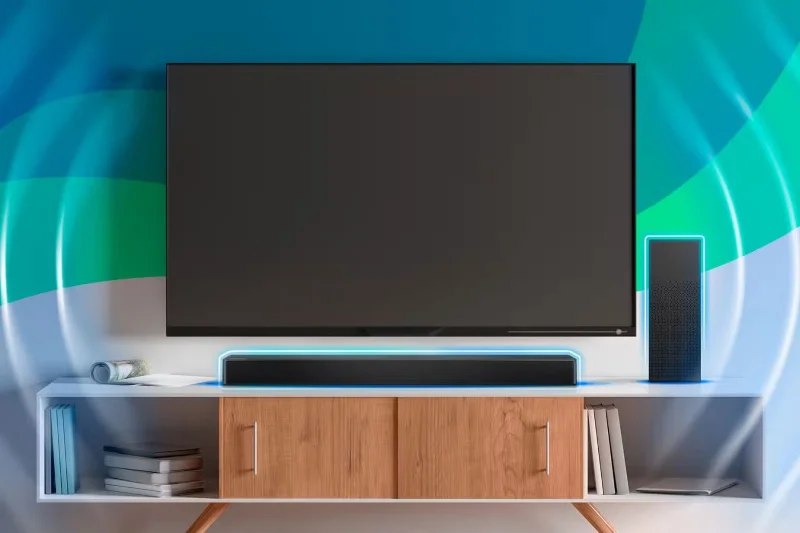
It’s no surprise that the same company that makes TVs also sells different sound systems like soundbars and speakers. Whether you buy a soundbar or speakers, they will deliver superior sound quality than the built-in sound of your TV. But what if companies invested in improving the built-in sound system so that you don’t need to buy a soundbar to get great sound?
Having great picture and sound quality in one device would be great. And let's say you are an audiophile or have high-end audio taste. In that case, you can supplement it with an external sound system.
4. Modular upgradeable hardware
You don't upgrade your TV often, and for good reason. TVs are more durable, upgrades are incremental, and they have limited uses beyond content viewing, gaming, etc. So it doesn't make sense to upgrade your TV every few years just because a few hardware components like the processor and memory are outdated, especially as apps demand more storage space and processing power over time.
It would be great if companies created a modular, upgradeable hardware system with replaceable components like memory, storage, and processors. Then, if your TV feels sluggish, you can add more memory or swap out the processor to improve performance.
This would be much better than relying on software tweaks to improve Android TV performance. Upgradable hardware would also help improve longevity, which is good for the environment.
5. "Dumb TV Mode" to turn off smart features on demand
It’s hard to find a traditional TV these days. While there are a few places you can buy them, there are far fewer models on the market than there are Smart TVs. Worse still, you probably won’t find any with large screen sizes like 55 inches or more. Smart TVs have their downsides, though, so it’s no wonder many people want traditional TVs to make a comeback. But it’s not necessarily a revival of traditional TVs.
A better approach would be to combine the two. For example, they could create a regular Smart TV but give users a “Dumb TV Mode” that turns off all the smart features and turns the TV into a basic display without all the apps, data tracking, internet connectivity, etc.
This will make the TV more versatile and work best for both users who want smart features and those who prefer to have a traditional TV.