Home
» PC Tips
»
6 ways to fix the error of not being able to backup files on Windows PC
6 ways to fix the error of not being able to backup files on Windows PC
Backing up important files is essential to check and store important system files or personal data to protect you from data incidents.
There can be many reasons for backup problems and this article will try to cover all of them. Let's look at the best ways to fix your backup problems on Windows.
Reasons why you can't backup files on Windows
Like anything in technology, you can experience backup failures for a variety of reasons. Here are a few of them:
Insufficient Disk Space : This cause is very common. If you have little or no free space, you will definitely encounter one error or another.
Hardware Problems : If the hardware you're trying to back up your files to is broken - whether it's a USB stick or your drive driver itself - then you should definitely perform a quick backup.
Corrupted system files : Your system files are vital to many things in Windows. When it comes to backups, they are responsible for everything from managing disk activity, which is essential for performing essential functions like creating, copying, and moving files.
Malware : Do you suspect you have malware on your PC? If so, it's no wonder you may be unable to perform a number of important Windows functions, performing regular Windows backups being one of them.
How to Fix Backup Errors on Windows PC
While the points presented above may be the main reasons why you are having backup problems, it is not always easy to pinpoint the exact cause. This article has put together a series of fixes that will help you get rid of complex Windows backup problems that can cause you serious problems.
1. Check hardware
Sometimes it is not uncommon to encounter hardware problems with your Windows. If that happens to your hard drive, USB, or wherever you are trying to create your backup, you will definitely encounter backup errors.
2. Check system files
System files are specific files or applications that your Windows relies on to perform basic functions and other essential tasks. As discussed in our guide to system files , corrupted file systems can lead to a variety of problems, such as application crashes and other software or hardware failures.
So, if you suspect that your system files need cleaning, you should go through the above guide on cleaning up system file errors. The guide has covered all the possible methods that can help you restore your system files back to normal.
Don’t panic if this doesn’t fix your Windows backup issues, though; move on to the method below and see if changing your backup settings helps.
3. Check backup settings
The simplest solutions are often overlooked. Before you perform any complicated fixes, this article recommends trying this simple workaround: Check your backup settings.
If you haven't looked at your settings in a while, and especially your backup settings, now might be a good time to do so.
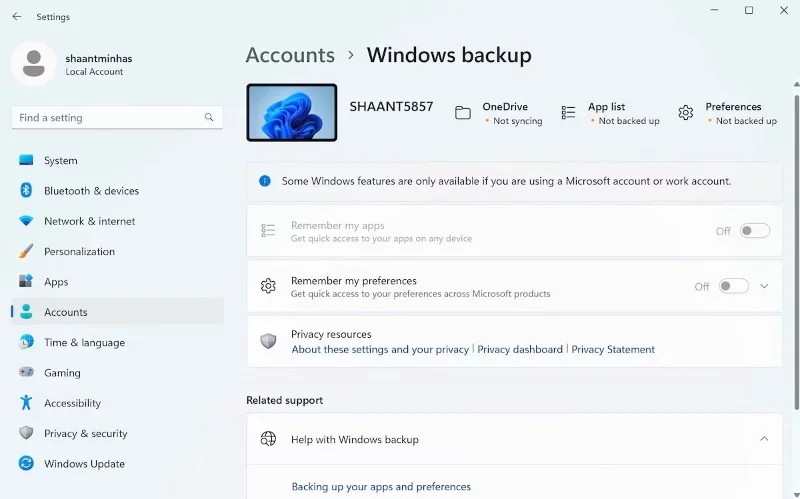
To check backup settings on Windows 11, follow the steps below:
Go to the search bar in the Start menu, type settings and select the best match.
Go to Accounts > Windows backup .
Once inside, you can change the following settings from there:
Sync OneDrive folders
List of applications
Application options
Windows backup settings
The method on Windows 10 is a little different. Here's how to do it:
Go to the search bar in the Start menu, type settings and select the best result. Alternatively, you can press the Windows key + I shortcut.
Select Accounts > Sync your settings .
From here, select your settings, such as language preferences, color themes, etc.
Reset all settings here and see if this affects your PC backup process.
4. Scan for malware
A malware attack can do all sorts of things to your PC. It can lock you out of your files, steal sensitive information, and in this case, prevent you from making your backups. Check out our malware removal guide and get rid of malware that may be causing backup problems on your Windows PC.
5. Check backup storage capacity
If your storage space is full, it's understandable that you'll encounter backup errors. Whether it's full due to previous backups, a system restore, or some other related reason (such as a disk failure), unless you eliminate the underlying cause first, you'll likely be unable to continue with the backup.
Check out this quick guide on how to free up storage space on Windows and reclaim your storage. Once your storage is back to normal or if there are no issues with it, read our quick guide to backing up Windows to learn about the best backup methods at your fingertips.
6. Restore factory settings
If none of the above methods work, a full Windows reset is your last hope. Once you're done, your PC should be back to normal.