Restore Bluetooth Headset Microphone Input on Ubuntu 24.04
Get your Bluetooth headset mic working by selecting the right input, using a hands-free audio profile, and checking Ubuntu’s PipeWire route.
When connecting an external monitor to your Windows PC, you may encounter an "Input Signal Out of Range" error. This error typically occurs if you have a high refresh rate monitor connected to a lower-end graphics device. Additionally, lack of support for higher resolutions on your monitor or graphics card is another common cause of this error.
To fix this error, you can change your screen resolution to match your video card resolution. Additionally, reducing the screen refresh rate to the standard 60Hz can help you fix the error. Here's how to do it.
1. Change the screen resolution to Windows recommended setting
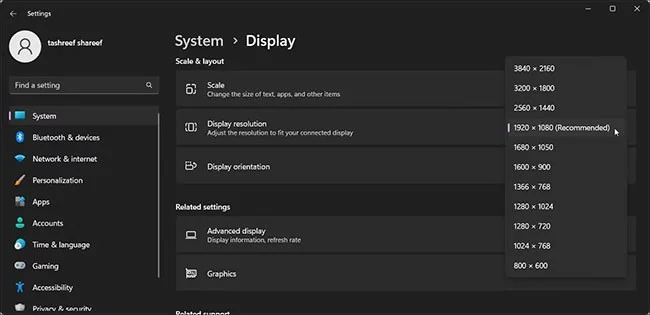
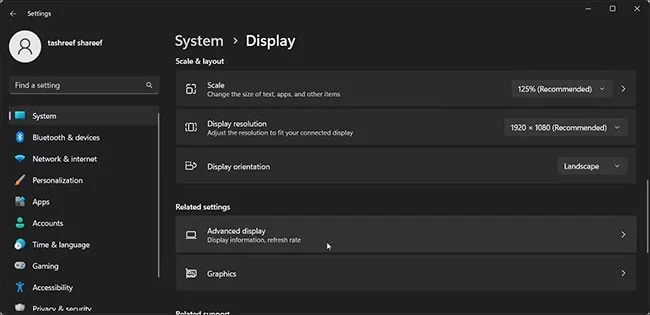
One way to fix the “Input Signal Out of Range” error is to set the screen resolution recommended by Windows. Usually, the error message displays the recommended screen resolution, making it easier to identify and configure the display settings. If not, Windows can automatically detect and suggest it in the Settings app.
On a single monitor setup with no video signal, you'll need to boot into Safe Mode to see your display settings. So check out our guide on how to boot into Safe Mode on Windows and then follow the steps below.
To change your screen resolution:
2. Reduce the refresh rate on the screen
High refresh rate monitors are great for work and gaming. However, if you have an older video card, the high refresh rate of a modern monitor can cause an "Input Signal Out of Range" error.
To fix this error, try reducing the screen refresh rate to the standard 60Hz. Once the error is fixed, you can use the options to find a higher refresh rate configuration without the error.
Again, perform these steps in Safe Mode if you have a single monitor setup.
To change the screen refresh rate on Windows:
1. Press Win + I to open Settings.
2. In the System tab , scroll down and click Display.
3. Scroll down to the Related settings section and click Advanced display.
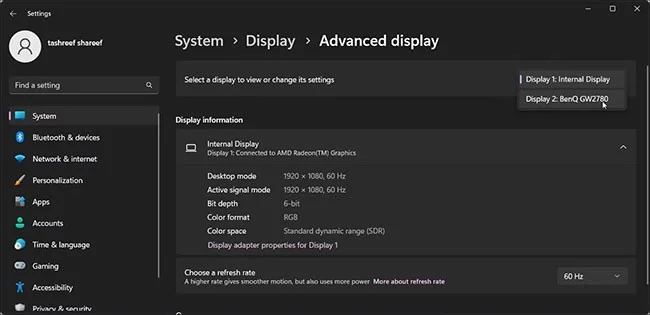
4. Click the Select a display to view or change its settings drop-down menu and select your display. For a single display setup, just move on to the next step.
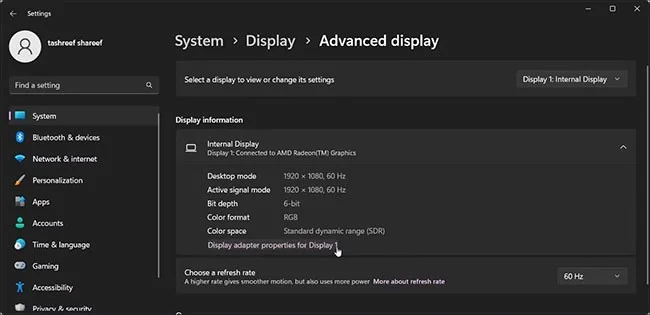
5. Next, under Display information , click Display adapter properties for Display X .
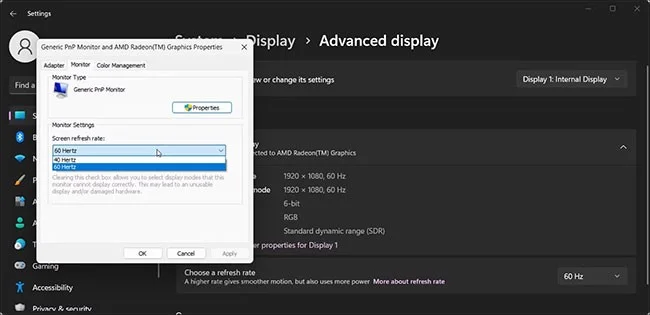
6. Open the Monitor tab in the Properties dialog box.
7. Click the Screen refresh rate drop-down menu and select 60 Hertz.
8. Click Apply > OK to save the changes.
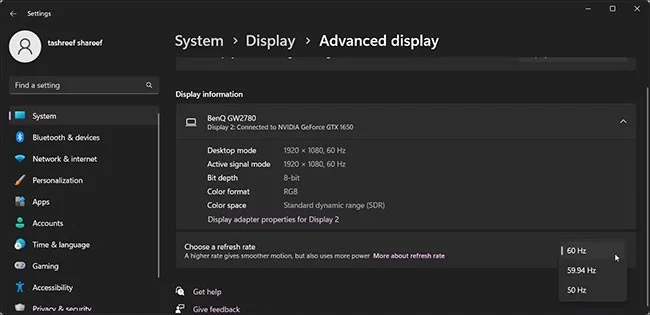
9. Also, click the Choose a refresh rate drop-down menu under Display information and select 60Hz.
10. Click Keep changes to confirm the action.
You may need to reboot to retain the changes and exit Safe Mode. After rebooting, your display should start responding.
Now that the error is fixed, open Display adapter properties and gradually increase the refresh rate. Do this until you find a good balance between higher screen refresh rates and display adapter compatibility.
3. Update graphics driver
Incompatible or outdated graphics drivers can cause problems with connected displays. To fix the problem, install the latest available drivers for your graphics card. Check out Quantrimang.com's guide on how to update graphics drivers on a Windows computer .
Make sure to use the "Safe mode with networking" option when you boot into Safe Mode, as this will enable your Internet connection and allow you to download new drivers.
This error typically occurs on systems with outdated video cards or older monitors that support lower refresh rates. To fix the error, set the display resolution to recommended and the refresh rate to the standard 60Hz. If the problem persists, install any pending display driver updates to resolve the issue.
Get your Bluetooth headset mic working by selecting the right input, using a hands-free audio profile, and checking Ubuntu’s PipeWire route.
Learn why Flatpak apps may ignore Ubuntu 24.04 GTK themes and follow safe steps to check theme extensions, refresh Flatpak apps, and diagnose portal issues.
Install Ubuntu 24.04 alongside Windows 11 with BitLocker safely. Compare separate-drive and shared-drive paths, recovery keys, partitioning, and boot checks.
Diagnose NVIDIA driver failures after an Ubuntu kernel update. Check DKMS and Secure Boot, rebuild the matching module, enroll a MOK, and verify the fix.
Fix Ubuntu 24.04 Wi-Fi drops after suspend with checks for NetworkManager, radio blocks, updates, power saving, and drivers—then verify each resume.
Learn why tracker-miner-fs-3 uses high CPU in Ubuntu GNOME and how to check indexing, exclude folders, update Ubuntu, or safely rebuild the search index.
Fix Debian’s UEFI boot error by checking boot mode, the EFI System Partition, GRUB files, and firmware boot order—without reinstalling Debian first.
The Outlook Inbox Repair Tool fixes corrupted PST files quickly so you can recover emails and restore normal Outlook function. Follow these exact steps to run scanpst.exe without data loss.
Get the Adobe PDF Installer Offline to install Acrobat Reader on any PC without needing internet during setup. Follow these exact steps for the full standalone package.
Learn how to Chromecast from laptop to TV with this step-by-step guide. Stream browser tabs, videos, or your full screen from Windows or Mac to your TV in minutes.