The steps to create a new database in Microsoft Access are not difficult. This article will guide you in detail through the steps to create a database in Access .
Step-by-step instructions for creating a database in Access
Nowadays, it is not difficult to create an online database because you have many different software support options. However, the most popular choice currently is still Microsoft Access. Most free database software is not as good as Microsoft Access. It is considered a complex but most effective tool in creating databases.
Microsoft Access is a GUI-based front-end database application that brings the power of software development tools and the Jet Database Engine into a software development platform with a no-code & intuitive approach. low-code. Therefore, creating a relational database in Access is really easy.
The article below will show you in detail each step of creating a new database in Access using the available templates. It also explains the steps to create an Access database from scratch by creating forms, tables, individual reports and other projects.
Use templates to create databases in Access
Microsoft provides you with a number of Access database samples. You can use them without having to edit them. An Access database template includes all the necessary components in a database, from tables, queries, macros, reports to forms...
You can choose any database template to start creating a database in Access. Here's how:
1. Open Microsoft Access on your laptop or desktop.
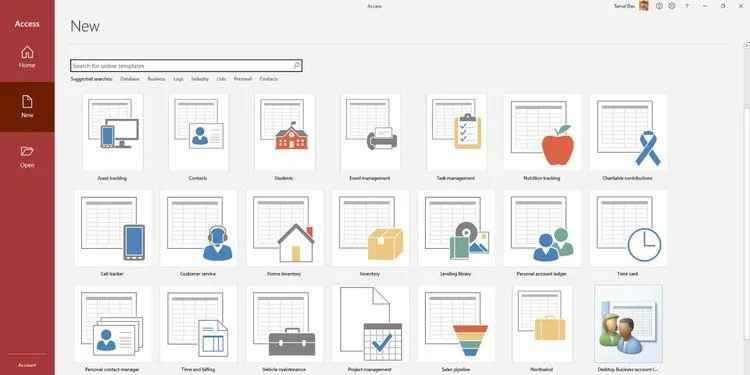
2. You will see the main Access window .
3. Click New in the left panel.
4. Now you will see a series of Access database templates.

5. Use the search box for online models if you don't see a suitable choice.
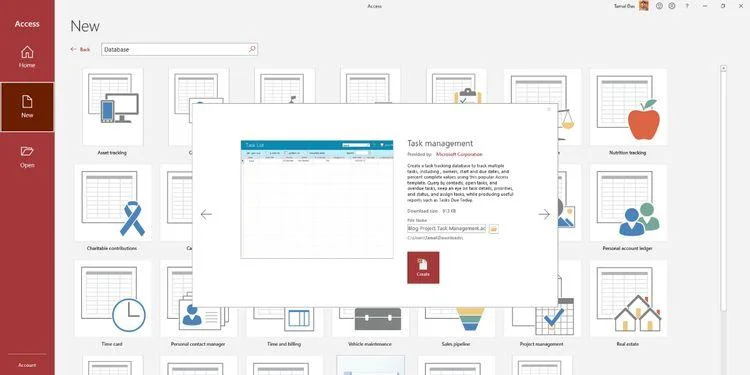
6. The templates summary window will open when you select a template.
7. Here, you can change File Name and file path.

8. Click Create to build the database. It will open automatically.
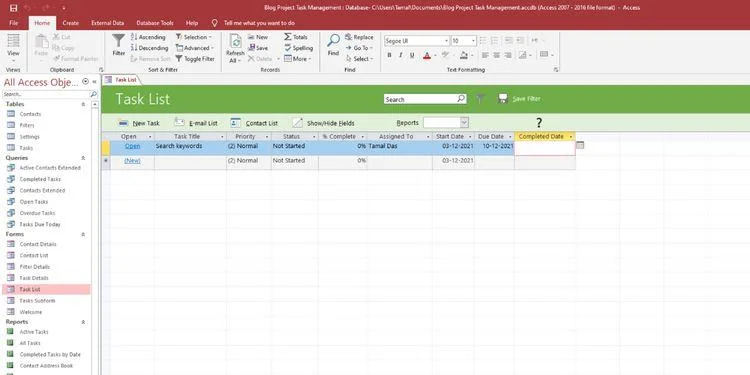
9. You will see the welcome screen. Click Get Started to use the database.
10. The Navigation panel on the left shows you all database objects such as Tables, Queries, Forms...
11. You can now import tasks into the project by clicking New Task in the Task List form.

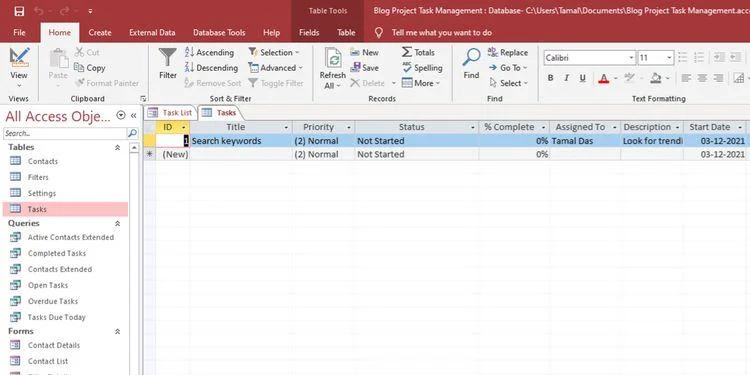
12. Double click Task located under the Tables menu on the left to review the raw database.

13. Click Close (X) in the upper right corner, below the ribbon to close any open database objects.
How to create a database in Microsoft Access from scratch
Although Access database templates help you save time, they do not allow you to go deep into database operations. You need to create a database from a blank Access file with your own data, tables, forms, and other parts.
You can start creating your own Access database as follows:
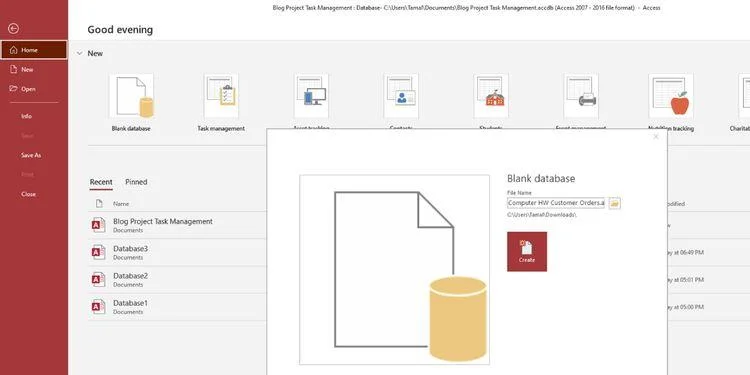
1. On the Access ribbon menu , click the File tab .
2. You will see the Blank database option . Click on it.
3. Change the name and path in the Blank database overview window .

4. Click the Create button to build and open an empty database.

An empty database is the foundation. You need more data and database parts to create a functional database. The following are suggested steps to add some basic database parts to Microsoft Access.
Add tables
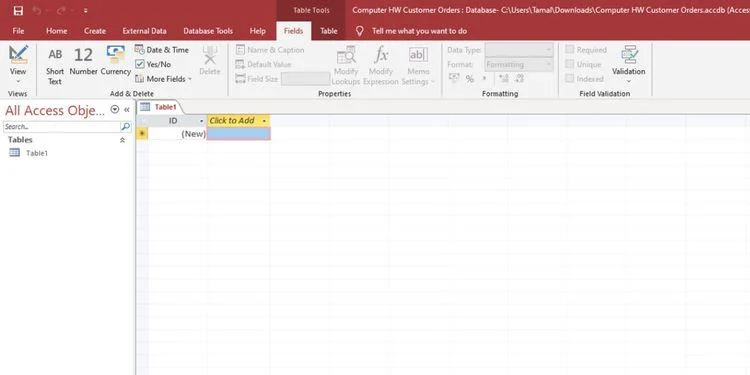
The empty database will automatically add a table, Table1. Tables in Datasheet are similar to Excel. However, Access uses the terms Field for columns and Record for rows.
If you want to add a new table to the database:
- Click Create on the ribbon menu.
- You will see 6 database sections such as Application, Table, Query, Form, Report, Macro.
- Just click Table to create Table2.

Add data to the table
1. The first field shows ID. Click on it to rename it to Record ID .

2. Click Click to Add and select the data type, telling Access what type of record you save in this field.
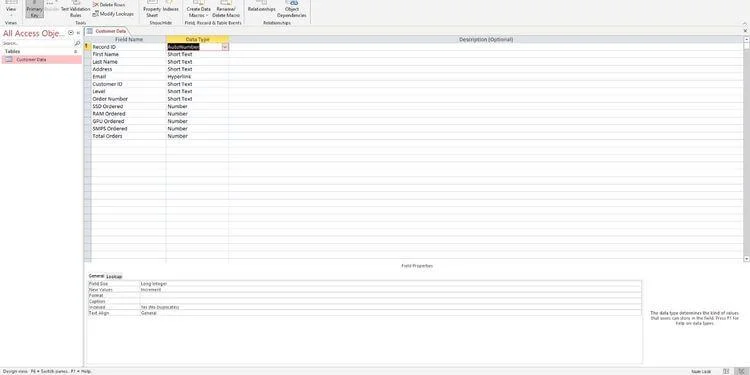
3. Select Short Text for fields such as First Name, Last Name, Address...
4. To add fields and data types faster, click the Design View icon in the lower right corner.

5. You can add Field Name and Data Type side by side.
6. Now it's time to add the data. After adding a record under First Name, Access will assign Primary Key 1 to the cell under Record ID .
The primary keys here are unique for each record. Access uses it to build relationships between tables.
Above are the steps to create a basic database in Access . Hope the article is useful to you.