Kabbalah numerology is a way to determine your inner purpose and life path. Using your real name, match the letters with the traditional numbers associated with them, then use a formula to find your number. It's a simple way to gain some insight into your personality and ideals.
Things to Know About Kabbalah Numerology
Kabbalah numerology chart
Each letter corresponds to a value in the following table:
| 1 |
A, J, S |
| 2 |
B, K, T |
| 3 |
C, L, U |
| 4 |
D, M, V |
| 5 |
E, N, W |
| 6 |
F, O, X |
| 7 |
G, P, Y |
| 8 |
H, Q, Z |
| 9 |
I, R |
The original numerical value for each letter was derived from the Hebrew alphabet. While there may be as many as 400 different life path numbers in Kabbalah studies, many studies focus on the more common numbers. The main focus is on finding your own Kabbalah number.
How to find Kabbalah numbers
Now, it's time to do a little comparing, counting, and math. This formula will help you determine your Kabbalah number.
- To find your Kabbalah number, use your full name (including middle name).
- Find the value for each letter in the name by referring to the chart above.
- Now, add all the numbers together. This should be a two-digit number (or in some cases, a three-digit number).
- Divide this larger number by 9.
- Take the remainder (the part that doesn't fit exactly when divided) and add 1 to it. This is your Kabbalah number.
For example, let's say you add up all the letters in your name and get the number 42. When divided by 9, 42 leaves a remainder of 6. Add one to this number and your Kabbalah number will be 7. If you divide a larger number and it is evenly divisible by that number, such as when divided by 81 and there is no remainder, you would add 1 to 0 - resulting in a Kabbalah number of 1.
What is the meaning of Kabbalah numbers?
Once you have found your Kabbalah number, you can learn the energy behind it. The main values of Kabbalah include:
1: Progress
2: Expansion
3: Love
4. Misfortune
5: Creation
6: Completion
7: Magic
8: Rush
9: Success
Many people believe that contemplating this number itself may provide further answers.

What makes the Kabbalah approach different?
To the outsider, the different types of numerology may not seem very different. After all, each type uses numbers to learn something about a person.
There are key differences, however. Kabbalah numerology only analyzes a person's name, not their date of birth. Other numerology methods will not only evaluate a person's date of birth, but also assign a life path number based on that date.
The values of numbers also differ between Kabbalah and other methods. While the letter A may have the same value in both Kabbalah and Chaldean numerology, the letter W does not (along with many others).
Kabbalah numerology also has a much wider range of numbers. There can be up to 400 different life paths based on 22 different vibrations. Fortunately, most numerologists work with the more ‘common’ life path numbers.
The Foundations of Kabbalah Numerology
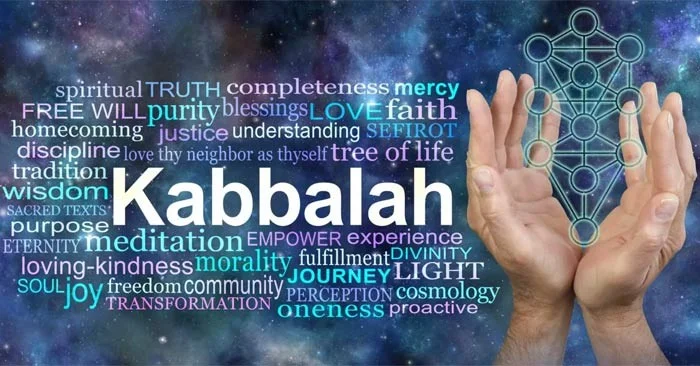
Kabbalah Numerology is based on ancient Jewish mysticism, specifically the Hebrew alphabet. The word Kabbalah itself refers to knowledge that comes from the mind, not from the experiential senses or the body. Therefore, the Kabbalah Numerology system seeks to bring about knowledge at a higher level, through higher levels of self-awareness.
Unlike Chaldean Numerology or Pythagorean Numerology, Kabbalah Numerology only analyzes a person's name (known as name numerology). As a result, numerologists sometimes find the Kabbalah system less accurate than other methods of numerology.

Useful tools for self-awareness
The Kabbalah number, along with the path represented by that number, can provide some important insights into your ideals, motivations, and priorities. It can even help you gain some direction in moments when you feel uncertain about a course of action. As a tool for self-reflection and self-understanding, Kabbalah numerology provides a good general structure and an opportunity to reflect or journal about how your number may impact your present & future life.