How to create a chart in Microsoft Word 2016

Drawing diagrams and charts is one of the quite useful features when editing text in Word. Help viewers easily visualize, compare and capture a lot more.

However, many people have difficulty creating charts in Word. In the framework of this article, Download.com.vn will guide you to do it on Word 2016, but on Word 2007 , Word 2010 , Word 2013 and Office 365 also do the same.

How to draw charts and diagrams in Word 2016

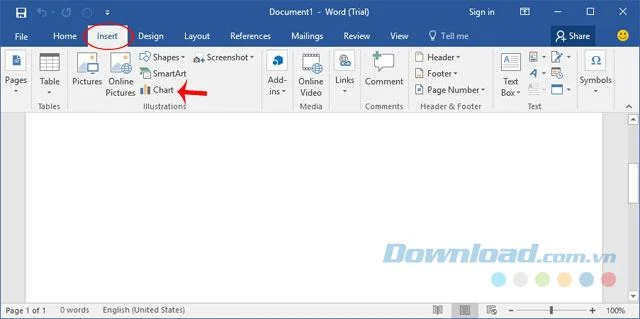
Step 1: Open any Word file, switch to the Insert tab , select Chart.
How to create a chart in Microsoft Word 2016

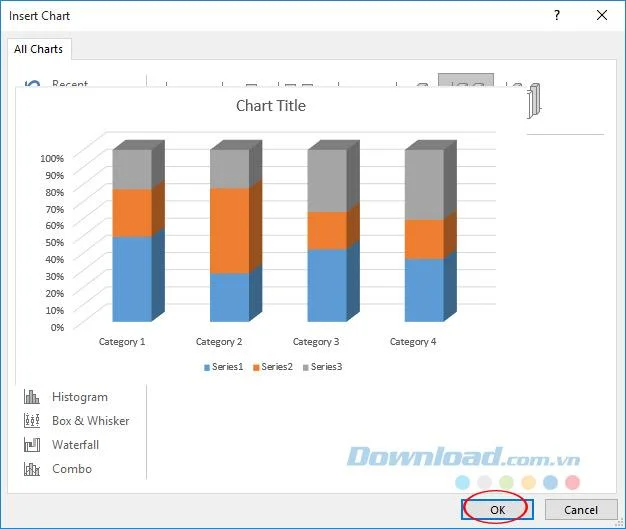
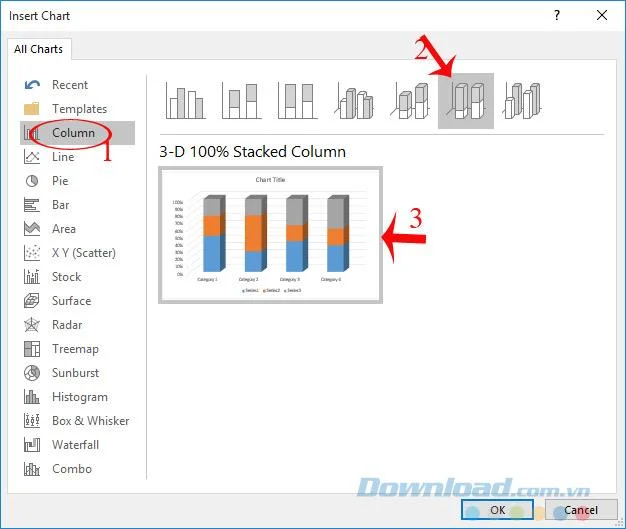
Step 2: The Insert Chart window appears, allowing you to select the appropriate chart type. Word 2016 supports the following chart types:

  • Column: A bar graph, showing data that changes over time or compares between items.
  • Line: A line chart, showing trends over time.
  • Pie: Pie chart, representing percentages.
  • Bar: Bar chart, similar to Column style but organized vertically and horizontally.
  • Area: Area chart, representing change over time and directing attention to the total value.

  • XY (Scatter): Scatter chart XY, used to compare data values ​​one by one.
  • Stock: Stock chart, illustrating fluctuations of stock prices, rainfall, temperature ...
  • Surface: Surface chart, optimized when both categories and value chains are numerical.
  • Donut: A donut chart, showing the relationship between the parts and the total.
  • Bubble: Bubble chart, widely used in market research, financial analysis.
  • Radar: A spider web diagram, often used to identify performance, strengths and weaknesses.

How to create a chart in Microsoft Word 2016

Step 3: Once you have selected the appropriate chart type, you can hover on the chart to enlarge and see it better. Then click OK.

How to create a chart in Microsoft Word 2016

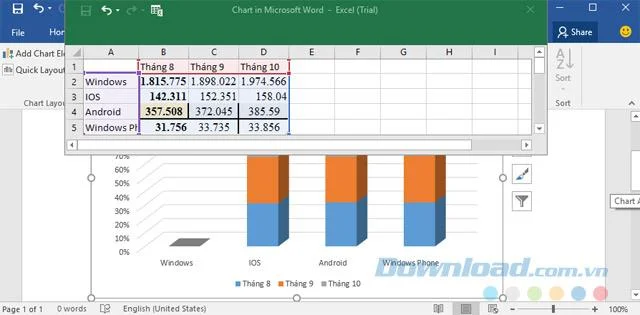
Step 4: Immediately there will appear a small Excel table for you to enter the values, names of the columns. After importing, just turn off Excel and you're done.

How to create a chart in Microsoft Word 2016

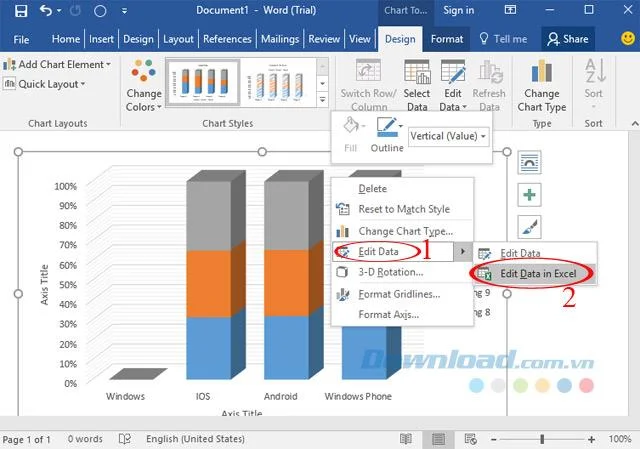
Step 5: If you want to reopen the Excel table for editing, right-click on the chart, hover to the Edit Data line , and then select Edit Data in Excel.

How to create a chart in Microsoft Word 2016

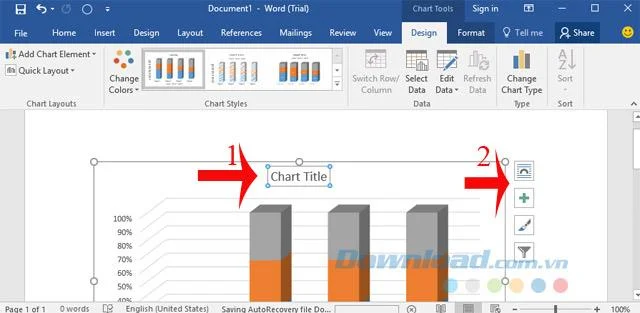
Step 6: Next, you can edit the title of the chart, add arbitrary attributes such as column selection, color change in the right tool.

How to create a chart in Microsoft Word 2016

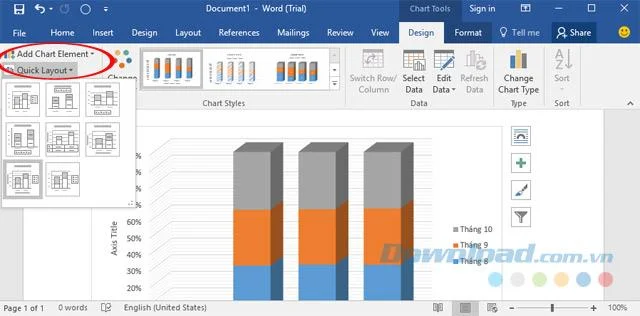
Step 7: After creating the chart, but you do not like to change the style, click Quick Layout to select offline.

How to create a chart in Microsoft Word 2016

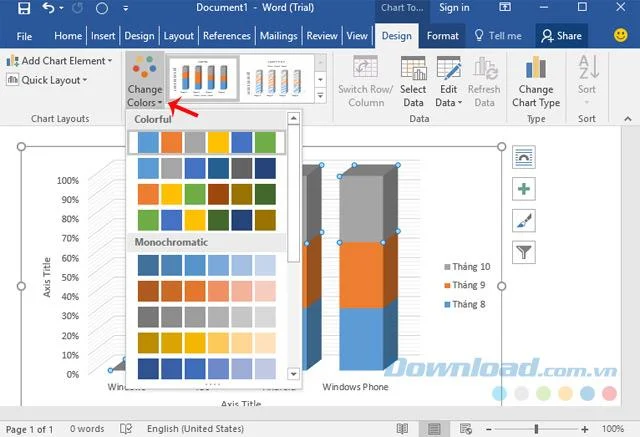
Step 8: You can choose the colors for the columns as you like by clicking the drop-down arrow next to Change Colors , and then selecting the appropriate colors in the palette.

How to create a chart in Microsoft Word 2016

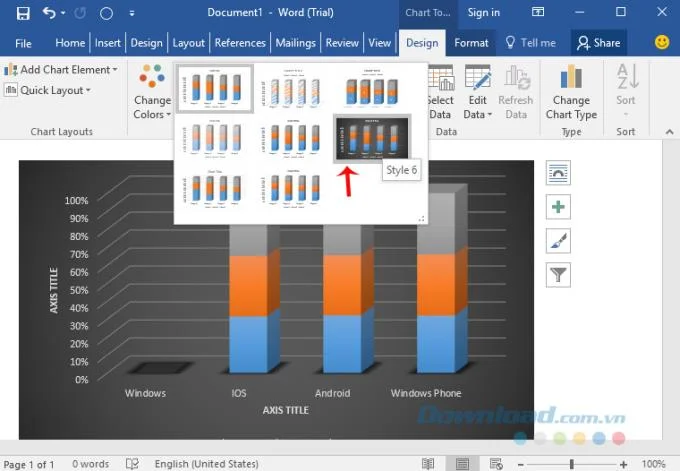
Step 9: In addition, you can also choose the background and display style for the columns in the table.

How to create a chart in Microsoft Word 2016

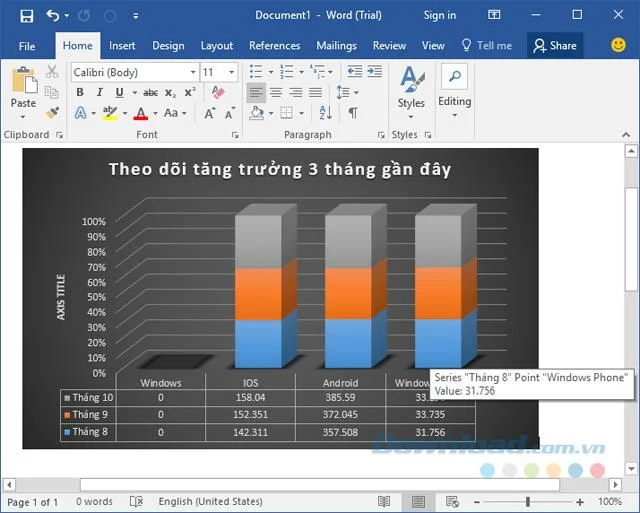
Step 10: So you've drawn the chart in Word 2016 successfully.

How to create a chart in Microsoft Word 2016

Video tutorial on creating charts in Word 2016

The implementation is quite simple, isn't it? The most important thing is to choose the right chart type to represent the meaning of the data. Also when using Word 2016, you can insert Math formulas , customize the interface as you like very easily.

I wish you successful implementation!
Leave a Comment

Side Hustles That Actually Pay in 2026: 7 Realistic Options and the Tradeoffs to Know

Side Hustles That Actually Pay in 2026: 7 Realistic Options and the Tradeoffs to Know

Compare realistic side hustles for 2026 by startup cost, fees, flexibility, and income control, with current tax and scam guidance from official sources.

Remote Work Ergonomics in 2026: Upgrade Your Home Office Without Overbuying

Remote Work Ergonomics in 2026: Upgrade Your Home Office Without Overbuying

Upgrade your home office ergonomics with current OSHA and NIOSH guidance on chair fit, monitor height, laptop setup, lighting, and movement.

Why Emotional Intelligence Matters in Leadership—and How to Build It

Why Emotional Intelligence Matters in Leadership—and How to Build It

Learn why emotional intelligence matters in leadership, where it helps most, how to strengthen it, and how to tell whether your approach is working.

How to Transition to a Tech Career Without a Degree: A Results-First Roadmap for 2026

How to Transition to a Tech Career Without a Degree: A Results-First Roadmap for 2026

A practical roadmap for moving into tech without a degree: choose an accessible role, build job-ready skills, prove them with projects, and use hiring feedback to improve.

Building a Personal Brand on LinkedIn in 2026: What Still Works, What Changed, and What to Ignore

Building a Personal Brand on LinkedIn in 2026: What Still Works, What Changed, and What to Ignore

Build a credible LinkedIn personal brand in 2026 with current profile, content, newsletter, analytics, verification, and visibility guidance from LinkedIn.

Quiet Quitting vs. Quiet Firing in 2026: What’s Really Changing at Work

Quiet Quitting vs. Quiet Firing in 2026: What’s Really Changing at Work

Quiet quitting and quiet firing are catchy labels, not diagnoses. Learn what is verified, what depends on context, and what employees and managers can do next.

The Rise of the Fractional Executive: When Part-Time C-Suite Leadership Makes Sense

The Rise of the Fractional Executive: When Part-Time C-Suite Leadership Makes Sense

Fractional executives offer senior leadership without a full-time hire. Learn when the model works, what to ask, and the risks to manage.

How to Negotiate a Raise During Q4 Performance Reviews: A Practical 2026 Decision Guide

How to Negotiate a Raise During Q4 Performance Reviews: A Practical 2026 Decision Guide

Prepare a stronger Q4 raise request with current wage data, timing options, compensation tradeoffs, and scripts for yes, partial, or no outcomes.

6 High-Income Skills You Can Start Learning Before 2026 Ends

6 High-Income Skills You Can Start Learning Before 2026 Ends

Choose a high-income skill you can realistically start before 2026 ends, with current pay data, learning priorities, and a practical self-check.

Mastering the Hybrid Work Schedule: A Practical Framework That Actually Holds Up

Mastering the Hybrid Work Schedule: A Practical Framework That Actually Holds Up

Build a hybrid work schedule around tasks, team overlap, and measurable outcomes. See sample patterns, warning signs, and when to adjust your plan.