
Would Europe Be Drawn into a Hypothetical U.S.-Israel-Iran Nuclear War? NATO Rules Explained

A guide to NATO Articles 4 and 5, UN self-defense rules, and why consultation does not mean automatic European entry into war.
Besides their daily tasks of conducting a series of scientific experiments in microgravity conditions every day, astronauts on the International Space Station (ISS) sometimes also spend time admiring the scenery from “million dollar” views as an effective form of stress relief.
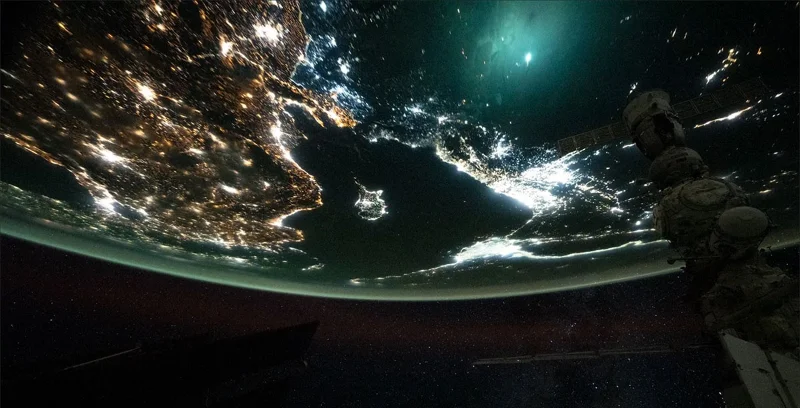
NASA astronaut Matthew Dominick recently shared an extremely rare image he happened to capture while sightseeing on the International Space Station (ISS). It was a huge collision that took place on Earth, but not a war or any other man-made horror, but the moment a meteor exploded upon hitting the planet's atmosphere.

This pale greenish-blue light just above the Nile River basin is believed to be a type of super bright meteor that occurs when a piece of a rocky asteroid or icy comet enters Earth's atmosphere and burns up, creating a bright flash. Dominick captured the event by pure chance as the ISS flew over North Africa on September 2.
It’s a busy time for interactions between Earth and asteroids. On September 4, an asteroid tracked as 2024 RW1 was also observed as a bright green fireball streaking from the Earth’s surface as it burned up violently over the Philippines. Fortunately, no one was injured, nor was any damage to infrastructure reported.
The Philippines event is one of the few cases where an asteroid was identified before it hit Earth. Astronomers detected the object about eight hours before it hit the atmosphere, allowing them to plan observations well in advance of the impact. With increasingly sophisticated asteroid-watching technology, space observers are now better able to predict the impact of objects floating in space before they actually hit Earth.
A guide to NATO Articles 4 and 5, UN self-defense rules, and why consultation does not mean automatic European entry into war.
Assess claims about Iran in six steps, distinguishing uranium enrichment, weapons development and verified possession.
Understand nuclear decision authority in six steps, including US civilian control and the limits of public information about Israel.
A guide to official 2026 evidence on Hormuz shipping disruption, Iran-related claims, confirmed incidents, and what remains uncertain.
A source-based guide to nuclear escalation risks, UN Charter rules and NATO Article 5 in a strictly hypothetical Iran scenario.
Use five steps to prepare for an outage; nuclear and EMP scenarios are hypothetical, and official shelter instructions come first.
Use 5 defensive steps to verify a cyber disruption, protect household accounts, and avoid mistaking an outage for war.
Use these 5 steps to assess climate effects from a hypothetical Iran strike, compare model assumptions, and avoid unsupported predictions.
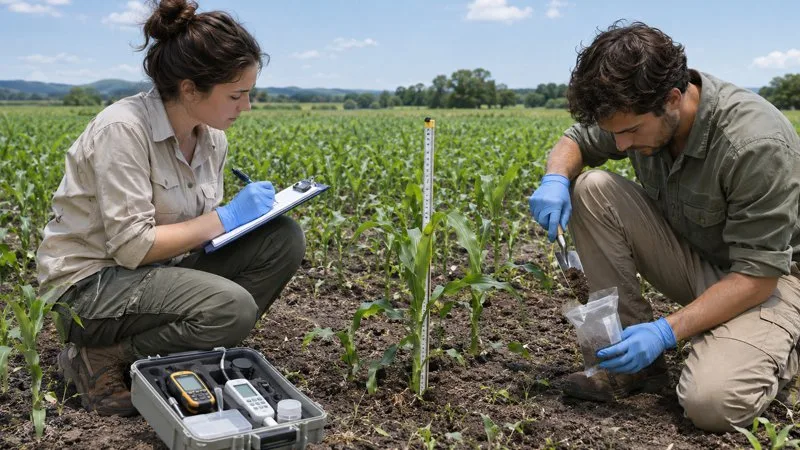
Explore six steps for reading research on climate, food and ecosystem recovery after a hypothetical nuclear conflict.
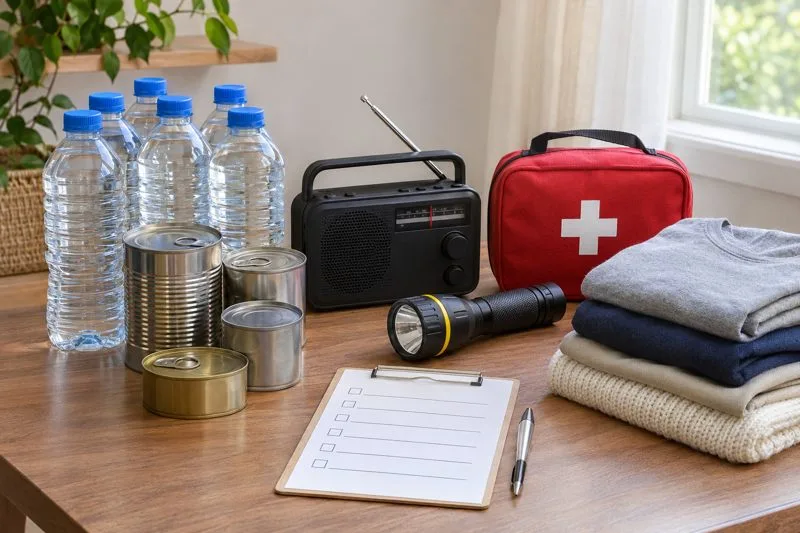
Build a practical fallout preparedness kit in six steps, with sealed food and water, a radio, medical supplies and shelter guidance.