Home
» Today
»
Australia’s October 1 Card Surcharge Ban: What Changes for Credit Card Payments
Australia’s October 1 Card Surcharge Ban: What Changes for Credit Card Payments
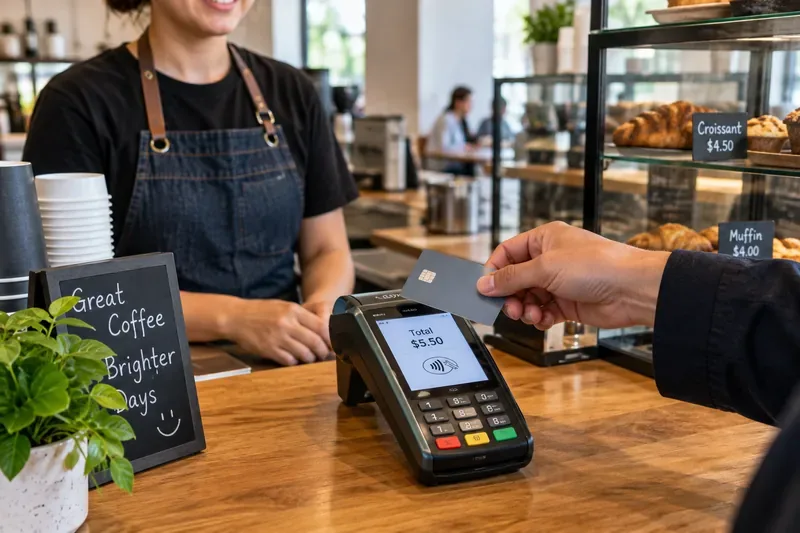
You tap your card for a $6 coffee, book a flight online, or pay a bill by credit card—and a percentage fee appears at the final step. In Australia, that familiar experience is about to change. From October 1, 2026, major card networks will introduce “no-surcharge” rules that stop businesses from adding a separate fee simply because a customer pays with a covered credit, debit, or prepaid card.
The important detail is that this is now a confirmed reform, not just an earlier proposal. The Reserve Bank of Australia (RBA) completed its review of merchant card payment costs and surcharging in March 2026 and changed its standards so designated card networks can impose no-surcharge rules from October 1. eftpos, Mastercard, and Visa have all decided to do so. The RBA also says American Express, UnionPay, and PayPal have announced that they will remove surcharging from the same date, subject to their own scheme rules and arrangements.
From October 1, 2026, a separate fee charged specifically for using a covered card should disappear under the new no-surcharge rules.
What exactly changes on October 1, 2026?
Until September 30, 2026, Australian businesses can generally add a card surcharge, but it cannot be higher than the business’s cost of accepting that payment type. There are also price-display rules: if there is no surcharge-free way to pay, the minimum unavoidable surcharge must be included in the displayed price.
From October 1, the position changes for covered card payments. Visa, Mastercard, American Express, and eftpos are introducing no-surcharge rules for prepaid, debit, and credit card payments on their networks. In practical terms, a merchant should no longer add a line such as “1.5% card surcharge” merely because you used one of those cards.
Is this a government ban written directly into consumer law?
Not quite, and the distinction matters. The RBA has removed the regulatory restriction that previously prevented designated card networks from imposing no-surcharge rules. The networks are then implementing those rules through their scheme rules and merchant contracts.
That means the direct enforcement of the no-surcharge rule generally sits with the card networks and payment service providers, rather than the ACCC. The ACCC will still enforce Australian Consumer Law, including rules against misleading price claims or disguising a card surcharge as something else.
The RBA’s plain-English summary of the review explains why the system changed: surcharging had become harder for consumers to avoid, increasingly complex, and often poorly disclosed.
Does the change cover debit cards as well as credit cards?
Yes. Although many searches refer to an “October credit card surcharge ban,” the confirmed reform is broader. It covers debit, prepaid, and credit cards on the relevant networks.
For many consumers, that is a bigger change than a credit-card-only rule would have been. A person using an everyday debit card at a café, restaurant, retailer, or online checkout may currently encounter the same type of percentage surcharge as someone using a credit card. From October 1, those card-specific surcharges should no longer be charged on covered networks.
What fees can businesses still charge?
The new rules do not eliminate every extra fee. They target fees imposed because you paid by card. Businesses can still charge other legitimate fees where allowed, provided those fees are not simply a renamed card surcharge and they comply with consumer-law pricing rules.
Weekend surcharges can still apply.
Public-holiday surcharges can still apply.
Booking or service fees can still apply where lawfully disclosed.
Delivery and other separate charges can still apply.
Businesses may offer discounts for using particular payment methods, such as cash or PayID, if prices are displayed correctly.
The ACCC warns businesses not to evade the new rules by calling a card surcharge a “service fee” or another label when it is really triggered by the use of a card. That could amount to misleading conduct. Its price-display guidance explains how unavoidable fees and payment-method discounts should be shown.
Will prices simply rise instead?
Possibly in some businesses. The reform does not make card acceptance free for merchants. Businesses still pay costs to banks, acquirers, payment processors, and card networks. From October 1, however, covered merchants will generally need to recover those costs through their overall prices rather than a separate card surcharge.
The RBA has paired the surcharge change with lower interchange-fee caps from October 1, 2026. For domestic consumer credit cards, the maximum interchange cap will be 0.30% of the transaction value. Debit and prepaid cards will also have lower or revised caps. The intention is to reduce underlying acceptance costs while simplifying what consumers see at checkout.
That does not guarantee that every retailer’s shelf price will stay unchanged, or that every merchant will reduce prices. Businesses remain free to set prices independently, subject to competition and consumer laws. The consumer-facing change is mainly about transparency: the card cost should no longer appear as a last-step surcharge on covered transactions.
What happens if you see a card surcharge after October 1?
Start with the simplest check: confirm what the fee is actually for. A “Saturday surcharge,” “booking fee,” or “delivery fee” is different from a fee that appears only because you selected Visa, Mastercard, American Express, or eftpos.
1. Check the payment method and wording
Look at the receipt, checkout screen, invoice, or payment terminal. If the fee is explicitly tied to the card type or appears only after choosing a covered card, it may be inconsistent with the network’s no-surcharge rule.
2. Ask the business to explain the charge
A merchant may be using an old terminal configuration, outdated signage, or a payment provider that has not yet been correctly updated. The RBA notes that many payment service providers are expected to disable surcharging functionality around October 1.
3. Keep evidence if the charge looks wrong
Save the receipt, screenshot the checkout page, and record the date, merchant, amount, and card network. That makes it easier to raise the issue with the merchant, payment provider, or relevant network.
4. Distinguish scheme-rule issues from misleading pricing
The ACCC says card networks or payment service providers are responsible for enforcing the no-surcharge rules. If the issue is instead misleading price presentation—for example, a business disguises a card surcharge as a different fee—the ACCC and state or territory consumer agencies remain responsible for consumer-law enforcement.
What should businesses do before October?
Businesses that currently surcharge should not remove the current rules prematurely unless they choose to stop surcharging voluntarily. Up to September 30, 2026, the existing law still applies: any card surcharge must not exceed the merchant’s cost of acceptance, and applicable price-display requirements remain in force.
Before October 1, businesses should review menus, price lists, checkout pages, invoices, apps, and point-of-sale signage. They should also speak with their payment service provider about terminal settings and online-payment configurations. The ACCC specifically advises businesses to remove card-surcharge notices and make sure surcharge functionality is disabled where necessary.
Why did the RBA change the system?
The RBA concluded that card surcharging was no longer delivering its original policy goal effectively. It was designed to signal that some payment methods cost merchants more than others and encourage consumers toward lower-cost choices. Over time, however, cash use declined, more businesses applied the same surcharge across multiple cards, and consumers found it increasingly difficult to avoid card fees.
The RBA’s 2024–26 review received more than 260 written submissions and involved around 150 meetings with industry participants, government bodies, businesses, and consumer groups. Its final package combines surcharge removal, lower interchange caps, and additional fee transparency. More fee-publication requirements begin later in October 2026 and further reforms continue into 2027.
How to check whether the reform is working for you
After October 1, a simple self-check is to compare the advertised price with what you pay using a covered card. If a $20 item is advertised at $20 and you pay by Visa, Mastercard, American Express, or eftpos, you should not see an additional fee added solely because you used that card.
If the final amount is higher, identify the reason before assuming the rule has been broken. A clearly disclosed weekend surcharge may still be valid. A separate booking fee may also be valid. A fee labelled or functioning as a card surcharge is different.