Home
» Today
»
How Rising Fuel Costs Affect Travelers—and How to Cut Your Travel Budget
How Rising Fuel Costs Affect Travelers—and How to Cut Your Travel Budget
Fuel prices can change a trip budget faster than many travelers expect. The effect is most obvious on a road trip, where every gallon comes directly out of your pocket, but higher fuel costs can also raise operating expenses for airlines, rental-car companies, tour operators, and other transportation businesses. That does not mean every airfare or rental rate rises in lockstep with fuel. Travel prices are also shaped by demand, competition, season, route, capacity, taxes, and how early you book.
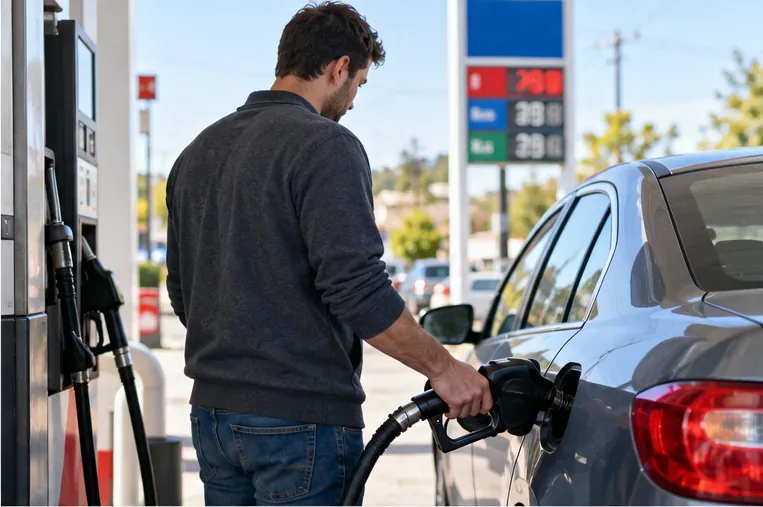
For a current U.S. reference point, the U.S. Energy Information Administration reported an average regular gasoline price of $4.478 per gallon for the week of September 21, 2026, up from $4.071 on August 31. You can check the latest weekly figure on the EIA regular gasoline price page. Because fuel prices vary widely by state and region, treat the national average as a planning benchmark rather than the price you will necessarily pay.
Air travel is affected differently. The U.S. Bureau of Transportation Statistics reported that U.S. scheduled airlines paid an average of $3.40 per gallon for fuel in July 2026, 45.4% more than in July 2025. Total airline fuel spending that month was $5.89 billion. Those figures show how sharply an airline's fuel bill can move, but they do not tell you what a particular ticket will cost. BTS also notes that airline fuel costs can be affected by hedging and contracts. See the BTS July 2026 airline fuel release for the source data.
Step 1: Understand where fuel costs enter your trip
Start by separating your travel spending into direct fuel costs and fuel-sensitive costs. A direct fuel cost is money you personally spend on gasoline, diesel, or charging during a trip. A fuel-sensitive cost is a price set by a transportation provider whose own fuel bill is only one part of its total costs.
Driving your own car: gasoline or diesel is a direct cost. Toll roads, parking, food, lodging, and vehicle wear are separate.
Rental car: you usually pay both the rental rate and the fuel you use. Airport fees, taxes, insurance choices, and one-way charges can matter as much as gasoline.
Flying: jet fuel is an airline operating cost. The fare you see may change with fuel costs, but also with seat demand, competition, schedule, and route economics.
Bus, shuttle, ferry, or tour: fuel is generally built into the operator's price rather than itemized for you.
Build a trip budget before booking by putting route distance, expected fuel economy, fuel price, lodging, food, parking, and fees in one place.
Step 2: Build a fuel budget before you book
For a gasoline road trip, a simple estimate is:
Trip fuel cost = miles driven ÷ miles per gallon × price per gallon.
Suppose you expect to drive 1,000 miles in a car that averages 30 miles per gallon. At $4.478 per gallon, the estimated fuel cost is about $149. If the same trip were priced at $3.50 per gallon, the estimate would be about $117. That roughly $32 difference is large enough to affect meals, parking, or a night's lodging for some travelers.
Use your vehicle's realistic highway fuel economy if you know it. If you do not, start with the EPA estimate for your exact model and then give yourself a cushion for traffic, weather, hills, air-conditioning, or a heavily loaded vehicle. FuelEconomy.gov, administered for the U.S. Department of Energy and EPA, provides vehicle-specific estimates and guidance.
Use the price you expect to pay along your actual route, not only the national average, when estimating a road-trip fuel bill.
Add a fuel-price buffer
A beginner-friendly way to handle uncertainty is to budget with a slightly higher price than today's local average. This is not a forecast; it is a buffer. For example, if current prices on your route are near $4.30, you might test your budget at $4.50 or $4.75. If the trip still fits comfortably, a small price jump is less likely to cause stress later.
Step 3: Compare the total trip cost, not just the headline fare
Higher fuel costs can make one mode of travel look less attractive, but the cheapest option is not always obvious. Compare the door-to-door total: what you will spend from the moment you leave home until you reach your destination.
Option
Costs to include
Easy-to-miss items
Drive
Fuel, tolls, parking, lodging if needed
Extra miles, hotel parking, vehicle wear
Fly
Ticket, airport transport, bags, seat choices if purchased
Parking, rental car, change restrictions
Rental car
Daily rate, taxes, fuel
Airport surcharges, one-way fee, add-ons
Bus or rail
Ticket and local transport
Station transfers, schedule limitations
For air travel, the U.S. Department of Transportation says advertised ticket prices must include the total amount required to buy the ticket, including government taxes and mandatory carrier-imposed surcharges. Optional services can still add to your trip. Review the fare rules and baggage information before paying; DOT's Buying a Ticket guidance explains what to check.
Compare transportation choices using the full door-to-door cost, including bags, airport or station transfers, parking, and local transportation.
Step 4: Reduce the miles and gallons you actually use
If you are driving, you have more control than you may think. Start with the route itself. Combining stops, avoiding unnecessary backtracking, and grouping errands near your destination can reduce total miles. FuelEconomy.gov notes that trip planning can reduce driving distance and that several short cold-start trips can use more fuel than one longer multipurpose trip covering the same distance. See its planning and combining trips guidance.
Next, drive efficiently. FuelEconomy.gov reports that aggressive driving can cut fuel economy substantially, and that fuel economy usually falls quickly at higher highway speeds. Its driving more efficiently guidance also recommends avoiding unnecessary roof cargo, excess weight, and excessive idling.
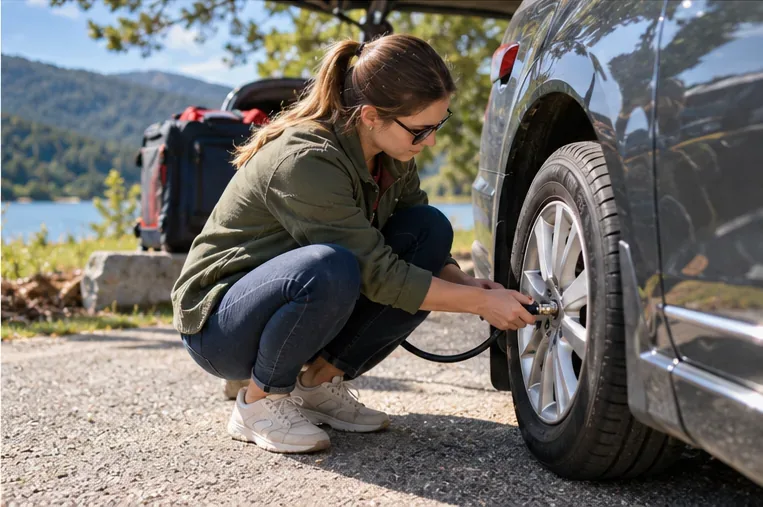
Before leaving, check the tire-pressure specification on the driver's door placard or in the owner's manual and inspect the tires when they are cold. Do not inflate to the maximum number molded into the tire sidewall unless that is also what the vehicle manufacturer specifies. Properly maintained tires support predictable handling and help avoid unnecessary fuel loss from underinflation.
Check tire pressure before a long drive and use the vehicle manufacturer's recommended pressure so avoidable rolling resistance does not add to fuel use.
Step 5: Cut costs that are easier to control than fuel
You cannot set the pump price or an airline's fuel bill, so reduce the expenses you can control. This is often more effective than chasing a few cents per gallon across town.
Change the timing. If your dates are flexible, compare nearby travel dates before locking in hotels and transportation.
Shorten the route. A hotel that costs a little more but eliminates daily backtracking can reduce fuel, tolls, and time.
Use public transit where practical. In a city with expensive parking, taking transit for part of the trip can reduce both fuel use and parking charges.
Pack lighter. You do not need to travel with an empty car, but removing unnecessary heavy items and unused roof carriers can help efficiency.
Check what your fare includes. A slightly higher airfare can be cheaper overall if it avoids a checked-bag fee or a costly airport transfer.
Pre-set a daily spending limit. Separate transportation, lodging, food, and activities so a fuel increase does not quietly consume the entire discretionary budget.
Step 6: Recheck prices shortly before departure
Your original estimate is a planning tool, not a guarantee. Recheck gasoline prices, transportation schedules, parking rates, and any reservation rules a few days before you leave. If fuel has risen sharply, recalculate the trip instead of assuming your old budget still works.
For road trips, update three numbers: expected miles, expected miles per gallon, and the route's current fuel price. For flights, compare your booked itinerary with your actual reservation rules before making changes. A lower new fare is not automatically a savings if the existing ticket is nonrefundable or if changing it creates new fees or restrictions.
Common mistakes to avoid
Using only the national gasoline average. Prices can differ materially by region, so look at the states and cities on your route.
Assuming airfare moves one-for-one with jet fuel. Fuel matters, but airline pricing also reflects demand, competition, inventory, route economics, and timing.
Comparing a plane ticket with only gasoline. A fair comparison includes parking, tolls, airport transfers, bags, rental cars, and overnight stops.
Driving far out of the way for cheaper gas. Extra miles can erase the savings, especially with a low-MPG vehicle.
Skipping a contingency fund. A modest buffer helps with fuel spikes, detours, parking changes, or an extra meal on a delayed travel day.
A simple pre-trip checklist
Estimate total driving miles or door-to-door transportation cost.
Use a current, route-relevant fuel price and add a small buffer.
Compare at least two realistic travel modes when practical.
Include bags, parking, tolls, transfers, rental-car charges, and lodging.
Check tires, remove unnecessary cargo, and plan stops efficiently.
Recalculate the budget a few days before departure.
Rising fuel costs do not have to derail a trip, but they make accurate planning more important. The key is to identify which expenses are directly tied to fuel, compare complete travel costs rather than headline prices, and focus your savings effort on the parts of the trip you can actually control. A budget built this way is more useful than trying to predict exactly where fuel prices or airfares will go next.