Home
» Today
»
Meat Recall: How to Check Whether Your Beef, Pork, or Goat Is Affected
Meat Recall: How to Check Whether Your Beef, Pork, or Goat Is Affected
If your beef, pork, or goat package bears the false establishment number “EST. 1363,” do not eat it. The U.S. Department of Agriculture’s Food Safety and Inspection Service (FSIS) says that number does not correspond to a federally granted inspection establishment. Star Meat Delivery Inc. of Lucama, North Carolina, announced a recall on September 22, 2026, covering approximately 167,639 pounds of raw beef, pork, and goat products made without federal inspection. The products were shipped in bulk under the A&D Foods label to retail and restaurant locations nationwide. Check the package, any over-label, and your freezer; if the key number is missing or covered, use the steps below instead of guessing.
This guide reflects the FSIS notice and materials available on September 24, 2026. FSIS says it may add products or labels as more information becomes available, so check the linked notice again if you are reading this later.
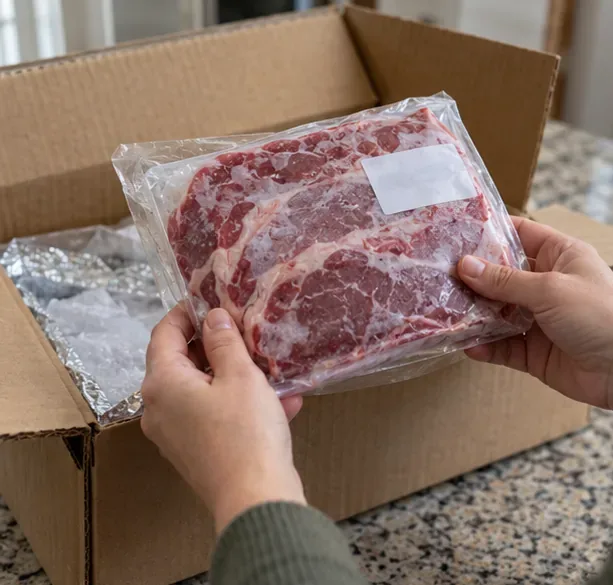
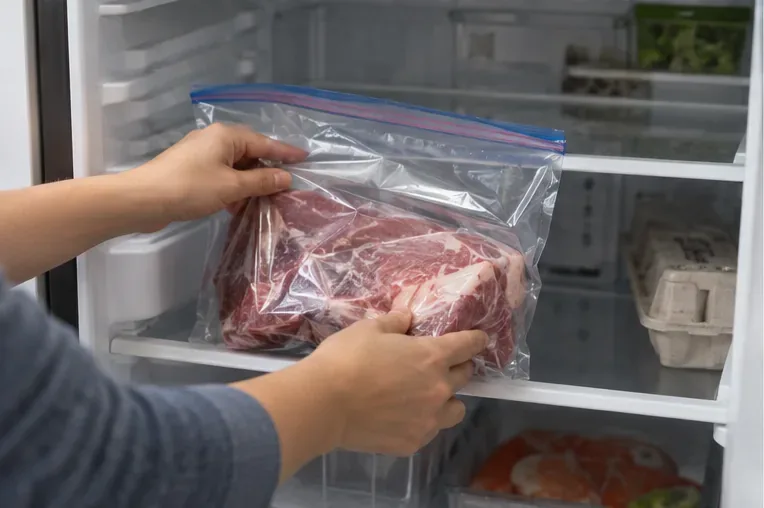
Compare the product and any visible label with the FSIS recall notice. This generic package is illustrative and is not an image of a recalled product.
How to check a package in a few minutes
Look for the establishment number “EST. 1363.” Check the USDA inspection mark, the package label, the outer box, and any sticker placed over the original label. FSIS specifically identifies products bearing this false number as misbranded and unsafe to eat. Do not treat a USDA-shaped shield or stamp as proof that this number is valid.
Check the company and distribution clues. The recall names Star Meat Delivery Inc. and says affected bulk products were distributed under the A&D Foods label. A retail store may have put its own price and safe-handling sticker on the individual pack, so A&D Foods may not be visible on the item in your refrigerator. Use the number and the official product-label images together.
Compare the meat description. The notice covers multiple raw beef, pork, and goat products, including a range of cuts and ground or seasoned pork products. It is not limited to one familiar grocery-store brand. The FSIS page links images and a product list; review the current list instead of relying on a short headline or a memory of what you bought.
Consider the production-date range, but do not use it by itself. The products were produced on various dates before September 22, 2026. The recall does not hinge on one single “sell by” date. A date that looks ordinary, or meat that has been frozen for months, does not rule out a match.
If information is missing, ask before eating. Write down the product name, meat type, package size, store, purchase date, and any code you can read. Contact the retailer or call the USDA Meat and Poultry Hotline at 1-888-674-6854. If the package has a store sticker over the manufacturer details, ask the retailer to check its case or supplier records. Keep the product sealed and refrigerated or frozen while you verify it.
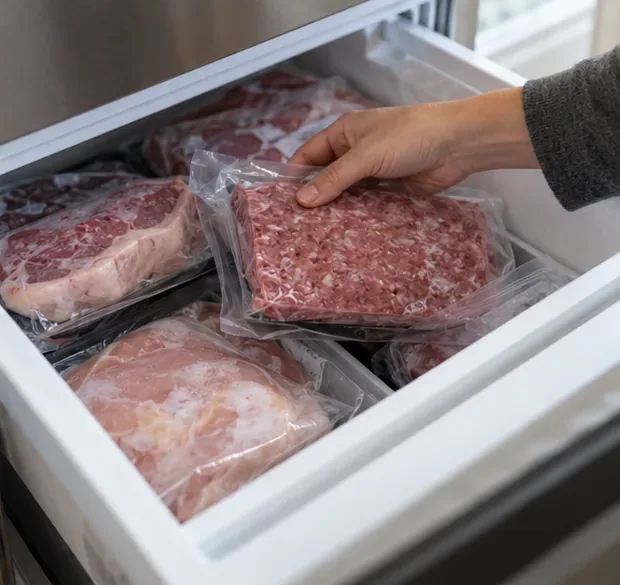
Check the freezer as well as the refrigerator; freezing does not remove a recall match.
What the recall does—and does not—tell consumers
Verified in the FSIS notice: Star Meat Delivery recalled approximately 167,639 pounds of raw pork, beef, and goat products because they were produced without the benefit of federal inspection and bore a false USDA mark. The false establishment number is “EST. 1363.” The products were made on various dates before September 22, 2026, packed in vacuum-sealed packages and cardboard boxes, and shipped in bulk under A&D Foods for further distribution to retailers and restaurants nationwide. FSIS reported no confirmed illnesses or injuries at the time of the notice.
What that means: FSIS is warning against eating the affected products because they bypassed the federal inspection process and used a false inspection mark. The notice does not identify one specific pathogen or contaminant as the cause. That distinction matters: the recall is not proof that every package contains a particular germ, but the absence of a named germ is not a reason to taste or cook a matching product. Do not consume a product bearing EST. 1363.
What may vary: The 167,639-pound figure is the approximate recalled quantity, not a count of packages sold to households. A product’s retail name, store sticker, package size, and date code may differ from a bulk shipping label. FSIS says some individual packages may not show the original marking because retailers may have applied their own labels. If your label is incomplete, confirm with the store or FSIS using the details you have.
What remains uncertain: The FSIS notice says product information may be updated and retail distribution lists will be posted when available. A nationwide distribution route does not establish that every store received product, and a package without visible EST. 1363 cannot be conclusively cleared from appearance alone. Check the current FSIS notice for additions and ask the retailer if you cannot match your purchase to the listed products.
Common assumptions to avoid
“My store’s sticker doesn’t say Star Meat Delivery, so it cannot be included.” Not necessarily. FSIS warns that retail stickers may cover original product information. Check the inspection number and ask the retailer to trace the stock if the label is incomplete.
“It was frozen before the recall, so it is safe.” Freezing does not cancel the recall or replace inspection. If the product matches, keep it out of meals and either return or discard it.
“It smells fine, and I can cook it thoroughly.” Smell, color, and cooking are not ways to identify whether a package is included in this recall. Do not taste it or cook it as a test. Use the label and FSIS product list.
“All beef, pork, and goat sold in the United States is recalled.” No. This notice applies to identified products from Star Meat Delivery bearing the false EST. 1363 mark, with the product list subject to updates. A different product is not automatically part of this recall, although it could be covered by another notice. Check FSIS for the particular product rather than avoiding an entire meat category.
“No reported illnesses means there is no risk.” FSIS’s statement means no illnesses or injuries had been confirmed in connection with these products when it issued the notice. It does not verify that every consumer who ate the meat is unaffected. Monitor your health and contact a clinician if you develop concerning symptoms.
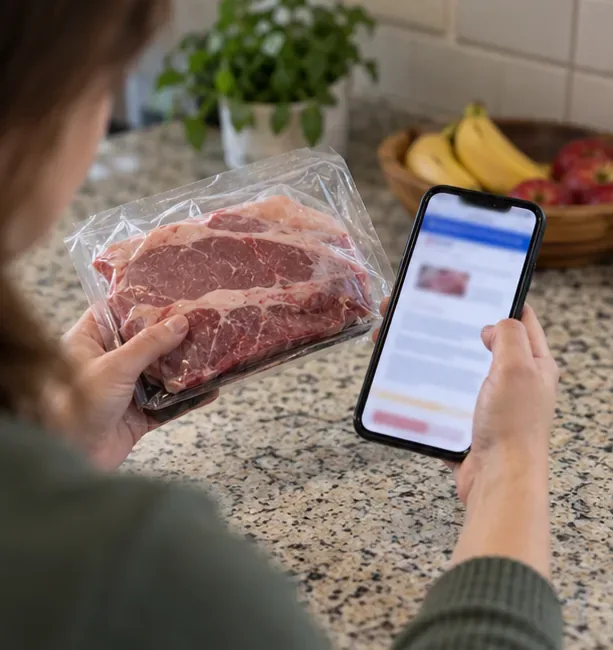
When a store sticker hides the original details, use the official recall notice and ask the retailer to check the product source. The phone screen shown is generic.
If the package matches: return or discard it safely
Do not eat, serve, donate, or give the affected meat to a pet. FSIS advises consumers to throw the products away or return them to the place of purchase. If you choose to return the product, keep it sealed, contain it in a leakproof bag or rigid container, and follow the retailer’s instructions for bringing recalled raw meat back. Call the store first if the package is leaking or if you are unsure whether it can be accepted. If you discard it, secure the package so that children, pets, and wildlife cannot reach it, and follow your local waste rules.
After handling a package, wash your hands with soap and water. If raw meat liquid leaked, clean the refrigerator shelf, counter, or other surface with hot, soapy water and then sanitize it using a food-safe product according to its label. Wash any reusable container that touched the package. Do not rinse raw meat in the sink; splashing can spread raw juices to nearby surfaces. The goal is to remove and clean up possible contact, not to salvage food that may be recalled.
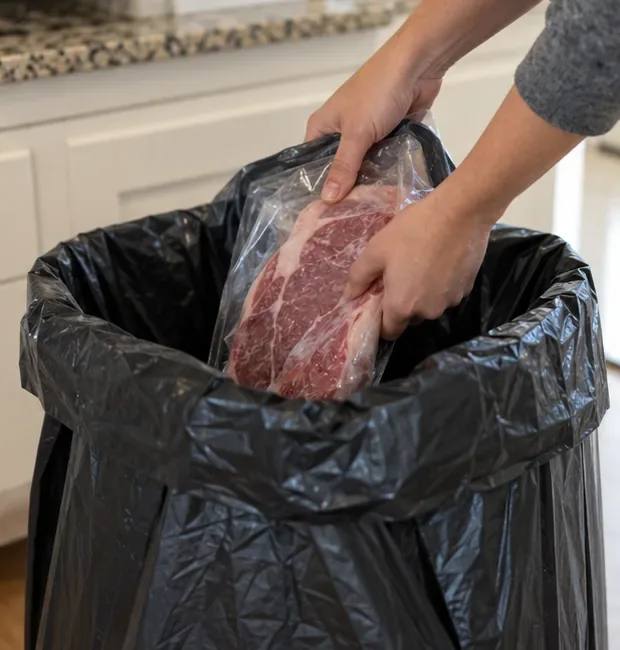
If you discard a confirmed affected package, keep it contained and out of reach of children and animals. This generic image does not show an actual recalled item.
If someone already ate the meat
Do not assume that illness will occur, and do not wait for symptoms before stopping use of any remaining matching product. FSIS reported no confirmed illness or injury linked to the recall at the time of its notice. Foodborne illness symptoms vary by cause and can include diarrhea, stomach cramps, nausea, vomiting, or fever. CDC advises people to seek medical care for severe symptoms such as bloody diarrhea, diarrhea lasting more than three days, fever above 102°F, frequent vomiting that prevents keeping liquids down, or signs of dehydration. People at higher risk, including young children, older adults, pregnant people, and those with weakened immune systems, should contact a healthcare professional for individualized advice.
If symptoms develop, tell the healthcare professional what was eaten, when it was eaten, and that the product may match the Star Meat Delivery recall. Keep a photo of the package or its label if you already have one, but do not keep or handle leaking food just to preserve evidence. For food-safety questions about meat, poultry, or egg products, call the USDA Meat and Poultry Hotline at 1-888-674-6854, weekdays from 10 a.m. to 6 p.m. Eastern Time.
Quick decision checklist
What you find
What to do
“EST. 1363” appears on the package, sticker, or original box
Do not eat it. Keep it contained and return it to the place of purchase or discard it safely.
Meat appears to fit the notice, but its original code is hidden or missing
Do not use it while uncertain. Call the retailer or USDA Meat and Poultry Hotline with purchase and package details.
No match to the listed company, number, or product is apparent
Check the latest FSIS notice and other current recalls; a non-match to this notice is not a general food-safety guarantee.
Someone ate the meat and has severe symptoms
Contact a healthcare professional promptly; seek urgent help for severe illness or dehydration.