Home
» PC Tips
»
Clean up the WinSxS folder to free up Windows space
Clean up the WinSxS folder to free up Windows space
Windows uses a system folder called WinSxS to store Windows installation files as well as backup files or update files. However, these files take up a lot of space on the system drive. Therefore, you should delete these folders and files to free up space on your Windows computer.
What exactly is the WinSxS folder?
Before we learn how to clean up the WinSxS folder, let's go over some important points.
First of all, you cannot completely delete the WinSxS folder, but you can definitely reduce its size. The reason is that the WinSxS folder contains many important libraries and components of the operating system. They are essential in solving problems related to the operating system. So, in a way, users should not touch the WinSxS folder because it is there to keep the PC safe and stable.
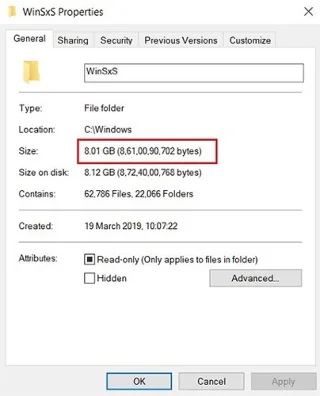
However, the problem is that the WinSxS folder continues to grow over time and if you have been using your machine for many years, the folder will take up about 40% of your operating system hard drive, which is quite worrying.
So what exactly is going on in that folder? Actually, in addition to the operating system components, Windows also keeps update files in the WinSxS folder. So whenever you get a new update, the files are downloaded and stored, just in case you run into problems in the future and want to roll back to a previous build. Basically, every time you get an update, the files accumulate in that folder, resulting in a staggeringly higher operating system hard drive space.
The WinSxS folder continues to grow over time
It would be wrong to say that Microsoft isn’t trying to fix the problem. Currently, Windows 10 comes with an automatic maintenance service that cleans up replaced files after a month. However, users report that it doesn’t work as intended.
Anyway, now you have a clear understanding of the problem and can take steps to reduce the folder size so that it does not hinder system stability.
Use Disk Cleanup to delete old updates from the SxS folder
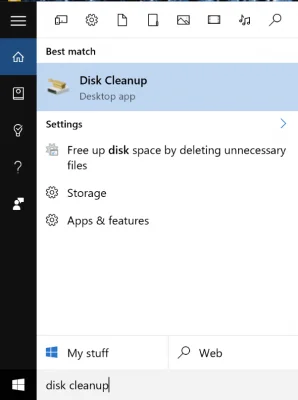
1. First open the Disk Cleanup tool by typing disk cleanup into the Search box on the Start Menu or on the Taskbar and then pressing Enter. On the search results list, click Disk Cleanup.
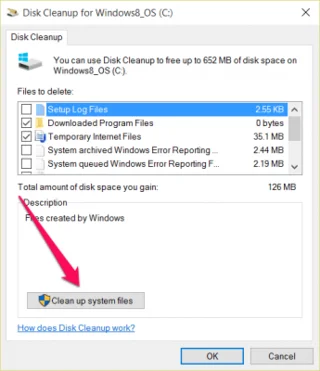
2. On the Disk Cleanup tool window, click the Cleanup system files button.
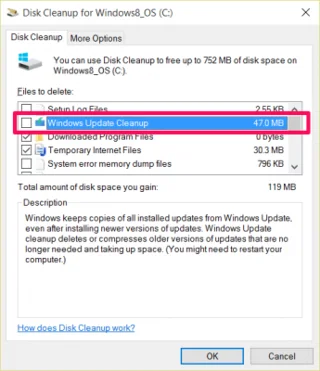
3. Check Windows Update Cleanup.
4. Finally click OK and you're done.
Use Command Prompt to delete the SxS folder
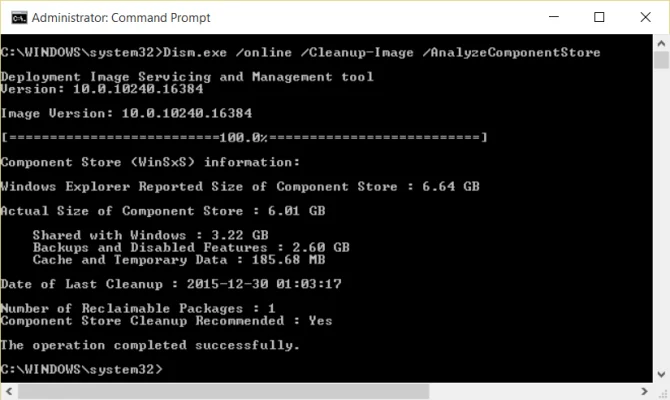
If you want to see how much free space the SxS folder is taking up, you can use Command Prompt.
1. Open Command Prompt as Admin. To do this, type cmd in the Search box on the Start Menu or the Search box on the Taskbar. In the search results list, right-click Command Prompt and select Run as administrator.
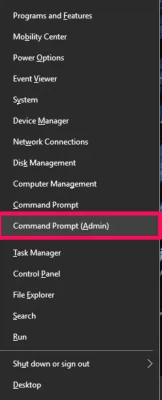
Or else, right-click the Start button in the bottom left corner of the screen, select Command Prompt (Admin).
2. On the Command Prompt window, type the command below and press Enter:
The execution of the command depends on the system and the size of the file you delete.
Delete the WinSxS folder using the StartComponentCleanup task
The StartComponentCleanup task was created in Windows 8 to automatically clean up components on a regular basis, when the system is not in use. This task is set to run automatically when triggered by the operating system. When running automatically, the task will wait at least 30 days after an updated component is installed, before uninstalling previous versions of that component.
If you choose to run this task, it will time out for 1 hour and may not completely clean up all files.
The StartComponentCleanup task can also be started from Command Prompt with admin privileges:
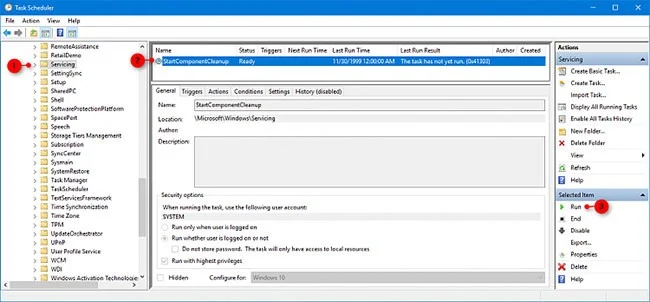
3. In Servicing in the middle, select the StartComponentCleanup task and click Run in Selected Item on the right.
Select the StartComponentCleanup task and click Run under Selected Item on the right.
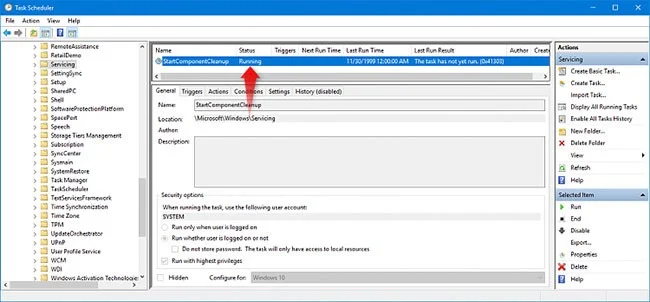
4. The StartComponentCleanup task will run until it completes (this may take some time).
The StartComponentCleanup task will run until it completes.
Delete the WinSxS folder using /StartComponentCleanup and /ResetBase with the Dism command
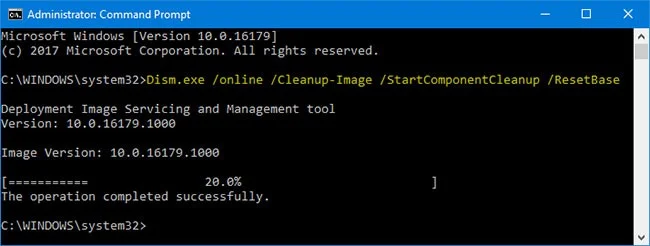
Using the /ResetBase switch with the /StartComponentCleanup parameter of DISM.exe on a running instance of Windows 10 will remove all superseded versions of every component in the component store.
All current service packs and updates cannot be uninstalled after this command is completed. This will not block future service packs or updates from being uninstalled.
3. When finished, you can close Command Prompt if you want. This may take a while to complete.
Delete the WinSxS folder using /StartComponentCleanup and /ResetBase with the Dism command
Delete WinSxS folder using /SPSupersed with Dism command
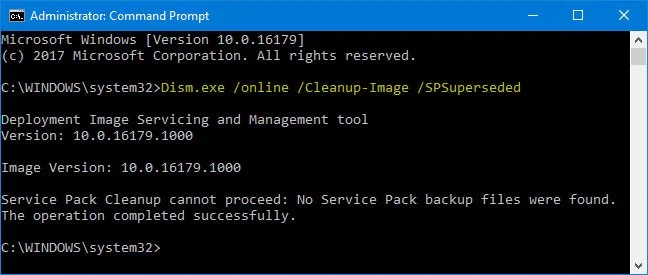
To reduce the amount of space used by a service pack, use the /SPSuperseded parameter of Dism.exe on a running instance of Windows 10 to remove any backup components required for uninstalling the service pack. A service pack is a collection of cumulative updates for a specific release of Windows.
This option will most likely never be needed for Windows 10, as service packs are no longer used for Windows 10.
The service pack cannot be uninstalled after this command completes.
1. Open Command Prompt with admin rights.
2. Type the command below into Command Prompt and press Enter.
Dism.exe /online /Cleanup-Image /SPSuperseded
3. When finished, you can close Command Prompt if you want. This may take a while to complete.
Delete WinSxS folder using /SPSupersed with Dism command