When to Start Decorating for Halloween in 2026

Use a simple 2026 Halloween decorating timeline for indoor décor, outdoor displays, and fresh pumpkins, with practical adjustments for weather and events.
There are three common types of dryers on the market today: condenser dryers, vented dryers, and heat pump dryers. Each type of dryer has its own advantages and disadvantages. So how do you know which type of dryer is right for your family? Check out our article!
What is a condenser dryer?
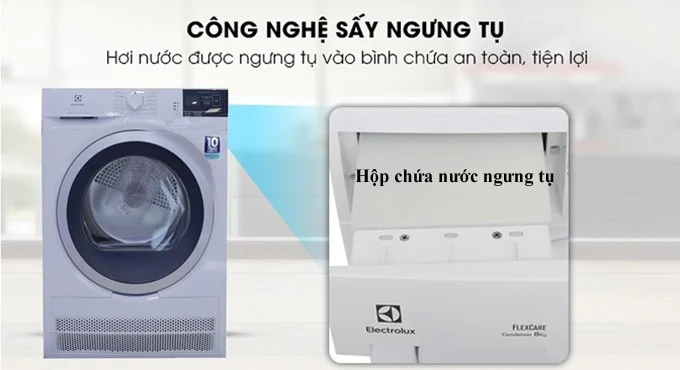
Condensing dryer is a type of dryer that uses condensation technology in the drying process. This technology has the effect of retaining water vapor during the drying process and condensing it into water inside the condensing chamber (condensing chamber).
What is a vented dryer?
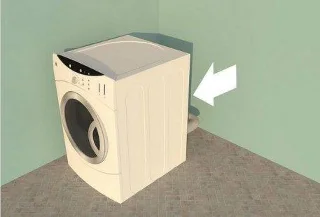
A vented dryer is a dryer that uses a heating element to heat the air. The fan in the dryer uses a heating element to heat the air. The fan in the dryer blows across the heating element so that the air is pushed into the drying chamber, causing the water in the clothes to evaporate faster.
What is a heat pump dryer?
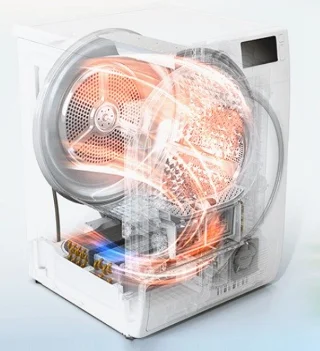
Heat pump dryers are dryers that use a gas compressor in a high-pressure environment to create hot air. The hot air after passing through the drying drum will be cooled to condense the moisture extracted from the clothes.
Compare
| Condensing dryer | Vented dryer | Heat pump dryer | |
| Mechanism of action | The device heats the drying drum and has a condenser to convert the steam into water and store it in a tank. When the tank is full, you just drain and pour the water. | The heating element is heated to create hot air. The fan in the machine will continuously blow hot air into the drying chamber to dry the clothes. At that time, the water vapor will follow the hot air and escape outside. | In a high pressure environment, the compressor uses gas to create a hot air stream and blow it into the drying cage. The hot air stream has the task of taking moisture from the clothes, turning it into hot and humid air streams and cooling it right in the drying cage. At this time, the moisture will be condensed into water to be pushed up to the upper container, while the air stream will continue to circulate, be heated and blown into the drying cage. |
| Machine space | Can be installed anywhere because no additional vent pipe is required. | Place in a ventilated place so that the steam can escape without affecting surrounding objects. | Suitable for any space because the drying technology is integrated neatly into the machine. |
| Drying time | Both types have a drying time of 2.5-3 hours and a quick drying mode of about 40 minutes. | Drying time is longer than other machines of the same weight but using condensation and ventilation technology, about 10-20 minutes | |
| Operating efficiency | More suitable for fabrics that need to be less wrinkled and less stretchy such as children's clothes and shirts. | Anti-tangle with reverse drying technology | Clothes are not over-dried, do not create wrinkles and prolong the life of the fabric. |
| Power consumption | More power is required for the condenser, thus, more electricity is consumed | Save electricity | Save up to 50% energy compared to other types |
| Arranged in order of increasing energy savings: Condenser dryer -> vented dryer -> heat pump dryer |
| Repair and maintenance | Condensing dryers are more complex, especially the condenser, so repair and maintenance costs are also significantly higher. | ||
| Price | About 10 million to over 20 million | Popular, cheap, 5-10 million | From about 20 and up |
Which type of clothes dryer should I choose?
Each type of dryer will have its own advantages and disadvantages and the choice will depend on individual needs. If your budget for a clothes dryer is high, you should choose a heat pump dryer. Although the price is high, thanks to the drying efficiency and energy saving, the machine can last more than 10 years compared to the other two types of dryers.
On the contrary, if your budget for buying a dryer is not much, you do not have small children and do not require additional features such as separate drying programs for each type of fabric, air filtration technology, etc., you should choose a vented dryer to save money.
If your home has limited space, you can place a vented dryer on top of a front-loading washing machine to save a significant amount of space. If you live in an apartment, or have a small space, or have children, you should choose a condenser dryer.
You can refer to the top 5 best clothes dryers today to choose the most suitable clothes dryer for yourself!
Use a simple 2026 Halloween decorating timeline for indoor décor, outdoor displays, and fresh pumpkins, with practical adjustments for weather and events.
Mix five vivid, approachable Halloween cocktails with measured recipes, simple prep tips, and an alcohol-free option for your party guests.
Find 15 office-friendly Halloween costume ideas for 2026, with practical checks for dress codes, respectful themes, comfort, and workplace safety.
Plan a fun elementary school Halloween party with easy crafts, games, inclusive treats, costume tips, and a sample 75-minute classroom schedule.
Compare realistic side hustles for 2026 by startup cost, fees, flexibility, and income control, with current tax and scam guidance from official sources.
Upgrade your home office ergonomics with current OSHA and NIOSH guidance on chair fit, monitor height, laptop setup, lighting, and movement.
Learn why emotional intelligence matters in leadership, where it helps most, how to strengthen it, and how to tell whether your approach is working.
A practical roadmap for moving into tech without a degree: choose an accessible role, build job-ready skills, prove them with projects, and use hiring feedback to improve.
Build a credible LinkedIn personal brand in 2026 with current profile, content, newsletter, analytics, verification, and visibility guidance from LinkedIn.
Quiet quitting and quiet firing are catchy labels, not diagnoses. Learn what is verified, what depends on context, and what employees and managers can do next.








