Thermal glue plays an important role in helping to cool the heatsink so that the CPU has more contact with the heatsink and conducts heat better. Join WebTech360 to learn more about thermal paste as well as the types of glue available on the market today.
Thermal paste (thermal paste or thermal grease and there are dozens of names such as: thermal gel, thermal compound, but in general, Thermal Interface Material - TIM) is an almost indispensable thing on every laptop. computers from desktop to laptop. It is a form of heat conductor, slightly liquid or glue-like, so it is called thermal paste.
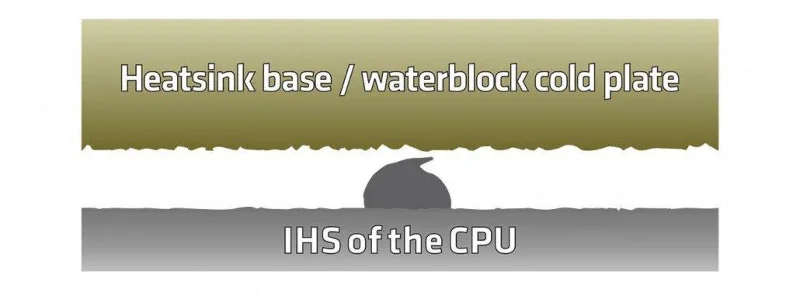
Thermal glue is added in the middle of the heat-emitting surface, here is the CPU cover , GPU base or heat-absorbing surface of the heatsink. The reason there must be thermal paste is because it plays the role of filling up the very small defects on the contact surface of the two metal surfaces being applied.

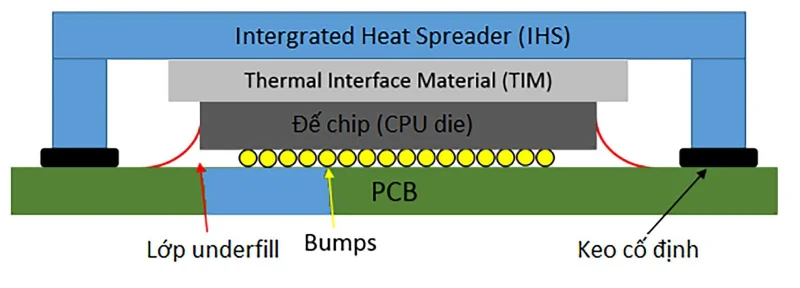
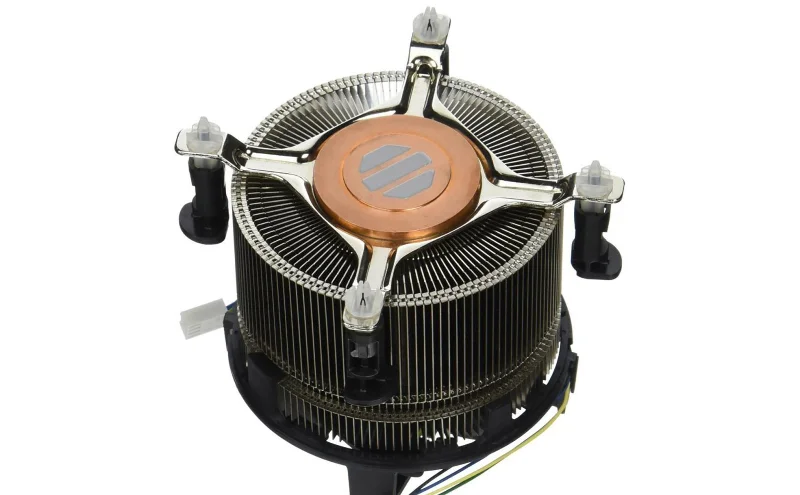
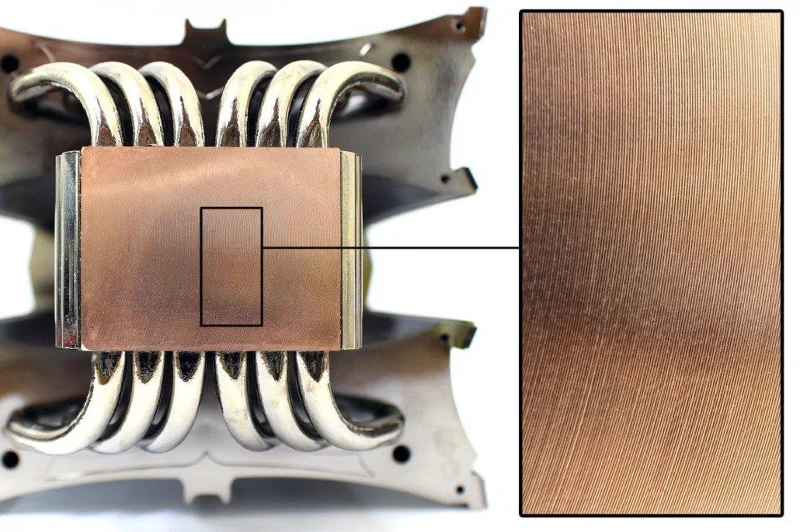
Each CPU or GPU has a surface to diffuse heat from the bottom semiconductor substrate. With CPU, this cover is called IHS (Integrated Heat Spreader), it transfers heat from the chip base up and between the chip base and the IHS cap there is also a TIM layer. The IHS cap will be in direct contact with the heat absorbing surface of the air cooler or the block of the water cooler. The problem is that these two metal surfaces are never perfect, even though they are very flat to the naked eye, in fact there are still tiny holes and grooves that can only be seen under a microscope.

The microscopic space left between the IHS cap and the contact surface of the radiator contains air. Air conducts heat so poorly that thermal paste needs to be added to fill these gaps, creating a "smooth" and sealed heat-conducting surface.
How many types of thermal paste and its quality affect CPU cooling performance?
There are three main types of thermal paste on the market today: metal-based, ceramic, and silicon-based.

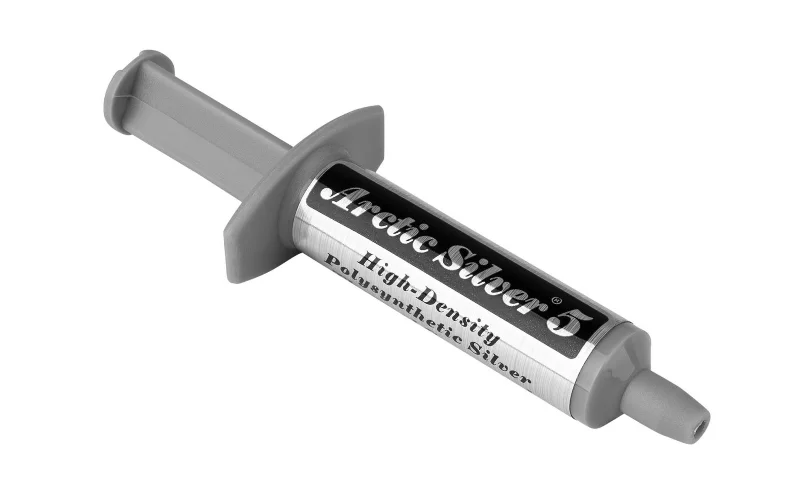
Metal-based thermal paste is a glue with very good heat transfer performance. This type of dispersion glue contains tiny metal particles, which can be silver, zinc, aluminum, copper. This glue has a disadvantage that in addition to good thermal conductivity, it can also conduct electricity due to the presence of metal. However, today, many companies have improved with the conductive isolation layers and structures in the glue. This is also the type of glue that you can easily find on the market.

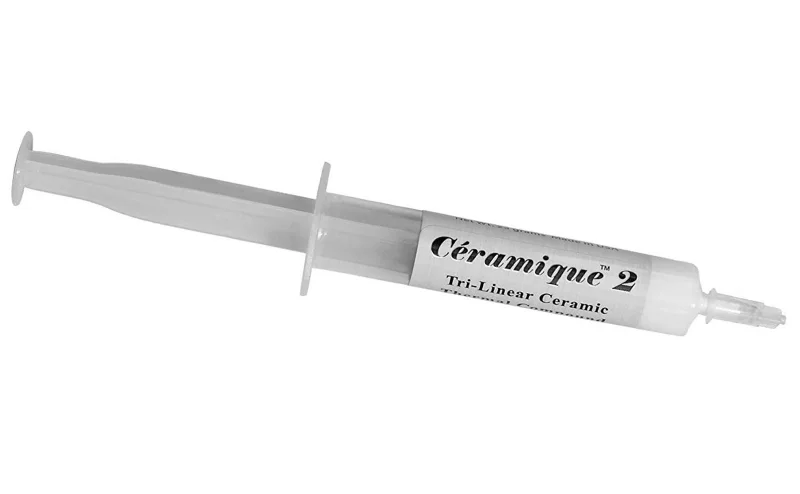
Ceramic glue usually contains ceramic particles, ceramic conducts heat very well and this is also a very safe glue. Of course, ceramic glue does not achieve the same good heat transfer performance as metal-based glue. The difference in temperature can be from 1 to 3 degrees Celsius.

Silicone-based adhesives usually contain silicon and zinc. This glue usually comes with the CPU's stock heatsink and its cooling efficiency is usually average.

There are also liquid metals with excellent heat conduction efficiency. It has the main ingredient Gallium - a soft metal that melts at a temperature higher than normal (29 degrees Celsius), is not as toxic as mercury, and when combined with Indium and other metals, the temperature The melting and freezing of this alloy falls to - 19 degrees Celsius. This means that at room temperature, the liquid metal is always in a liquid state. This glue, in addition to its excellent thermal conductivity, also has high electrical conductivity, so be careful when using it. In addition, it has corrosive properties to aluminum, so liquid metal is often used by users when opening the IHS (delid) CPU cover to apply directly to the semiconductor base.
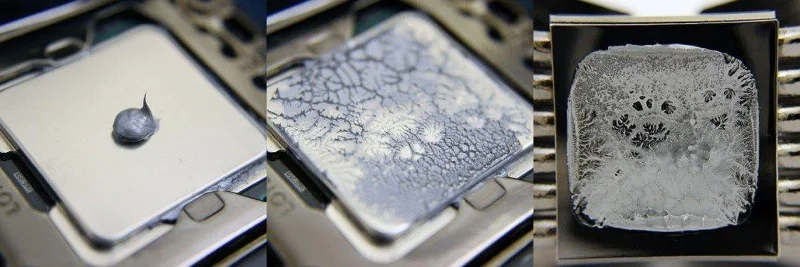
Going back to the first question, if you find that the device is too hot when playing games or just running common tasks, it is highly likely that the machine has been used for a long time and the thermal paste has dried up, the ability to conduct heat is not good. It's still good and what you need to do is remove the machine to re-apply new glue as well as clean the cooling fan.
About liquid metal:

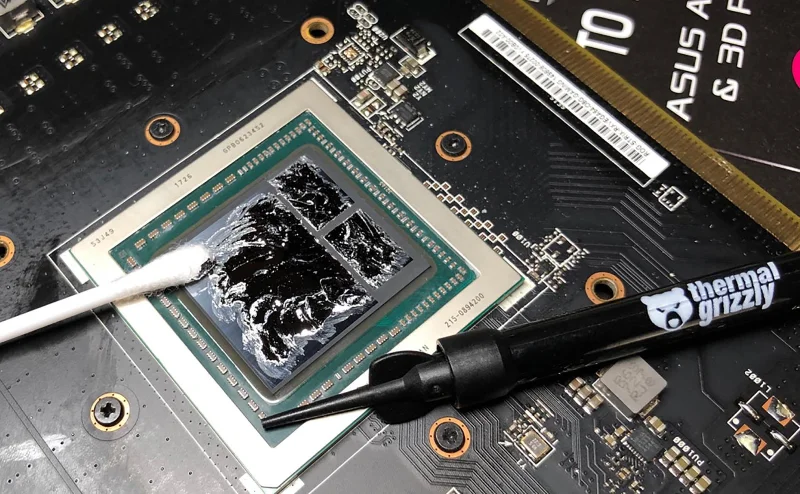
Liquid metal glue has a flowing property, it does not harden under heat like ceramic glues. So during use, metal glue can leak around and if it sticks to other components, it can cause a fire by conductive metal glue. So to apply liquid metal glue, we should use a cotton swab and apply it evenly on the contact surface of the CPU.
Then, you need to create a layer to isolate the CPU's contact area from other components. The usual solution is to use clear nail polish with the main component of polymer to sweep on the surrounding components, when the paint dries it will create a very effective isolation layer with liquid metal glue. Another option is to apply insulating tape.

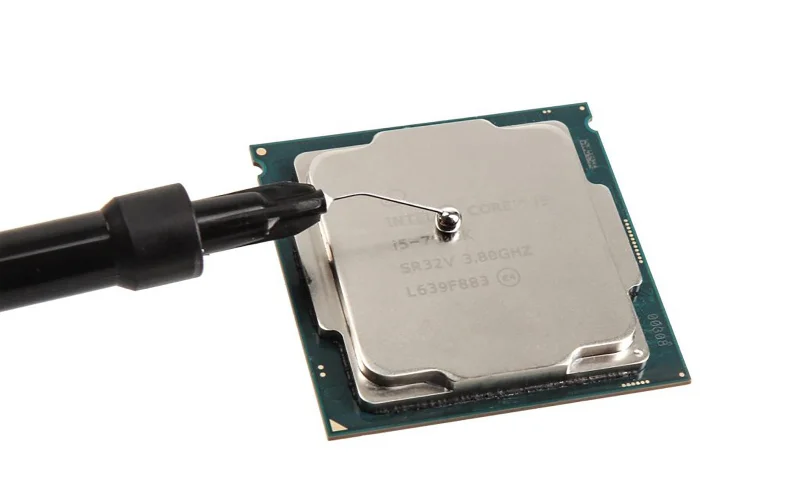
The type of glue I still use is a common dissipative glue like metal glue, ceramic glue, easy to buy and safe. However, care should be taken not to apply too much glue. Usually just a small lump in the middle of the CPU cover, when you apply the heat sink and tighten the screw, the pressure will cause the glue to spread to fill the gaps as well as the entire contact surface.
And that's a summary of thermal paste as well as notes related to applying thermal paste, if you want more information, continue to follow WebTech360's news, we will continue . Bringing you information, interesting.
Source: Tinhte.vn