You are needing to send a video file to your friends but the large amount cannot be sent, because some upload support sites do not support such large files. So what to do in this case?
Rest assured , HJSplit will help you do that. HJSplit supports split large files quickly, and also has the ability to merge them into one complete file very easily. Moreover, HJSplit does not need to be installed, just download it to use it.
Invite you to refer to the detailed steps below to split and merge files more easily with HJSplit software:
1. Instructions to split files with HJSplit
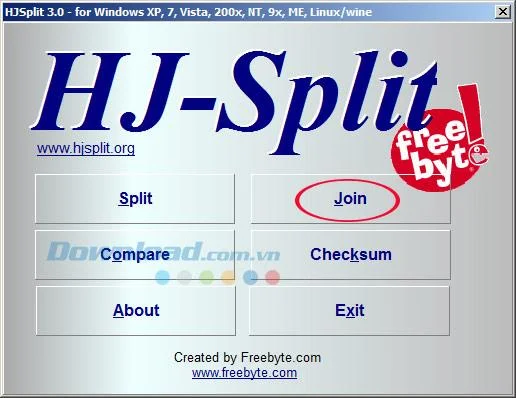
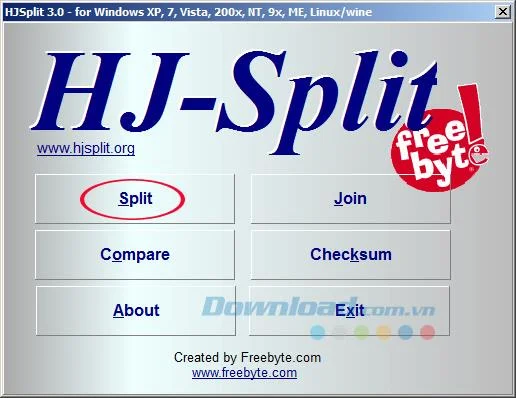
Step 1: Open HJSplit , on the main interface of the software, click Split.
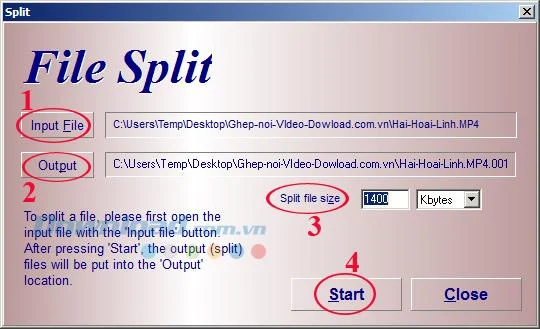
Step 2: Split window appears you can customize some of the following parameters:
- Input File: The path of the folder containing the file to be split.
- Output File: The path of the folder containing the files after splitting.
- Split file size: File size after splitting.
After selecting, click the Start button to start the process of splitting the video.

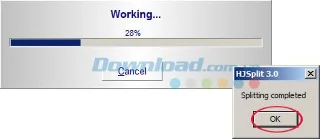
Step 3: The file splitting process begins, when the process runs 100%, a file splitting notification box will complete. Click OK to close the message box. Now you will see the split files appear as * .001, * .002 ... the number of files depends on when you select the file size to split.

2. Instructions to pair files with HJSplit
Step 1: On the main interface of HJSplite, click Join .

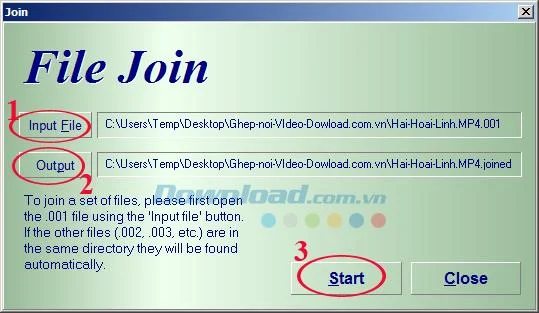
Step 2: Join window appears, customize some of the following parameters:
- Input File: The path of the folder containing the files to be paired. You just need to select the first split file * .001, the program will automatically merge the remaining files.
- Output File: The path of the file folder after pairing.
After selecting, press the Start button to start the process of joining Video.

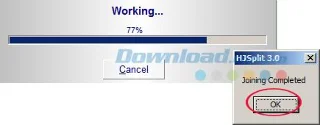
Step 3: The process of file merging takes place, the process of joining the file quickly or slowly depends on the size of the original file, wait until the process runs at 100% will appear a message to merge files successfully. Click OK to close this message box.

So you can split and merge any file to suit each purpose. If you want to split a compressed file , you can easily do it with WinRAR .
In addition, if you want to split Video files, you can refer to the software Speed Video Splitter , also want to split the PDF file, download Weeny Free PDF Cutter .
HJSplit User Guide:
I wish you successful implementation!