How to fix error I / O error 123 in HJSplit

You use HJSplit to split and join files , but when using the Start button, you get the "I / O error 123" error message. And how to overcome?

>>>  Download HJSplit for free here.

Most of the time when using  HJSplit, the error is due to improper use of the user, so this situation occurs. So please refer to the following article to understand the causes and find solutions to continue the process of file splitting:
How to fix error I / O error 123 in HJSplit

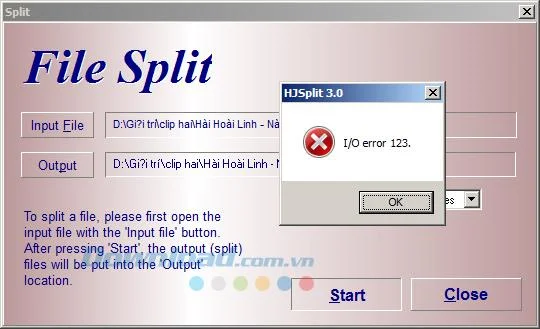
I / O error message  error 123

Cause of error I / O error 123:

  • Because the folder containing the file is Vietnamese.
  • Because the names of the paired files do not match.

How to fix the error:

Please rename the folder or existing files inside that folder with unsigned characters. Because  HJSplit does not support other languages, naming it will cause the above error.

How to fix error I / O error 123 in HJSplit 

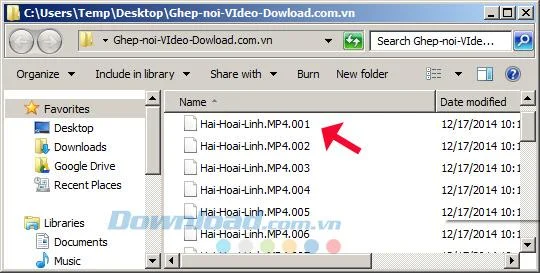
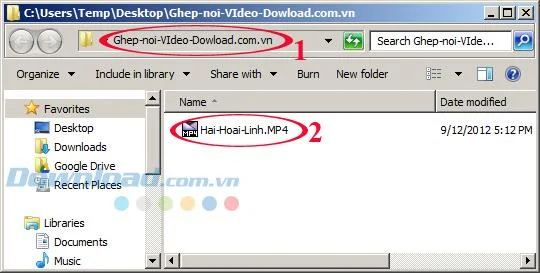
Rename the same pair of files, only the component behind. 

For example: As shown in the picture below, there are 7 files separated from the complete file, then named as: Hai-Hoai-Linh.MP4.001,  Hai-Hoai-Linh.MP4.002 until  Hai-Hoai-Linh. MP4.007 so that when pairing does not occur I / O error 123.

How to fix error I / O error 123 in HJSplit

This error is very easy to fix, but many people have got in trouble and struggling to find a solution. Hopefully the above article will help you use HJSplit more effectively. 

In addition, you can refer to the following software:  MKVToolnix ,  Alon Video Joiner ,  Zealot Video Workshop ... to split and join Video easily and quickly.

I wish you successful implementation!
Leave a Comment

Enable FIPS Mode on SLES 15 and Verify the Boot State

Enable FIPS Mode on SLES 15 and Verify the Boot State

Follow SUSE’s SP7 procedure to enable FIPS mode, reboot safely, verify the active policy, and check whether your compliance requirement calls for validated modules.

Set Up a LUKS-Encrypted Data Volume on SLES

Set Up a LUKS-Encrypted Data Volume on SLES

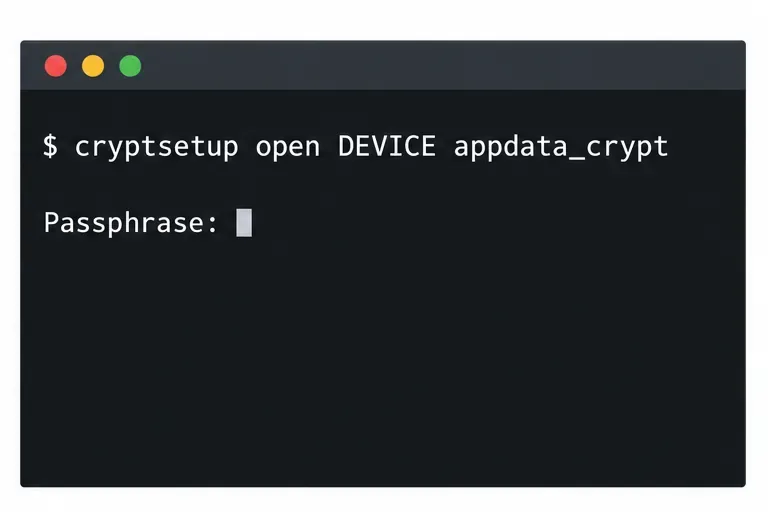
Compare YaST and cryptsetup for a new encrypted SLES data volume, choose LUKS1 or LUKS2, and verify unlock and mount behavior safely.

Build a Custom AppArmor Profile on SUSE Linux

Build a Custom AppArmor Profile on SUSE Linux

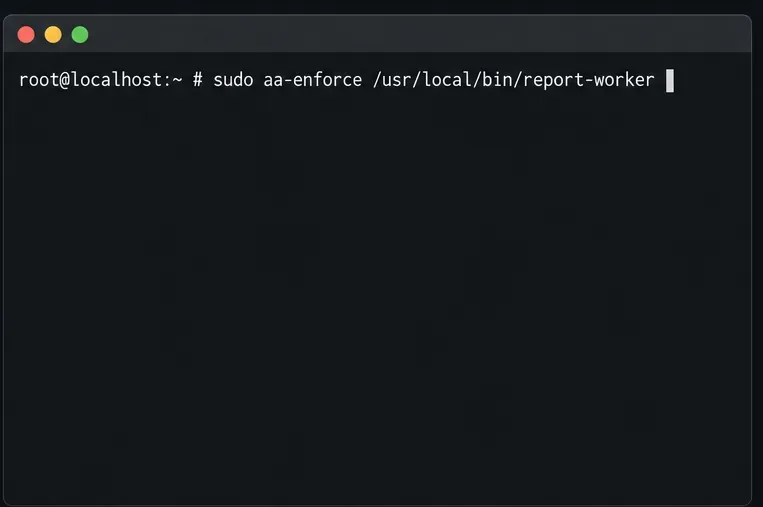
Create, refine, and verify a least-privilege AppArmor profile on SLES 15 SP7, with a clear note on SLES 16’s SELinux default.

Build a Local SUSE Update Server with RMT on SLES 15

Build a Local SUSE Update Server with RMT on SLES 15

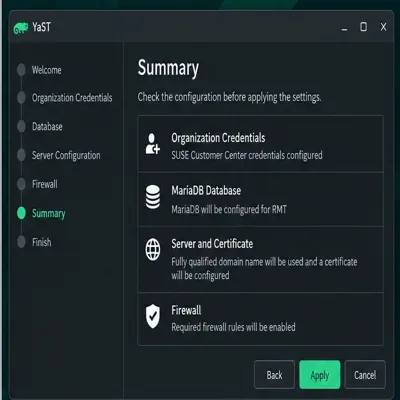
Set up RMT on SLES 15, mirror entitled repositories, and verify HTTPS registration and package access from a test client.

Join SLES 15 to Active Directory with SSSD in YaST

Join SLES 15 to Active Directory with SSSD in YaST

Connect SLES 15 to AD with YaST’s SSSD-based logon management, then verify directory lookup, domain login, and Kerberos tickets.

Enable SLES Live Patching and Verify a Kernel Fix

Enable SLES Live Patching and Verify a Kernel Fix

Set up the right Live Patching path for SLES 16.0 or 15 SP7, apply eligible kernel fixes, and confirm what is active without confusing it with a reboot-required kernel update.

Install and Sign Custom Kernel Modules on SLES 15 Secure Boot

Install and Sign Custom Kernel Modules on SLES 15 Secure Boot

Load a custom SLES 15 kernel module without disabling Secure Boot. Match the running kernel, sign the .ko file, enroll a MOK key, and verify loading.

Keep Services Available During a SLES 15 SP5 to SP6 Upgrade

Keep Services Available During a SLES 15 SP5 to SP6 Upgrade

SLES 15 SP5 can migrate online to SP6, but each node must reboot. Use a tested rolling upgrade or blue-green cutover to keep workloads reachable.

Apply the SLES 15 STIG Safely with OpenSCAP

Apply the SLES 15 STIG Safely with OpenSCAP

Use SUSE’s supported STIG profile to scan SLES 15, test remediation, review remaining findings, and retain assessment evidence.

Restore Cockpit Access to SUSE Linux Enterprise Server

Restore Cockpit Access to SUSE Linux Enterprise Server

Trace a failed Cockpit connection through DNS, port 9090, the systemd socket, firewalld, TLS, and login settings using current SUSE guidance.