The short answer: the creator economy is changing entertainment by collapsing production, distribution, audience feedback and monetization into a much tighter loop. A creator can publish an idea, see how people respond, expand it into a recurring show, fund it through ads or fans, and bring it to television screens without first passing through the traditional studio pipeline. That does not make studios, networks, labels or professional production obsolete. It creates a second route to entertainment—and the two routes are increasingly overlapping.
For viewers, that means more niche programming, more direct access to the people making it, and a faster flow of new formats. For creators, it means more control but also more business responsibility and platform risk. For media companies, it means the next hit may come from a creator-led channel, podcast or livestream rather than a conventional development slate.
Creator entertainment is no longer confined to the phone
One of the clearest signs of change is where people are watching. In its 2026 strategy letter, YouTube said Shorts were averaging 200 billion daily views and that YouTube had been the leading U.S. streaming service by watch time for nearly three years, citing Nielsen. The same letter describes creators as part of the new prime-time landscape rather than a separate category of internet video. See the YouTube CEO's 2026 letter.
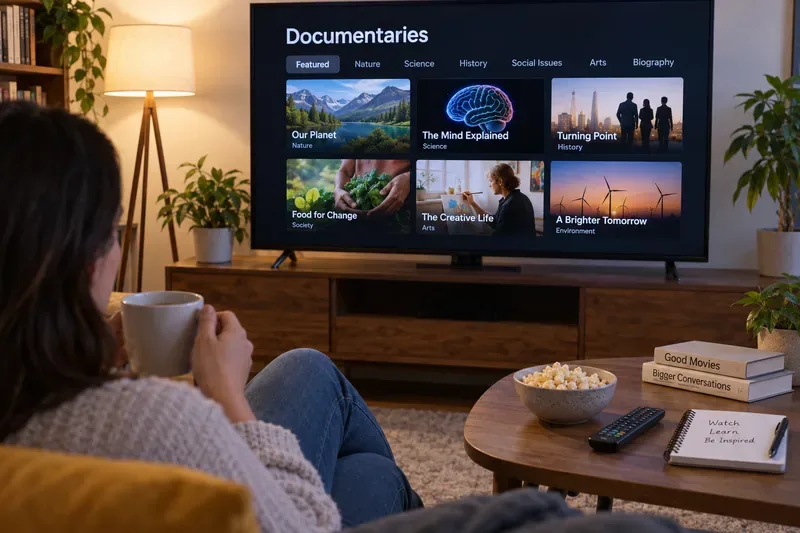
This matters because creator content is now competing for the same evening attention as movies, sports, reality shows and scripted series. A cooking creator can produce a long-form competition episode for the television screen. A comedian can move from short clips to an hour-long special. A podcaster can publish the same conversation as audio, video and short highlights. The distinction between a “social video” and a “show” increasingly depends on format and production choices, not on whether a traditional network commissioned it.
The biggest shift is the feedback loop
Traditional entertainment often develops slowly: concept, financing, production, distribution, ratings, then a decision about what comes next. Creator-led entertainment can shorten that cycle dramatically. Comments, watch time, shares, memberships, livestream participation and repeat viewing can all provide fast signals about what an audience wants more of.
Consider an illustrative example. A comedy creator posts three short sketches built around different fictional characters. One character consistently produces stronger completion rates and more requests for a follow-up. The creator then turns that character into a 20-minute episode, later a live show, and eventually a season of longer videos. That is not proof that audience feedback always predicts a hit, but it shows the structural advantage: creators can test ideas publicly at relatively low cost before making a larger investment.
This model works best when the creator can distinguish useful audience signals from noise. Chasing every trend can weaken a distinctive voice. A creator with a clear premise, repeatable production process and a recognizable point of view is better positioned to use feedback without becoming trapped by it.
Entertainment formats are blending together
The creator economy is also weakening old format boundaries. Podcasts increasingly have video. Livestreams can feel like talk shows, sports companion broadcasts or interactive game shows. Long-form videos can resemble documentaries. Short-form clips can function as trailers and discovery tools for longer work.
Spotify's current creator strategy is a useful example of this convergence. Its Partner Program combines audience-driven payouts for eligible Premium video engagement in select markets with advertising monetization. Spotify's January 2026 update describes the program as a way for creators to grow audio and video shows while using multiple revenue streams. See Spotify's 2026 Partner Program update.
For an audience member, the practical result is simple: the same entertainment property can follow you from a short clip at lunch to a full episode on a TV at night and an audio version during a commute. For creators, the trade-off is operational complexity. Every additional format can expand reach, but it also adds editing, packaging, rights management and publishing work.
Creators can now build entertainment businesses, not just channels
Platform payouts remain important, but the business model is becoming more diversified. At its September 2025 creator event, YouTube said it had paid more than $100 billion to creators, artists and media companies globally over the previous four years. The platform also emphasized shopping, fan funding, live content and other monetization tools. See Made on YouTube 2025.
Direct fan revenue is another important part of the shift. Patreon reported that podcasters earned more than $472 million on its platform in 2024 from more than 6.7 million paid memberships. That figure is self-reported by Patreon, so it should be read as platform data rather than an industry-wide estimate, but it illustrates how subscription-supported entertainment can operate alongside advertising. See Patreon's 2025 discussion of fan-first podcasting.
For a creator deciding how to monetize, there is no universal best model. Ad-supported publishing is easier for casual viewers because the content can remain free. Memberships can produce steadier direct revenue, but only when a meaningful group of fans wants ongoing access or extras. Sponsorships can pay well but introduce disclosure obligations and can damage trust if the fit is poor. Products, events and licensing can diversify income, but they turn the creator into an operator managing inventory, contracts, fulfillment or rights.
Creator-led entertainment and traditional media are converging, not simply competing
| Dimension | Creator-led model | Traditional model | What the trade-off means |
|---|
| Greenlighting | Publish, test and iterate quickly | Formal development and commissioning | Creators gain speed; studios often bring deeper financing and risk controls. |
| Audience relationship | Direct comments, communities, livestreams | More mediated through distributors and research | Creators get faster feedback; large media can reach broad audiences at scale. |
| Production | Small teams can move quickly | Larger specialized crews and workflows | Small teams are flexible; bigger productions can deliver scale, polish and complex rights management. |
| Revenue | Ads, memberships, sponsors, products, events | Ads, subscriptions, licensing, box office, distribution | Creators can diversify early, but income may be volatile and platform-dependent. |
| IP and brand | Often centered on a creator identity or owned channel | Often centered on a studio, franchise or label | Creator identity builds intimacy; institutional brands can survive talent turnover more easily. |
The strongest future model may be hybrid. A creator can prove an audience independently and later work with a production company for a larger project. A media company can partner with a creator who already understands a niche community. A podcast network can use creator-led communities for memberships while still distributing broadly. The opportunity is not “creators versus Hollywood.” It is a more fluid system in which talent, IP, financing and distribution can combine in more ways.
What changes for viewers?
For viewers, creator-led entertainment is particularly attractive when you want specificity, personality and community. A highly specialized history channel may go deeper on one era than a general cable network ever would. A gaming creator can react to a live event in real time. A fan community can influence which guests, topics or formats appear next.
The downside is that the boundary between entertainment, recommendation and advertising can become less obvious. In the United States, the Federal Trade Commission says creators and influencers should clearly disclose material connections with brands when endorsements are involved. The FTC's current guidance also notes that disclosure should be hard to miss and placed with the endorsement itself. See the FTC's endorsement and influencer guidance.
For audiences, a useful rule is to separate “I enjoy this creator” from “this recommendation is independent.” Entertainment value and commercial influence can coexist, but viewers should still look for sponsorship disclosure, distinguish opinion from evidence and remember that a creator's business incentives may shape what gets featured.
What changes for creators?
The creator model is most attractive when you can consistently make something differentiated, build a repeat audience and tolerate uncertainty. It is less attractive if your project needs a large budget before you can test demand, depends on rights you do not control, or requires a level of production that a small team cannot sustain.
A useful way to think about the trade-off is control versus support. Creators can control tone, release cadence and audience relationship, but they also absorb jobs that traditional organizations split across producers, editors, sales teams, lawyers, marketers and business managers. As a channel grows, professionalization is often not optional. It is what prevents a successful creative project from becoming an unsustainable workload.
A practical creator example
Imagine an independent science-entertainment creator with a loyal audience. The creator publishes short experiments for discovery, a weekly 25-minute show for deeper viewing, and a monthly livestream for members. If the long-form episodes begin attracting television viewing and sponsors, the creator may hire an editor and producer rather than increasing personal output indefinitely. That is a better fit than chasing daily volume if the show's appeal depends on careful research and production quality.
What changes for studios, networks and brands?
Traditional entertainment companies now have another talent and IP pipeline. Creators arrive with something development teams used to spend heavily to estimate: evidence that a specific audience already cares. But follower count alone is a weak reason to commission a show. A creator's strength may be intimacy, improvisation or direct community interaction, which can disappear if a partnership forces the work into a format that does not fit.
Creator partnerships make the most sense when the creator's existing format can scale without losing what people came for. They make less sense when the deal treats a creator only as a marketing surface. The best collaborations preserve the creator's voice while adding capabilities such as financing, production, distribution, rights management or live-event expertise.
Where entertainment is heading next
The direction is toward a mixed ecosystem: short video for discovery, long-form video for depth, television screens for premium viewing, podcasts that move between audio and video, livestreams for participation, and direct communities for the fans who want more. The same creator or property may operate across several of these modes.
That does not mean every creator will become a studio or every studio will become creator-led. The more realistic change is that entertainment is becoming less dependent on a single gatekeeper. A strong idea can be tested with an audience earlier, funded in more ways and expanded across formats once demand is visible.
For viewers: expect more choice and more personal connection, but keep commercial disclosure and source quality in mind. For creators: focus on repeatable formats, audience trust and diversified revenue rather than assuming reach alone will create a durable business. For entertainment companies: treat creator communities as audiences with their own culture, not simply as follower counts to be converted into conventional programming.
As of September 2026, the creator economy looks less like a side industry and more like an increasingly integrated part of entertainment itself. The lasting change is not that everyone can upload. It is that successful creators can now develop, distribute, monetize and evolve entertainment with the audience present throughout the process.