Home
» Discover
»
Streaming Wars in 2026: Which Platforms Are Actually Worth Keeping?
Streaming Wars in 2026: Which Platforms Are Actually Worth Keeping?
You open your bank statement and realize you are paying for six streaming services, but on most nights you still open the same one or two apps. That is the practical problem behind the streaming wars in 2026: the issue is no longer finding enough to watch. It is deciding which subscriptions earn a permanent place in your budget and which ones should be rotated, bundled, downgraded, or canceled.
The short answer is that most households do not need every major service all year. A broad library service such as Netflix can make sense as an always-on subscription, while Disney+ and Hulu are especially compelling as a bundle. HBO Max remains strong for prestige series, Warner Bros. movies, and select sports. Peacock, Paramount+, and Apple TV are easier to justify when their specific sports or originals match what you actually watch. Prime Video is most defensible when you already pay for Amazon Prime for other benefits.
Price check: U.S. prices and plan details below were verified on September 14, 2026. Streaming prices, promotions, sports rights, bundles, and included features can change, so check the provider before subscribing.
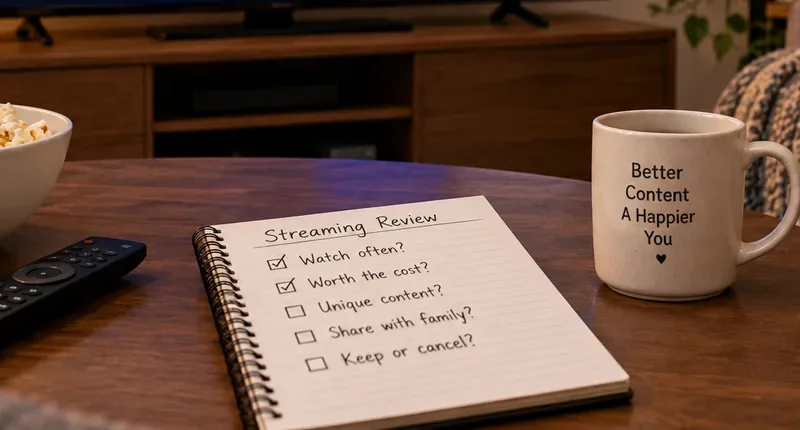
A simple streaming review works better than keeping every service by default: ask how often you watch it, whether its content is unique for your household, and whether the monthly price still feels justified.
Why streaming feels expensive even when individual plans look affordable
Subscription creep is the main reason. One service at $8.99 or $12.99 can feel inexpensive, but stacking five or six services quickly recreates a cable-sized entertainment bill. The problem becomes worse when households pay for premium ad-free tiers even though they rarely use downloads, 4K video, extra simultaneous streams, or other plan-specific benefits.
Another cause is content fragmentation. A household that wants Netflix originals, Disney franchises, HBO series, live soccer, NFL games, Formula 1, and current network shows may genuinely need several services at different times of the year. The sensible response is not necessarily to choose one winner. It is to separate permanent subscriptions from seasonal subscriptions.
The quickest way to decide what stays
Before comparing brands, use three questions. First, did anyone in the household watch the service in the last two weeks? Second, does it provide content that is difficult to replace elsewhere? Third, would you sign up today at the current price if you were not already subscribed?
If the answer to all three is yes, the service is a strong keeper. If only one answer is yes, it is usually a candidate for rotation rather than year-round billing. This simple test is more useful than judging a platform by the total size of its catalog, because a huge library has little value if your household does not open the app.
2026 streaming comparison: who should keep what?
Service
Current U.S. pricing checked Sept. 14, 2026
Best reason to keep it
When to cancel or rotate
Netflix
$8.99 with ads; $19.99 Standard; $26.99 Premium
Broadest all-purpose choice for households that want frequent new series, movies, documentaries, international titles, and kids content
If you mainly keep it for one returning show or rarely watch outside release windows
Disney+ and Hulu bundle
$12.99 regular monthly price with ads; $19.99 Premium bundle without ads on Disney+ and Hulu, with limited exceptions
Strong value for households combining Disney, Pixar, Marvel, Star Wars, family viewing, Hulu Originals, FX, and current TV
If your household barely uses either family/franchise content or Hulu's broader TV library
HBO Max
$10.99 Basic with Ads; $18.49 Standard; $22.99 Premium
Prestige HBO programming, Warner Bros. catalog, films, DC, Adult Swim, and select live sports
If you binge one flagship series at a time and do not need the movie catalog between releases
Peacock
$8.99 Select; $12.99 Premium; $19.99 Premium Plus
NBC/Bravo programming plus sports, movies, and Peacock Originals on Premium tiers
If you only need it for a particular sports season or a short run of NBC/Bravo shows
Paramount+
$8.99 Essential; $13.99 Premium
CBS programming, Paramount+ originals, UEFA Champions League, NFL on CBS, UFC, and more sports; Premium adds local CBS and the full SHOWTIME offering on the service
If your sports interests move elsewhere or your CBS/SHOWTIME viewing is occasional
Apple TV
$14.99 per month
Commercial-free Apple Originals plus Formula 1, MLS, and Friday Night Baseball at no extra subscription cost
If you are not following Apple originals or those sports closely enough to justify a permanent subscription
Prime Video
Included with Amazon Prime; Prime Video on-demand content includes limited ads unless an eligible ad-reduction upgrade is added
Easy to keep when Prime is already valuable to you for shipping and other membership benefits
If you joined Prime mainly for video and would not otherwise pay for the wider Prime membership
Netflix: the easiest single-service keeper, but ad-free pricing is now a serious commitment
Netflix remains the simplest choice for a household that wants one service covering many genres rather than one narrow content identity. Its current U.S. tiers are $8.99 per month for Standard with ads, $19.99 for Standard without ads, and $26.99 for Premium with 4K and four simultaneous streams. Netflix's own pricing page also notes that Standard supports two devices at once, while Premium expands simultaneous viewing and download capacity.
The important decision is not whether Netflix is “good.” It is whether the premium tier features matter to your household. A single viewer on a 1080p television can save substantially by avoiding Premium. A family using multiple 4K TVs at the same time may reasonably pay more.
Keep it year-round if: several people in your household use it every week and your viewing spans multiple genres. Rotate it if: you mostly return for one or two major releases.
Disney+ and Hulu: the bundle is often more compelling than choosing between them
For many U.S. households, the better question is no longer “Disney+ or Hulu?” Disney currently offers the two together at a regular monthly price of $12.99 with ads or $19.99 for the Premium bundle, which removes ad breaks from most Disney+ and Hulu movies and series. Eligible customers may also see temporary six-month promotional pricing, but a keep-or-cancel decision should be based on the regular renewal rate, not only the introductory offer.
The bundle works because the services cover different needs. Disney+ is especially strong for family viewing and major Disney, Pixar, Marvel, Star Wars, and National Geographic brands. Hulu adds current television, FX, adult animation, Hulu Originals, and a broader general-entertainment library.
There is also a Disney+, Hulu, HBO Max bundle priced at $19.99 with ads or $32.99 without ads on most on-demand content. If you already pay for all three services separately, checking the bundle is one of the easiest ways to cut the bill without losing content.
HBO Max: worth keeping for quality-focused viewers, easier to rotate for binge watchers
HBO Max currently charges $10.99 per month for Basic with Ads, $18.49 for Standard, and $22.99 for Premium. Standard includes Full HD streaming on two devices and up to 30 offline downloads, while Premium adds 4K on supported titles, four simultaneous streams, and up to 100 downloads.
HBO Max is easier to justify for viewers who regularly use HBO, Warner Bros., DC, Cartoon Network, Adult Swim, and the broader film library. It also includes select live sports on Standard and Premium plans. On the other hand, someone who subscribes only for one prestige drama can save money by joining for the season, watching it, and leaving until the next must-see release.
Peacock: a sports-and-NBC decision more than a universal keeper
Peacock raised U.S. prices on August 18, 2026 for new and returning subscribers. The current monthly rates are $8.99 for Select, $12.99 for Premium, and $19.99 for Premium Plus. Existing subscribers from before the change move to the new rates on billing dates on or after September 17, 2026.
The cheapest Select plan needs special attention: Peacock says it covers TV favorites but excludes sports, movies, and Peacock Originals. Premium is the practical starting point for people who want the platform's full mix. Premium Plus removes ads from most on-demand content and adds downloads, but live sports, live events, channels, and some programming can still contain ads.
That makes Peacock a clear keep for households that consistently watch its NBC/Bravo programming and sports. If those interests are seasonal, Peacock is an excellent rotation candidate.
Paramount+: one of the easiest services to justify for specific sports fans
Paramount+ currently lists Essential at $8.99 per month or $89.99 per year, and Premium at $13.99 per month or $139.99 per year. Essential carries ads and includes a large on-demand library plus sports such as UFC, UEFA Champions League, and NFL on CBS games, subject to market and rights limitations. Premium removes ads from most on-demand content, adds the local live CBS station, and includes the full SHOWTIME catalog available on the service. Live TV can still contain ads.
For a household following those sports, Paramount+ can be more valuable than its entertainment-only competitors. For everyone else, the decision usually comes down to how often you watch CBS, Paramount originals, and SHOWTIME programming.
Apple TV: much more interesting in 2026 if you watch F1, MLS, or its originals
Apple TV is now $14.99 per month in the United States after a seven-day trial for eligible new subscribers. Apple says its Originals are commercial-free, and the subscription now includes Formula 1, MLS, and Friday Night Baseball at no extra cost. Family Sharing can also extend one subscription to up to six people.
That changes the value calculation. For someone who watches F1 every race weekend and follows several Apple Originals, Apple TV can be a permanent service. For a casual viewer who watches one acclaimed series every few months, $14.99 is harder to justify year-round. In that case, rotating Apple TV for one or two months at a time is usually the better fit.
Apple also currently promotes an Apple TV and Peacock bundle starting at $17.99 per month. Bundle eligibility and exact tiers should be checked at signup, but it is another example of why households should look for combinations before paying for two services separately.
Prime Video: treat it differently if Amazon Prime already pays for itself
Prime Video is unusual because many households receive it as part of a broader Amazon Prime membership rather than evaluating it as a stand-alone entertainment expense. If fast shipping and other Prime benefits already justify your membership, Prime Video can be viewed as an included video library rather than another full-price streaming bill.
Amazon's current help information confirms that Prime movies and TV shows include limited advertisements and that an eligible Prime Video Ultra upgrade can remove ads from most on-demand Prime content. Live TV, sports, select ad-supported content, and some add-on subscriptions may still include ads. Amazon's help pages available during this review did not expose one stable public U.S. price for every Prime Video-only and Ultra configuration, so check the price displayed in your own Amazon account before upgrading.
Bundles can beat cancellations when your household truly uses multiple services
Canceling is not always the answer. If three people in a household genuinely use three different services, consolidating them into a bundle can preserve the content while lowering the effective cost. The Disney+, Hulu, HBO Max bundle is the clearest example in the current market. Apple and Peacock also now have a combined offer.
The caution is that bundles can create their own form of subscription inertia. A bundle is only a bargain if you value most of what it contains. Do not keep a three-service package because the percentage discount looks impressive if you consistently use only one service.
Ad-supported plans are the easiest savings lever
If you want to keep several services, moving one or two to ad-supported tiers can be less disruptive than canceling them outright. Netflix's $8.99 ad tier costs less than half of its $19.99 ad-free Standard plan. HBO Max Basic with Ads is $10.99 versus $18.49 for Standard. Peacock Premium is $12.99 versus $19.99 for Premium Plus.
The trade-off is not identical across services. Peacock Premium Plus still has ads in certain live and sponsored content. HBO Max says live events have ads regardless of plan. Paramount+ Premium can still show ads in live TV. Read the plan language instead of assuming “ad-free” means every piece of content is free from commercial interruptions.
Sports fans should build around rights, not around brand loyalty
Sports are the strongest reason the “pick one service” strategy fails. In 2026, Apple TV includes Formula 1 and MLS. Paramount+ carries UFC, UEFA Champions League, and NFL on CBS. Peacock's full Premium tiers include live sports and events. HBO Max includes select sports on its higher tiers. Disney also sells bundles that add ESPN services.
If sports are important, map the leagues and events you actually watch before trimming subscriptions. A platform that seems expensive on entertainment value alone may be essential during a season, while becoming easy to cancel in the off-season.
Which platforms are worth keeping?
For a typical household that wants to simplify, a sensible starting point is one broad everyday service plus one rotating specialist service. Netflix is still the easiest broad default. The Disney+ and Hulu bundle is arguably the strongest family-plus-general-entertainment combination. HBO Max is the most defensible permanent add-on for viewers who repeatedly use HBO, Warner Bros., movies, and select sports.
Peacock, Paramount+, and Apple TV are more dependent on specific interests. They can be excellent values for the right viewer, especially sports fans, but they are also easier to rotate if their exclusive content comes in bursts. Prime Video is usually worth keeping when Amazon Prime already makes sense for reasons beyond streaming.
How to check whether your streaming cleanup worked
After one full billing cycle, look at two things: your monthly total and your viewing behavior. If your bill is lower and nobody in the household is regularly searching for something that disappeared, the cleanup worked. If you canceled a service and immediately need it every week, restore it and cut somewhere else.
A good streaming setup should feel intentional. You should know why every recurring charge is there. If you cannot explain the reason for keeping a platform in one sentence, that service is probably the next one to test as a cancellation or rotation candidate.