When to Start Decorating for Halloween in 2026

Use a simple 2026 Halloween decorating timeline for indoor décor, outdoor displays, and fresh pumpkins, with practical adjustments for weather and events.
When NASA's Artemis I mission successfully launches and begins its journey around the moon in 2022, there will be no astronauts on board — instead, there will be two adult-sized mannequins. The dummies, named Helga and Zohar, were designed to test the radiation levels astronauts might be exposed to when they fly Artemis II and III.
After nearly two years of data collection and analysis, the German space agency DLR has released the first results from its space radiation study. The good news for future lunar explorers is that it appears that the radiation levels they will face will be within acceptable limits inside the spacecraft's properly shielded areas.
Radiation is one of the biggest concerns as humans move beyond Earth’s protective atmosphere and the region of charged particles known as the Van Allen belts that help protect all life on Earth from harmful radiation. Once out of low Earth orbit, toward the moon and beyond, astronauts will be exposed to extreme levels of radiation that can cause cancer, heart disease and a host of other health problems.
New research from DLR finds that radiation exposure inside the Orion spacecraft capsule varies significantly depending on location, with shielded areas offering up to four times better protection than unshielded locations.
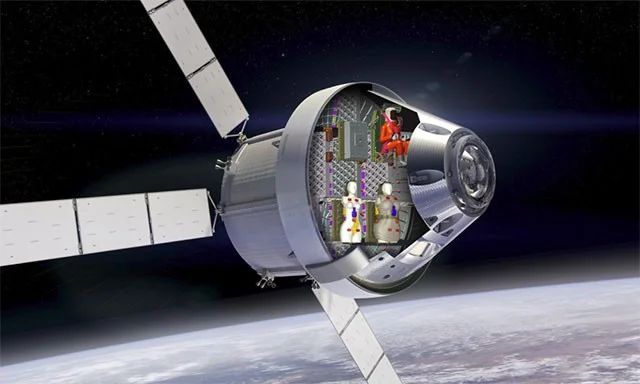
But it's not just the environment inside the capsule that matters. The study also found that the orientation of the spacecraft affects exposure levels. For example, turning the spacecraft 90 degrees while flying through the inner Van Allen belt reduced radiation exposure by 50 percent.
“ This indicates that this flight maneuver can significantly reduce the crew’s radiation exposure. This is also a good sign and confirms the basic suitability of Orion for future human spaceflight. Our measurement data also provide a solid knowledge base for the design of such missions, ” said Dr. Thomas Berger of the DLR Institute of Aerospace Medicine.
Two dummies were used to simulate the types of radiation exposures the human body might encounter, comparing an unprotected dummy to a dummy wearing a radiation suit. The researchers have not yet published the data from that comparison, but the analysis promises to yield some interesting insights.
With radiation monitoring instruments placed throughout the Orion capsule, we are gaining valuable insights into how space radiation interacts with the spacecraft’s shielding, what types of radiation penetrate to reach the human body, and which areas of Orion’s interior provide the best protection. This knowledge is invaluable as it will allow us to accurately estimate radiation exposure for ESA astronauts before they travel into deep space, ensuring their safety on missions to the Moon and beyond.
Use a simple 2026 Halloween decorating timeline for indoor décor, outdoor displays, and fresh pumpkins, with practical adjustments for weather and events.
Mix five vivid, approachable Halloween cocktails with measured recipes, simple prep tips, and an alcohol-free option for your party guests.
Find 15 office-friendly Halloween costume ideas for 2026, with practical checks for dress codes, respectful themes, comfort, and workplace safety.
Plan a fun elementary school Halloween party with easy crafts, games, inclusive treats, costume tips, and a sample 75-minute classroom schedule.
Compare realistic side hustles for 2026 by startup cost, fees, flexibility, and income control, with current tax and scam guidance from official sources.
Upgrade your home office ergonomics with current OSHA and NIOSH guidance on chair fit, monitor height, laptop setup, lighting, and movement.
Learn why emotional intelligence matters in leadership, where it helps most, how to strengthen it, and how to tell whether your approach is working.
A practical roadmap for moving into tech without a degree: choose an accessible role, build job-ready skills, prove them with projects, and use hiring feedback to improve.
Build a credible LinkedIn personal brand in 2026 with current profile, content, newsletter, analytics, verification, and visibility guidance from LinkedIn.
Quiet quitting and quiet firing are catchy labels, not diagnoses. Learn what is verified, what depends on context, and what employees and managers can do next.








