Can the UN Prevent a Hypothetical Nuclear Attack? What Its Powers Actually Allow
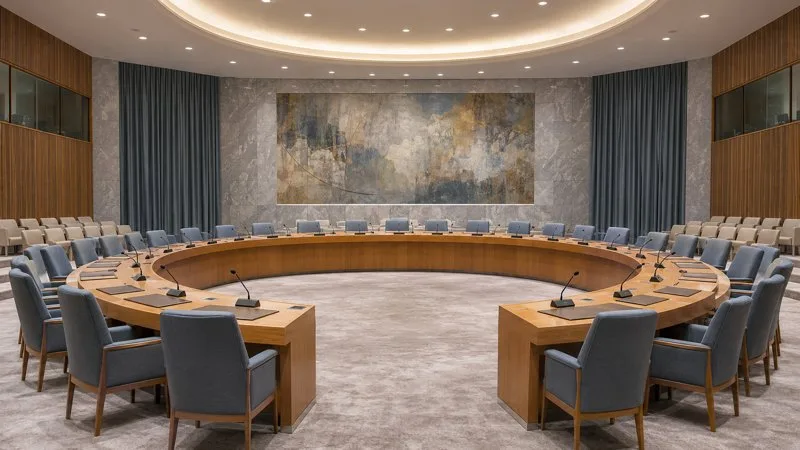
Explore six steps to understand UN diplomacy, Security Council powers, vetoes and the limits of preventing nuclear use.
Could your city shelter residents from radioactive fallout? There is no responsible way to answer that from a city name or a headline alone. Local emergency plans, building access, shelter capacity, alerts, and resident needs differ. This five-step guide helps you check what your local authorities actually publish and make a practical household plan. It is a preparedness exercise, not a claim that a nuclear war is happening or that any city is fully prepared.
Keep three ideas separate: a place where the public can shelter during a particular emergency, a sturdy building that may offer better protection from fallout, and a formally designated fallout shelter. Those labels are not interchangeable. FEMA’s interagency planning guidance describes underground areas and the center of large, heavy buildings as more protective, but it is a planning document, not a public directory certifying every building in every city.
Search the official city or county emergency-management and public-health websites for nuclear, radiological, shelter-in-place, and emergency-alert guidance. Check the page date and the agency that issued it. Save the official alert sign-up link and the non-emergency contact number. If you live in an area served by more than one local government, check which authority covers your home, workplace, and school.
Look for plain answers to practical questions: which alert channels officials use, where updates will appear if mobile data fails, and how instructions are provided in accessible formats and languages. Do not treat a social-media post, an old map, or a search result snippet as a current shelter order. As one local example, New York City publishes nuclear-incident guidance and points residents to its official Notify NYC alerts. That example is specific to New York; it does not establish what another city provides.
Make a short list for home, work, school, and regular destinations. For each building, note whether it has a basement or an interior room away from windows and exterior walls, and whether people can reach that area during operating hours. FEMA guidance says that basements and the center of substantial buildings generally provide better shielding than being outdoors. A building’s appearance alone cannot establish its protection, and the best accessible option depends on where you are when an emergency occurs.
Ask a landlord, employer, or school administrator what their shelter-in-place procedures are, who can open secured areas, and how the plan accommodates mobility, medical, communication, and sensory needs. Do not enter a locked utility area, subway tunnel, garage, or other restricted space to investigate. Ask whether it is an authorized place for public shelter and follow official directions.
Contact the local emergency-management office or its published information line and ask specific questions: Are any facilities officially identified for fallout protection? Are they open to the general public, or only to building occupants? How will officials announce opening locations? Are accessible entrances, backup power, water, and space for service animals addressed? Which facilities are intended for evacuation sheltering rather than radiation protection?
That distinction matters. A school or municipal site used as an evacuation center for storms may not be a designated fallout shelter, and a robust building may not be open to the public. Municipal shelter locations can also change with the incident. NYC Emergency Management, for example, tells residents that disaster-shelter sites change based on the emergency and directs them to current city channels. Use your own jurisdiction’s information instead of assuming that a facility listed for one hazard applies to another.
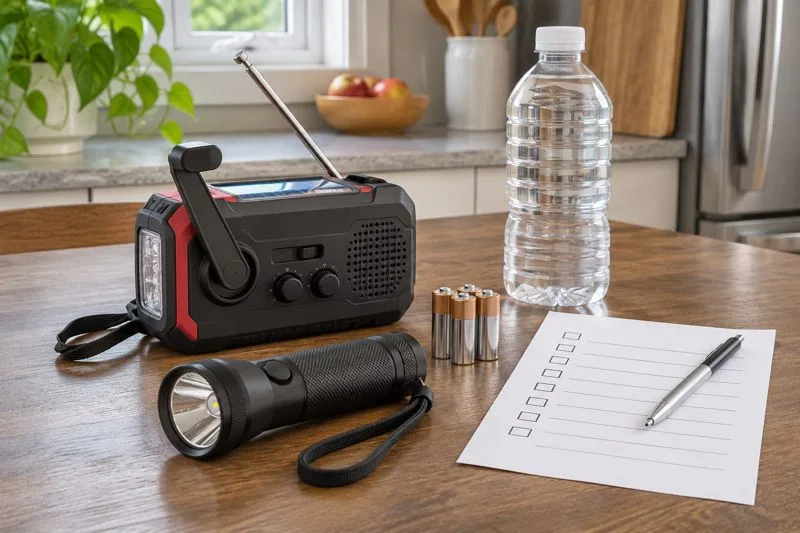
Write down the nearest sturdy indoor options you can reach from your usual locations, and agree on how household members will communicate if they cannot meet immediately. Include children, older adults, people with disabilities, caregivers, pets, and medicines that need special handling. Keep a small supply of sealed water and ready-to-eat food, essential medication, a first-aid kit, flashlight, spare batteries or power bank, battery or hand-crank radio, wipes, and plastic bags where you can reach them.
If an actual alert or incident occurs, do not drive across town looking for a place labeled “fallout shelter.” Follow the instructions for your location. General federal and local guidance emphasizes getting inside a sturdy building, moving to its basement or interior when available, staying inside, and listening for official updates. If a building is damaged, burning, or otherwise unsafe, use authorities’ instructions and immediate life-safety judgment to move to a safer structure. A plan should help you act from where you are, not encourage risky travel.
Keep a one-page note with official alert links, contact numbers, the shelter locations you verified, access limitations, and the date you checked them. Mark unanswered questions rather than guessing. If local public information is limited, ask the relevant agency what residents should do and how updates will be issued; do not label the city unprepared based only on a missing webpage. Recheck the plan when you move, change jobs or schools, or local agencies update their guidance.
A fair city comparison would require comparable information about plans, capacity, access, alerts, and building conditions. Public pages often cover different hazards and levels of detail, so counting listed shelters or ranking cities from web searches would not measure readiness reliably.
Do not assume that. Public plans and designated facilities vary by jurisdiction. Check with the local emergency-management office, and distinguish a formally designated facility from a building that may offer better shielding.
No location can be guaranteed safe from every hazard. Federal guidance identifies underground areas and the center of large, heavy buildings as more protective against fallout than outdoor locations, but structural damage, fire, flooding, access, and official instructions also matter.
Do not make that decision from a map or old webpage. Follow current local instructions. In a nuclear detonation response, official guidance generally prioritizes getting inside the nearest suitable building rather than traveling in search of a special shelter.
Official references: FEMA, Planning Guidance for Response to a Nuclear Detonation; NYC Emergency Management, Be Ready New York; NYC Emergency Management, Get Prepared.
Explore six steps to understand UN diplomacy, Security Council powers, vetoes and the limits of preventing nuclear use.
Understand six steps about tactical and strategic nuclear weapons, civilian harm, escalation risk and international humanitarian law.
Use this 5-step guide to separate Russia and China’s documented 2026 diplomacy from uncertain responses to hypothetical nuclear escalation.
Use these 5 steps to assess a hypothetical nuclear strike on Tehran, verify claims, map humanitarian needs, and avoid unsupported casualty forecasts.
Learn six steps for outage readiness, backups, shielding limits, safe power and shelter priorities in a hypothetical EMP emergency.
Learn six protective steps after a hypothetical nuclear detonation, from immediate shelter and decontamination to official updates.
Use this 5-step guide to check local fallout shelter plans, verify nearby options, and prepare a household response.
Use this 5-step guide to trace supply risks, market reactions, and inflation channels in a hypothetical Iran-related strike.
Use this 5-step guide to understand fallout distance, why it varies, and how to follow official safety instructions.
Use 5 steps to manage fear about WW3, set news boundaries, regain routine, and know when to seek mental-health support.