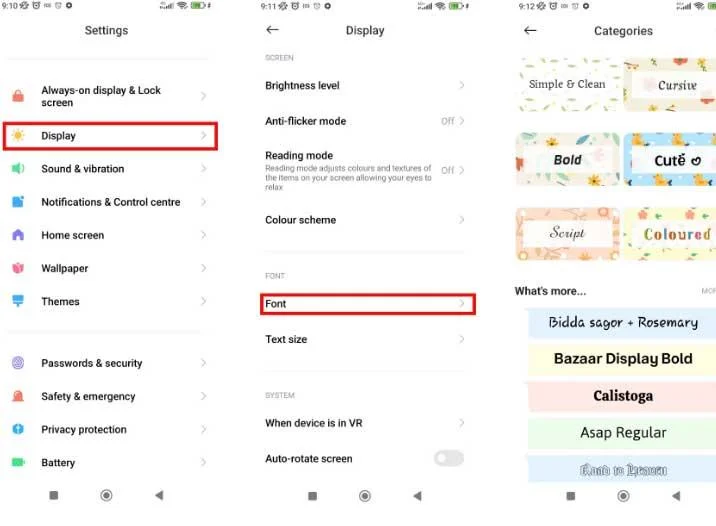
Want to create a new image for your Xiaomi device ? Just follow the instructions below to change font style and size on Xiaomi .

Xiamoi's customization features allow you to personalize your smartphone interface to suit your needs. These features include everything from applying live wallpapers to installing & setting themes, even allowing you to change the system font on your Xiaomi device.
You can personalize the font style or size to give the Android interface on Xiaomi a unique look. Here's how to change the font on Xiaomi .
How to change font style on Xiaomi devices
Changing the font on Xiaomi can improve clarity, so you can read text more easily. MIUI provides built-in options for this. Changing the font is also a great way to give your interface a completely new look, besides trying out the best Android launchers.
You have 2 ways to change the font style: using the Themes app or via Settings.
If the Themes app is already on the Home screen, then this is the easiest way to change the font on Xiaomi:
- From the Home screen , open the Themes app .
- From the table below, navigate to the Fonts section.
- Browse through font categories to find and choose a typeface that best suits your style.
- You will see a preview image of the font on different screens. If satisfied, touch Apply .
If you can't find the Themes app, you can still change the font style by going through Settings:
- Open Settings and tap Display .
- Select Font to automatically open the Fonts section of the Themes app .
- Browse font categories to find and choose the style that best suits your style.
- You will see a preview of the font style on different screens. If satisfied, touch Apply .

After choosing a font, you may need to restart your Xiaomi device to use it on the UI. If you are not sure how to do this, follow the instructions on the Xiaomi website.
To switch back to MIUI's default font style, go to My fonts > select Roboto .
How to change font size on Xiaomi devices
The default font size on your phone may be too small or large to read clearly. To avoid having to constantly squint or scroll the screen to read text easily, you can change the font size in the settings:
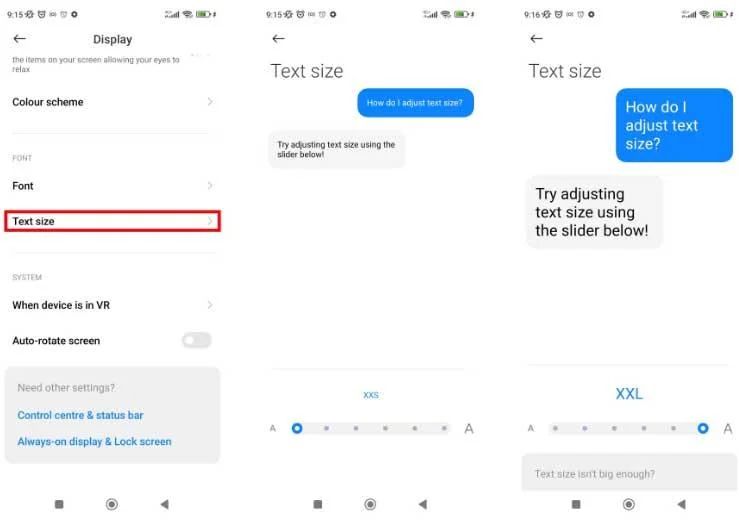
- Go to Settings > Display .
- Select Text size .
- Choose from six size options, from extra small (XXS) to extra large (XXL).

If XXL size is not large enough, you can enlarge the text using the Accessibility setting:
- After selecting the XXL font size , swipe up on the Text size isn't big enough box .
- Tap Accessibility > Display size to open the device's Display size settings.
- Switch to large size L to increase screen size.
Note, changing the screen size in Accessbility will change all elements displayed on it, not just text.
Above is how to change the font on Xiaomi . Hope the article is useful to you.