Home
» PC Tips
»
How to fix BSOD Memory Management error
How to fix BSOD Memory Management error
Have you ever encountered the Windows "Memory Management" blue screen of death error? This common Windows Stop Code is annoying, but there are some simple fixes for Windows Memory Management errors.
Every Windows computer uses Memory Management to manage system memory. Proper functioning of Memory Management is important for the health of the system. When Windows Memory Management stops working, your computer will start to show BSOD errors.
Windows Memory Management 10 and 11 keeps track of every memory location on your system, managing the allocation, transfers, and processes available and held in your system RAM. So when you open a program, Memory Management allocates RAM to that program, and when you close the program, it tells the system that the memory is now ready for use.
So, why does the Windows Memory Management 11 BSOD error occur?
In short, you will see a BSOD Memory Management error screen, meaning that a serious Memory Management error has occurred. Windows 11 will crash and you may see the Memory Management stop code 0x0000001A (this code doesn't always appear, but the text "MEMORY_MANAGEMENT" will definitely appear somewhere on your screen).
There are several common causes of Memory Management errors, including:
Faulty RAM
Problems with new hardware, such as graphics cards
Driver error
Software problems, including corrupted operating system and system files
Drive error
Sometimes, if it's a one-time Memory Management error, a quick system reboot will clear up the problem and you'll be good to go. Sometimes, you may have to dig deeper to fix Memory Management errors.
How to fix BSOD Memory Management error
1. Basic Fix
Before diving into detailed fixes, try running through these quick fixes. One fix may resolve the Memory Management issue before you spend more time troubleshooting.
Have you tried turning your computer off and on again? This simple fix can fix any Windows problem, including Windows Memory Management stop code.
Next, try updating Windows . Outdated system files can cause unexpected errors. Checking for pending updates is a quick and easy way to determine if an update is causing your problem.
Windows 10 : Press Win + I , then go to Update & Security > Windows Update . Install any pending updates.
Windows 11 : Press Win + I , then go to Windows Update. Install any pending updates.
You can also try reseating your system hardware in case something has slipped out of a port or socket. If you have recently moved your computer or something or someone has bumped into it, there is a small chance that your RAM is loose, which can lead to Memory Management errors.
There's no guarantee that these basic fixes will work, but they're worth a try.
2. Run the Windows Memory Diagnostic tool
If the Windows Memory Management error persists, it's time to run the Windows Memory Diagnostic tool to check for specific errors with your system's RAM. This tool will run after you restart Windows 11, check for errors in your RAM, and create an error log for analysis.
Type Windows Memory Diagnostic into the Start menu search bar and select the best match.
You now have two options: Restart now or check for problems after the next system restart. As the name suggests, the restart option will restart your computer immediately and start the diagnostic tool. However, be aware that the diagnostic tool can take several hours to run and your computer will be inoperable during that time.
Therefore, checking for problems later is often the best option because you can continue using your computer (despite the Memory Management BSOD) and then schedule a memory scan overnight, maximizing uptime.
Once complete, you can check the Windows Memory Diagnostic event log for errors. However, the log file does not appear after you restart Windows.
Press Win + X and select Event Viewer from the Power Menu.
In Event Viewer, select Event Viewer (Local) > Windows Logs > System .
In the right column, select Find and type MemoryDiagnostic in the box. Click Find Next .
Your diagnostic results will be displayed at the bottom of the window.
3. Run MemTest86
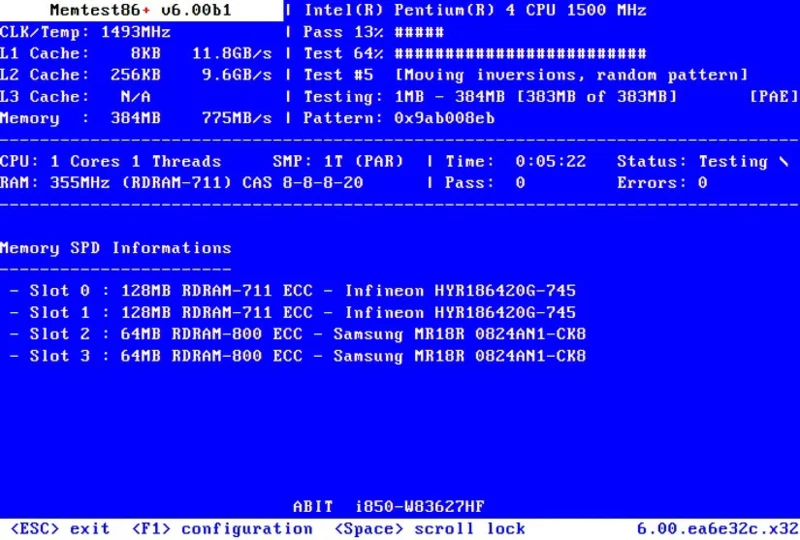
Now, while the Windows Memory Diagnostic tool scans and checks for RAM errors, it doesn't always catch everything. Many people choose to use MemTest86 .
The main difference between the two tools is that you run MemTest86 from a bootable USB. Like Windows Memory Diagnostic, MemTest86 takes a long time to complete a run, taking several hours depending on the amount of RAM installed in the system.
4. Update driver
Update graphics driver
Another quick and convenient fix for a Memory Management BSOD is to update your system drivers . New software or hardware may come with new drivers, and your system may not get the message. Driver errors are generally less common than they were in the past, especially since Windows 10 and 11 handle driver updates. But that doesn’t mean they don’t happen.
Windows 10
Press Win + I to open Settings , then select Update & Security > View update history . You can find any driver updates here.
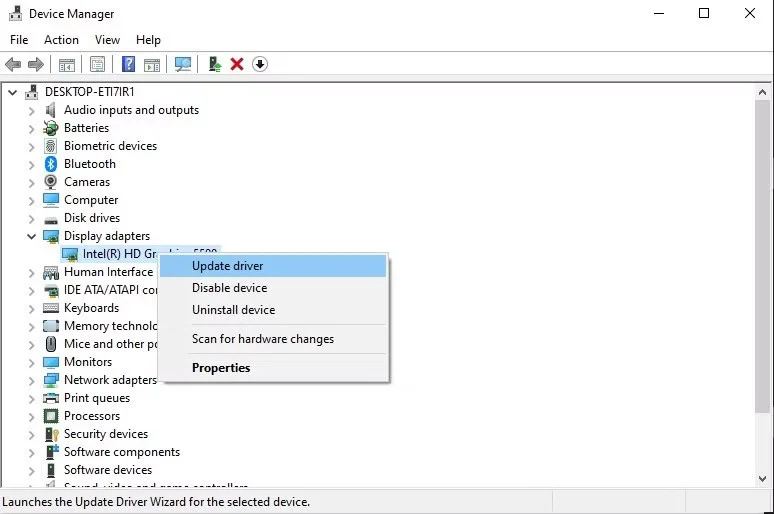
Now, type device manager in the Start menu search bar and select the best match. Scroll down the list and check for any error icons. If there are none, then your driver status may not be the source of the problem.
If you see a driver with a yellow or red warning, right-click the problematic driver, select Update Driver , and then follow the on-screen instructions, usually selecting the Search automatically for drivers option .
Windows 11
Press Win + I to open Windows 11 Settings. Go to Windows Update > Update History .
Scroll down and open the Driver Updates section . It will show you any recently updated Windows 11 drivers.
Now, press Win + X to open the Power Menu and select Device Manager . Scroll down the list and check for a yellow or red error icon. If there is no error icon, then the chances of a misconfigured driver causing the Windows 11 Memory Management issue are low.
If you see a driver with a yellow or red warning, right-click the problematic driver, select Update Driver , and then follow the on-screen instructions, usually selecting the Search automatically for drivers option .
A common theme in forum posts about Memory Management BSODs is that sometimes, outdated or completely new GPU drivers can cause BSODs. While the focus is on Memory Management stop codes, there is also a stop code specific to Video Memory Management. The internal Video Memory Management stop code is 0x0000010E and can indicate a faulty GPU driver.
To update your GPU drivers, go to the manufacturer's website and download the latest update. For most users, this will be Nvidia or AMD .
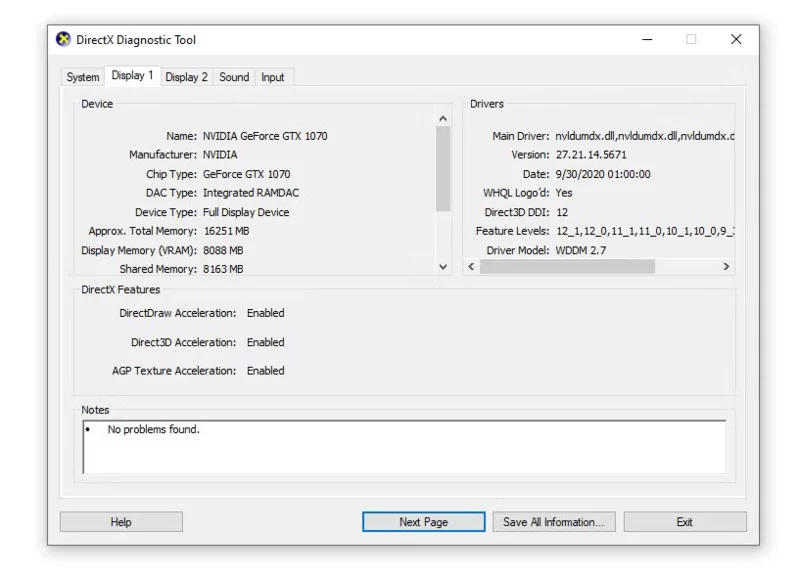
dxdiag display information
If you're not sure which GPU you have, type dxdiag into the Start menu search bar and select the closest result. When the DirectX Diagnostic Tool opens, select the Display tab . You should see your GPU listed here.
6. Run CHKDSK and SFC
CHKDSK is a Windows system tool that verifies file systems and, with certain settings, will fix problems when run. You run CHKDSK from the Command Prompt and it has a bunch of great features.
Type Command Prompt into the Start menu search bar, then right-click the best match and select Run as administrator . (Alternatively, press Windows key + X , then select Command Prompt (Admin) from the menu.)
Next, type chkdsk /r and press Enter. The command will scan your system for errors and fix any problems along the way.
Running CHKDSK can help fix a number of Windows errors, including the DPC WATCHDOG VIOLATION stop code.
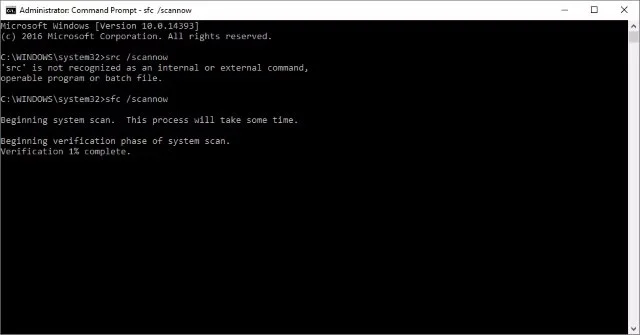
Memory Management error still occurs? System File Check is another Windows system tool that checks for missing and corrupted Windows system files. Sounds similar to CHKDSK, right? SFC checks Windows system files specifically, while CHKDSK scans the entire drive for errors.
But before running the SFC command, it's best to double check that the command works properly.
DISM stands for Deployment Image Servicing and Management. DISM is a built-in Windows utility with many functions. In this case, the DISM Restorehealth command ensures that the next fix will work properly. First, follow these steps.
Type Command Prompt (Admin) in the Start menu search bar, then right-click and select Run as administrator to open Command Prompt with admin rights .
Type the following command and press Enter : DISM /online /cleanup-image /restorehealth
Wait for the command to complete. This may take up to 20 minutes, depending on your system's performance. It may seem to get stuck at times, but wait until it completes.
Once the process is complete, type sfc /scannow and press Enter .
Now, wait for the scan to complete.
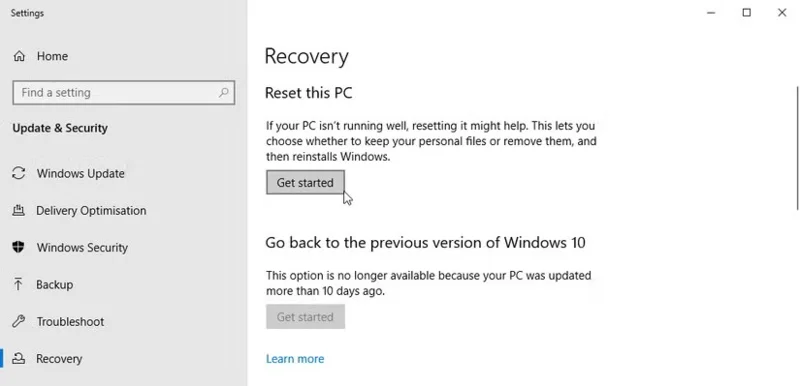
7. Reset Windows (Last resort)
Sometimes, nothing more than resetting Windows will completely fix your problem. Resetting Windows replaces your system files with a completely fresh set of files. This should theoretically clear up any lingering issues related to Memory Management errors while leaving most of your important files intact.
Memory Management Blue Screen of Death errors are tricky to troubleshoot. Too many variables can lead to Memory Management errors, which is exactly why diagnosing the problem directly can sometimes be problematic. However, one of the fixes above should get your system back up and running again, so you can get on with your work without encountering any more BSOD errors.
See also:
How to fix "We can't sign into your account" error on Windows 10