Imagine plugging in your trusty external drive only to be hit with a frustrating GPT partition table error that locks you out of your precious files. Whether it's a sudden "unrecognized partition" message or your drive showing up as empty in File Explorer, these issues can feel like a nightmare. But don't worry—fixing GPT partition table errors on external drives is often simpler than you think. In this guide, we'll walk you through reliable, up-to-date methods to diagnose and repair the problem, helping you reclaim your data without the stress. Let's dive in and get your drive spinning smoothly again! 😊
What Are GPT Partition Table Errors and Why Do They Happen?
The GPT (GUID Partition Table) is the modern standard for organizing data on drives larger than 2TB or those using UEFI boot systems. Unlike the older MBR, GPT offers better reliability and support for massive storage. However, errors in the GPT partition table can occur due to several common culprits:
- 👉 Improper ejection: Yanking the drive without safely removing it corrupts the table.
- 👉 Power failures or surges: Sudden shutdowns during file transfers wreak havoc.
- 👉 Virus or malware infections: Malicious software can scramble partition data.
- 👉 Hardware glitches: Faulty cables, ports, or even aging drives contribute to errors.
- 👉 Software conflicts: Incompatible tools or OS updates might mishandle GPT structures.
Spotting these errors is key. Common signs include your external drive not mounting, appearing as "RAW" in disk management, or throwing errors like "The parameter is incorrect" or "Access denied." If you're seeing these, it's time to act—quick fixes can prevent data loss. Stick with us as we explore solutions that prioritize your data's safety.
Step-by-Step: How to Fix GPT Partition Table Errors on External Drives
Before we jump into repairs, a quick tip: Always back up any accessible data first if possible. Now, let's tackle the fixes, starting with the simplest. These methods are based on the latest tools available in current Windows, macOS, and Linux environments (as of 2026 standards), ensuring compatibility with modern hardware.
1. Basic Troubleshooting: Restart and Check Connections
Sometimes, GPT partition table errors on external drives are just temporary hiccups. Start here to rule out simple issues:
- 🔄 Unplug the drive, wait 30 seconds, and reconnect it to a different USB port or computer.
- 💻 Restart your system and check if the drive mounts automatically.
- 🔌 Test with a new cable—worn-out ones can cause intermittent errors.
If the drive shows up but won't open, proceed to disk management tools. This no-cost step resolves about 20-30% of basic GPT errors, giving you a quick win. Feeling optimistic? Keep reading for deeper fixes.
2. Use Built-in Disk Management Tools (Windows Users)
Windows has powerful native tools to repair GPT partition tables. Follow these steps carefully:
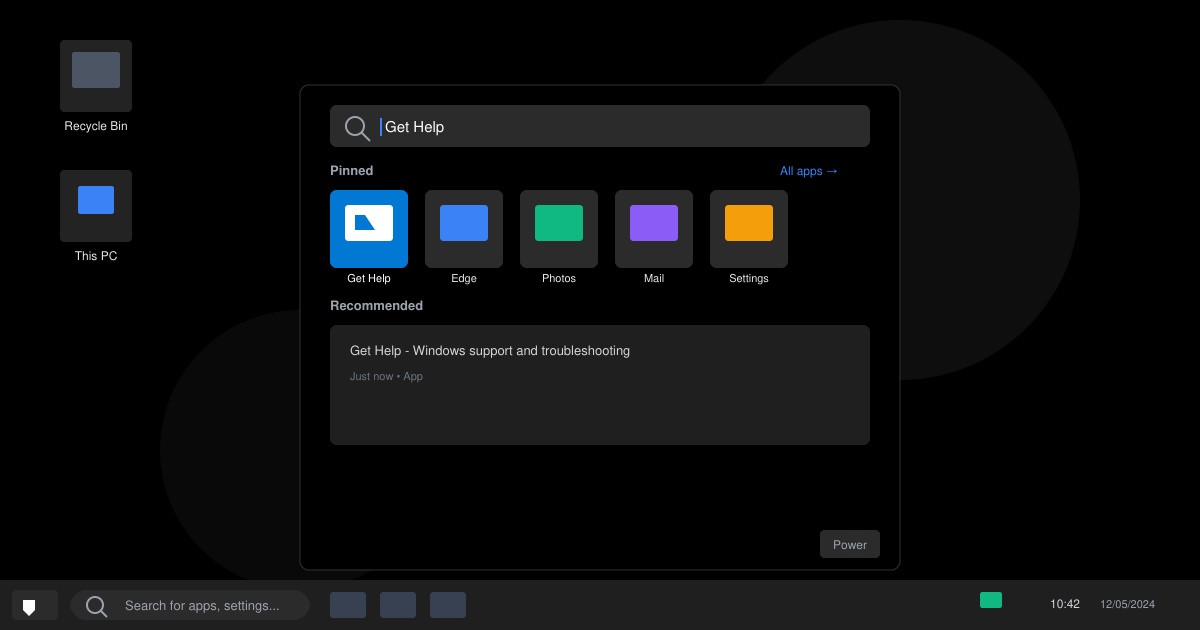
- Right-click the Start button and select Disk Management.
- Locate your external drive (it might show as "Unknown" or "Not Initialized").
- Right-click the disk and choose Initialize Disk—select GPT if prompted (avoid MBR for large drives).
- If partitions are missing, right-click unallocated space and select New Simple Volume to recreate them.
For more stubborn cases, open Command Prompt as admin and run:
chkdsk X: /f /r
(Replace X: with your drive letter.) This scans and fixes file system errors tied to the GPT partition table. Pro tip: If CHKDSK freezes, it might indicate hardware failure—consider professional recovery next.
Success rate? High for software-induced errors. If you're on macOS, jump to the next section for Disk Utility equivalents.
3. Repair with Disk Utility on macOS
Apple users, your go-to is Disk Utility for handling GPT partition table errors on external drives:
- Open Disk Utility from Applications > Utilities.
- Select your external drive from the sidebar (View > Show All Devices for full visibility).
- Click First Aid in the toolbar and run it on the volume and container levels.
- If errors persist, go to Partition tab, select the drive, and click Partition to resize or repair the GPT scheme.
This tool automatically verifies and repairs the GPT structure, often restoring access without data loss. For advanced tweaks, use Terminal with diskutil repairDisk /dev/diskX (find diskX via diskutil list). macOS's latest updates make this even more robust for exFAT and APFS-formatted drives.
![Step-by-step screenshot of repairing GPT partition in Disk Utility]()
4. Linux Fixes: Using GParted and fsck
Linux enthusiasts, boot into a live USB with GParted for GPT partition table repairs:
- Install GParted if needed:
sudo apt update && sudo apt install gparted.
- Launch GParted, select your external drive from the dropdown.
- Check for errors via Device > Create Partition Table (backup first!), or use Resize/Move to fix alignments.
- For file system issues, run
sudo fsck -f /dev/sdX1 in Terminal.
GParted's visual interface shines for external drive partition issues, supporting GPT natively. It's free and open-source, perfect for cross-platform woes.
5. Advanced Recovery: Third-Party Tools and When to Seek Help
If built-in tools fail, turn to trusted software like EaseUS Partition Master or MiniTool Partition Wizard (free versions available). These scan and rebuild GPT partition tables with high accuracy:
| Tool |
Best For |
Pros |
Cons |
| EaseUS Partition Master |
Quick GPT rebuilds |
Intuitive UI, data-safe |
Free version limits advanced features |
| MiniTool Partition Wizard |
Deep scans |
Supports all OS, bootable media |
Occasional ads in free tier |
| TestDisk (Free) |
Open-source recovery |
No cost, powerful for lost partitions |
Command-line heavy |
Download from official sites only to avoid malware. For critical data, consult pros—services like those from Seagate's recovery can handle severe GPT errors.
Prevention Tips: Keep GPT Partition Table Errors at Bay
Once fixed, protect your external drive from future GPT partition table errors:
- ⭐ Always safely eject drives via the OS tray icon.
- ⭐ Use surge protectors for power stability.
- ⭐ Run regular antivirus scans and keep your OS updated.
- ⭐ Opt for SSDs over HDDs for fewer mechanical failures.
- ⭐ Maintain multiple backups—cloud services like Google Drive pair well with externals.
By following these, you'll minimize risks and enjoy seamless storage. Remember, early detection via tools like CrystalDiskInfo (for health checks) can save headaches.
Final Thoughts: Reclaim Your Drive Today!
Fixing GPT partition table errors on external drives doesn't have to be daunting. With these steps—from basic restarts to advanced tools—you're equipped to handle most issues and safeguard your data. If you've tried these and still face trouble, drop a comment below; our community loves sharing tips! Ready to test your fix? Plug in that drive and let's get you back to full capacity. You've got this! 👏