Home
» Wiki
»
How to fix IPv4/IPv6 No Internet Access error on Windows
How to fix IPv4/IPv6 No Internet Access error on Windows
IPv4 or IPv6 addresses help identify and connect to other devices on a network. However, if you encounter a "No Internet Access" error when using IPv4 or IPv6, it's likely that your Internet connection isn't working properly.
In this guide, Quantrimang.com will explore some troubleshooting steps to help you resolve the "IPv4/IPv6 No Internet Access" error and restore your Internet connection.
What causes the "IPv4/IPv6 No Internet Access" error?
If your PC only gets an IPv4 or IPv6 address when connecting to a network, it will display the "No Network Access" error. This can happen for a number of reasons, but some common factors include problems with your router configuration, faulty network drivers, incorrect DNS server addresses, and IPv6 compatibility issues.
While it can be difficult to pinpoint the exact reason, there are a few general fixes you can try to see if they resolve the issue. Here are some troubleshooting methods that will help you fix the "No Network Access" error on your Windows computer.
How to fix "IPv4/IPv6 No Internet Access" error on Windows
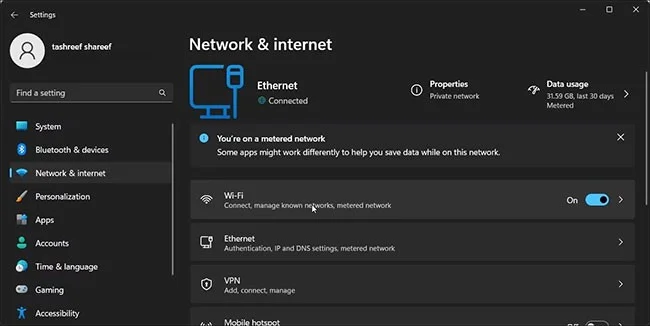
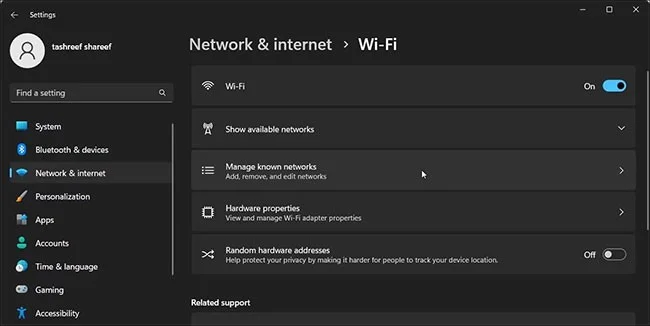
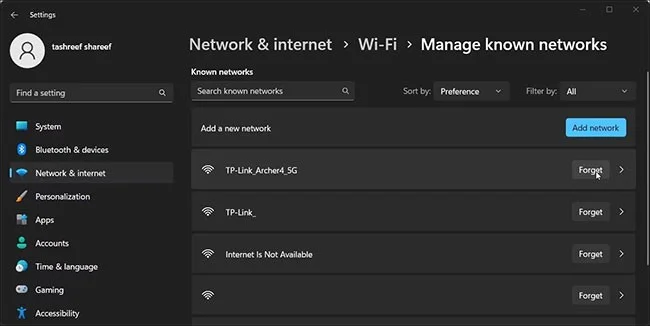
Method 1: Forget and reconnect to the wireless network
You can fix the "IPv4/IPv6 No Internet Access" error by removing the wireless network settings from your Windows PC. Once done, reconnect to the same network and check for any improvements.
Another variation of the "IPv4/IPv6 No Network Access" error only affects select applications. For example, you may be able to access the Internet on your web browser, but not on your email client or software.
This can happen due to a corrupted network configuration. Luckily, you can quickly fix it by resetting the Winsock directory. This is achieved through a series of Command Prompt commands that reset important network settings to default.
To reset the Winsock directory:
1. Press Win + S to open Windows Search.
2. Type cmd. Then right-click on Command Prompt and select Run as administrator .
3. In the Command Prompt window, type the following command and press Enter:
netsh winsock reset catalog
4. After successful execution, type the following command and press Enter:
netsh int ipv6 reset reset.log
5. Once successful, close Command Prompt and restart your PC. After restarting, check if the IPv4/IPv6 error is resolved.
Method 3: Disable Internet Protocol Version 6 (IPv6)
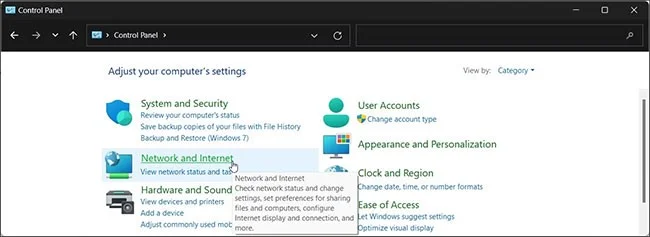
If the "No Internet Access" error only occurs for IPv6, you can disable the affected IP in the network properties to fix the problem. Unless you must use IPv6, the IPv4 protocol should be able to handle your connection without any problems.
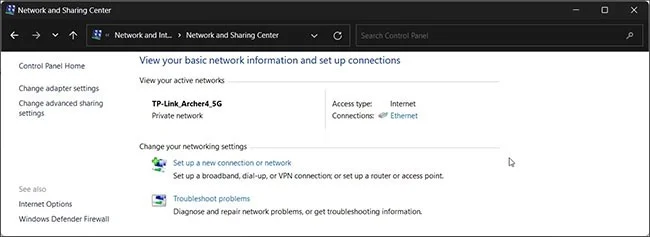
5. Click Change Adapter Settings in the left pane to see all your network adapters.
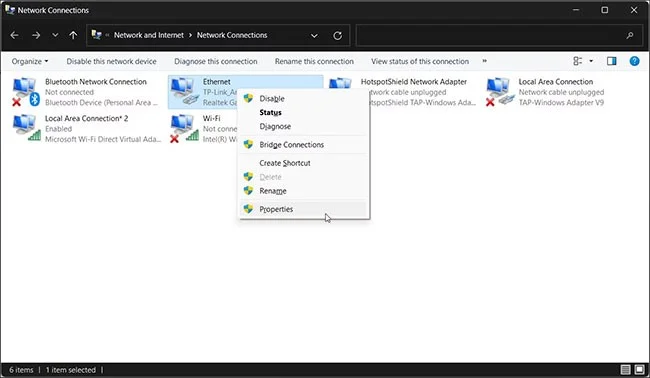
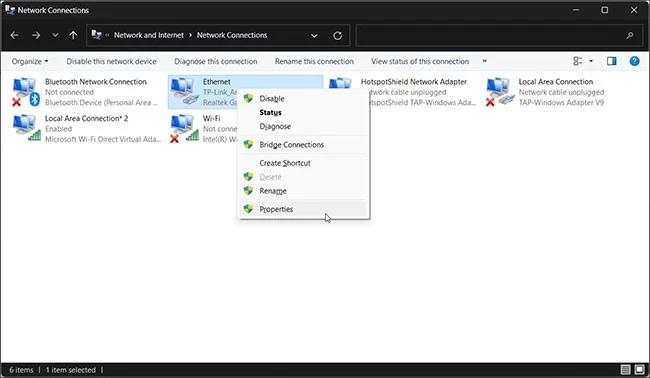
6. Right-click on your network connection and select Properties.
Network adapter properties
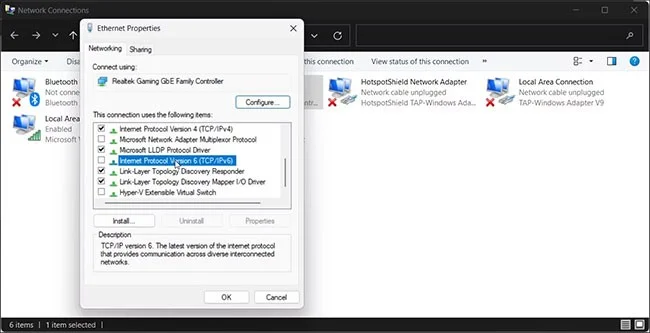
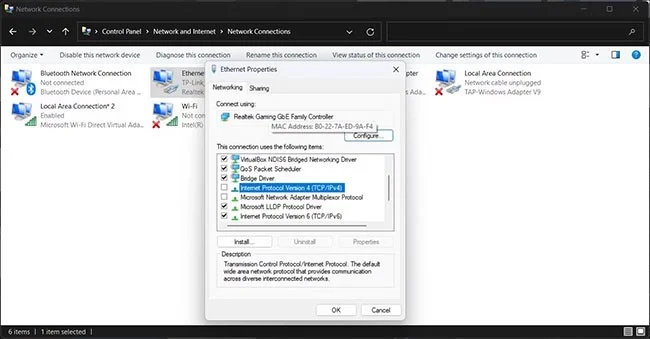
7. In the Properties dialog box, locate and clear the Internet Protocol Version 6 (TCP/IPv6) option .
Disable IPv6
8. Next, uncheck the Internet Protocol Version 4 (TCP/IPv4) option .
Disable IPv4
9. Click OK to save the changes.
10. Right-click on the network connection again and select Properties.
11. Next, check the Internet Protocol Version 4 (TCP/IPv4) option . Do not check the IPv6 option.
12. Click OK to save changes and restart your PC.
Method 4: Configure the network adapter to automatically obtain the DNS server address
Windows operating systems allow you to set and use third-party DNS server addresses for security reasons. However, incorrect configuration of DNS server addresses can cause the "No Internet Access" error.
To fix this, make sure your network connection is set to automatically obtain IPv4/IPv6 and DNS server addresses. Here's how to do it.
1. Press Win + R to open Run.
2. Type ncpa.cpl and click OK to open Network Connection in Control Panel.
3. Right-click on your network connection and select Properties.
Select Properties
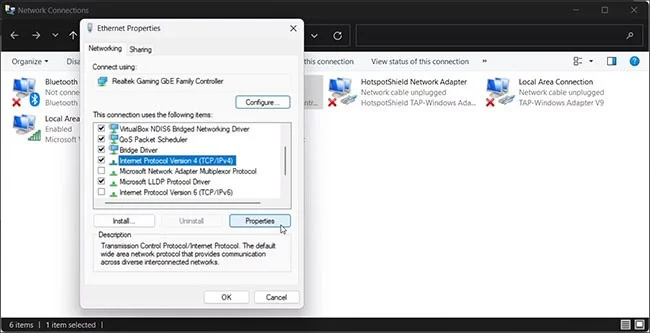
4. In the Properties dialog box , select Internet Protocol Version 4 (TCP/IP) and click the Properties button. You can also double-click IPv4 to access its properties.
Select Internet Protocol Version 4 (TCP/IP)
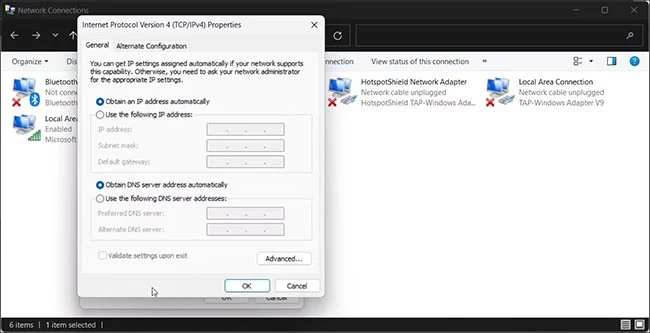
5. Next, select the Obtain an IP address automatically and Obtain DNS server address automatically options .
Select the Obtain an IP address automatically and Obtain DNS server address automatically options
6. Next, select Validate settings upon exit and click OK to save changes.
Method 5: Reset the power to the router and modem
Temporary problems with your router can also cause problems with your Internet connection. To fix this, perform a power reset. This involves turning your router and modem off for a moment and then turning them back on.
To perform a power reset:
1. Disconnect the modem's power from the electrical outlet.
2. Next, disconnect the router's power supply.
3. Leave the device in standby mode for a few minutes.
4. Once complete, connect the power, then turn on your modem and router.
5. Wait for all the lights on the router to stop flashing, then check to see if the error is resolved.
Method 6: Update network adapter driver
A corrupt or outdated network adapter driver can cause you to lose your network connection. New drivers often come with performance improvements and bug fixes. However, a fresh installation can also help resolve issues caused by a corrupt driver.
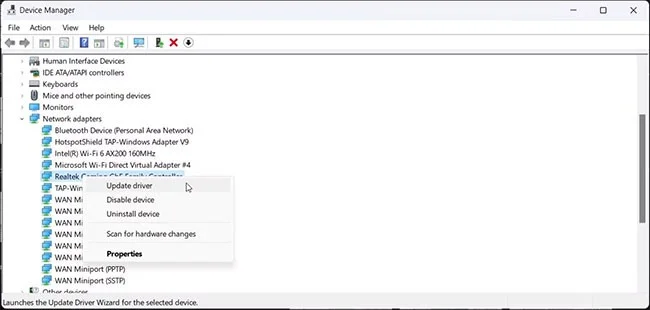
4. Right-click on the problematic network adapter (wireless or Ethernet) and select Update Driver.
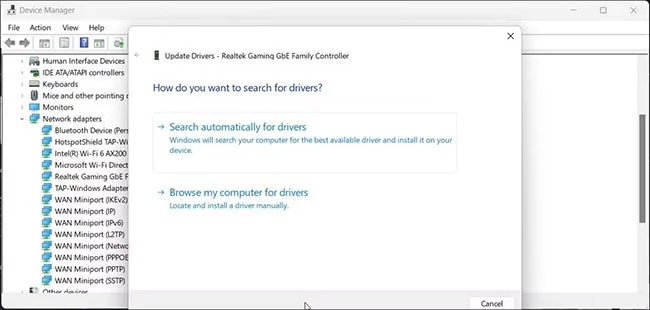
5. Click Search automatically for drivers and follow the on-screen instructions.
Click Search automatically for drivers
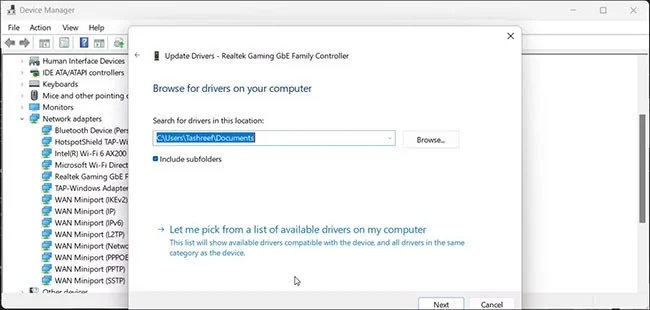
6. If you do not have an active Internet connection, click Browse my computer for drivers .
7. Next, click Let me pick from a list of available drivers on my computer .
Click Let me pick from a list of available drivers on my computer
8. Select the most recent driver update and click Next.
9. Once the driver is installed, close Device Manager and restart your PC.
Some laptop manufacturers provide their own applications for managing system drivers. For example, HP, Lenovo, and Asus laptops come with HP Support Assistant, Lenovo Vantage, and MyASUS, respectively. Launch the application and check to see if there are any new updates available for your computer.
Alternatively, you can also visit your PC manufacturer's website to download the latest update for your network driver.
Method 7: Check Third-Party Antivirus and Firewall Software
Third-party antivirus software comes with built-in firewalls. Sometimes firewalls can block legitimate connections causing problems with your network connection.
Try temporarily disabling your firewall or third-party antivirus software to see if the problem persists when the security program is disabled. Sometimes, you may need to completely uninstall the security program to disable its firewall.