Home
» PC Tips
»
How to Fix Repairing Disk Errors on Windows
How to Fix Repairing Disk Errors on Windows
Errors can appear on your Windows device, no matter how well you maintain it. Errors related to your computer's drive can prevent your system from booting properly and restrict access to your files and applications.
Let's look at different methods to fix drive problems on your Windows device.
1. Start with these basic troubleshooting methods
When your Windows computer starts displaying drive errors, there are some initial steps you can take before moving on to more advanced solutions. Here's what you should do:
Wait an hour : Sometimes the simplest solution is to wait. If this is the first time you've seen this error message in a while (if ever), wait an hour and the error may resolve itself, allowing your computer to boot normally again.
Check the drive for physical damage : If your drive is physically damaged, this can cause this error to keep appearing. Check your drive for any damage.
Revert to an earlier point in time with a system restore point: System Restore undoes recent system changes without affecting your files. If the error started appearing recently, try using System Restore on Windows and see if that fixes the problem.
If the above solutions don't work for you, it's time to start with advanced troubleshooting methods.
The Startup Repair tool is a built-in Windows feature that fixes problems that prevent your computer from starting properly. This tool can be a lifesaver if your system keeps crashing when it starts up.
Note : While the repair process begins, avoid interrupting or turning off your computer. Doing so may further damage Windows.
3. Run SFC and CHKDSK tools
If the startup repair tool doesn't work, it's time to use Command Prompt to run the System File Checker and CHKDSK tools .
The System File Checker (SFC) tool checks your computer for any corrupted system files and then attempts to repair them. Most of the time, this solves disk errors and other boot problems in Windows.
"Disk Controller Driver" often appears under different names, such as "Standard SATA AHCI Controller". This is the Windows driver that establishes communication between the operating system and the hard drive. If the Disk Controller Driver is out of date, it can lead to drive-related errors.
Follow these steps to update the Disk Controller Driver on your PC:
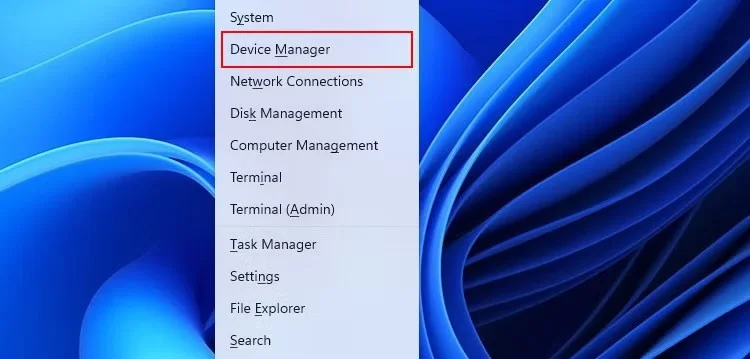
1. Press Win + X and click Device Manager from the menu.
Device Manager in the Power menu
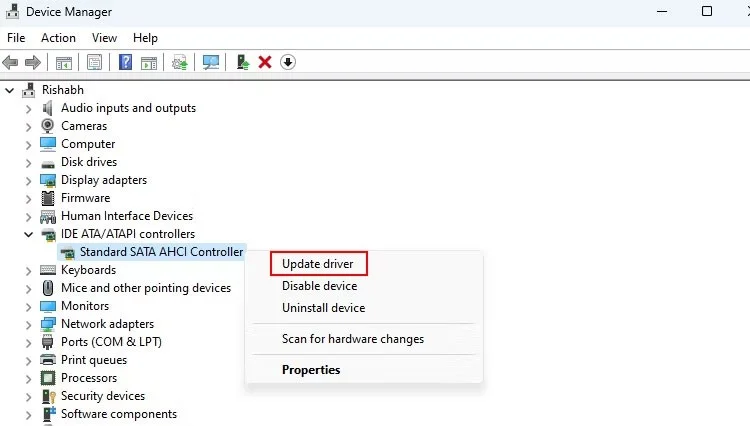
2. Expand the IDE ATA/ATAPI controllers category . Right-click on your Disk Controller Driver (in our case, Standard SATA AHCI Controller ) and select Update driver .
Windows 11 Device Manager Preview
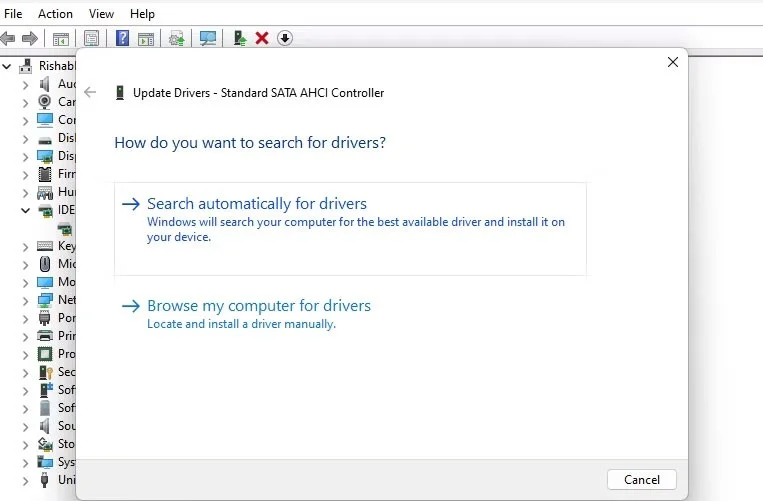
3. Select Search automatically for drivers > Search for updated drivers on Windows Update . Windows will then search for necessary updates for your Disk Controller Driver.
Windows 11 driver update window
4. Once it installs the driver update, restart your computer. If the black screen error does not appear, it means your problem has been resolved.
5. Try a third-party drive repair tool
Sometimes, the built-in Windows tools to fix the problem don’t work. So you have to rely on third-party tools to fix the problem. We’ll be using a free tool called Macrorit Partition Expert for this guide.
Note : Third-party disk repair tools are not a sure-fire fix. Sometimes they work, but sometimes they cause more problems with your system. So before using any tool, create a restore point on Windows for backup.
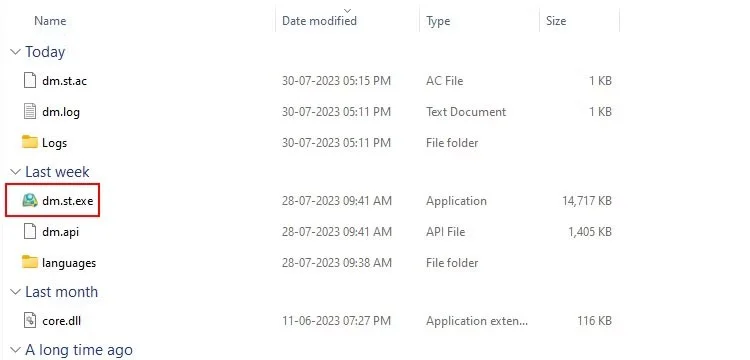
Here's how to use Macrorit Partition Expert tool on Windows:
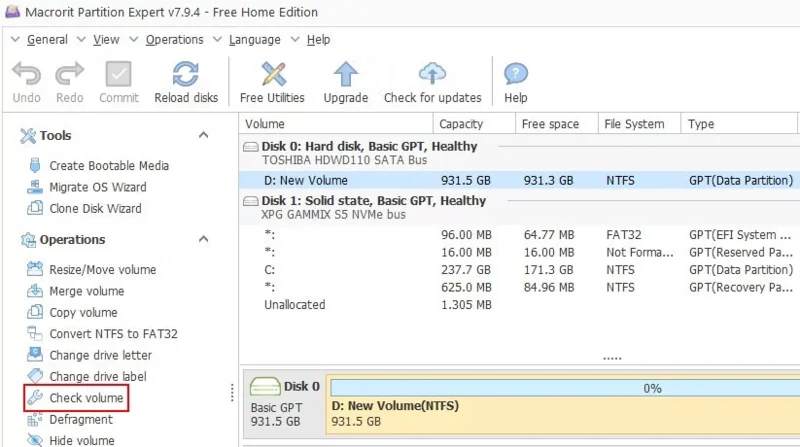
3. On the application window, select the drive or volume that has your current Windows. For example, in this case, it is in Disk 0 .
4. Once selected, click Check Volume from the left sidebar.
Macrorit Partition Expert Application
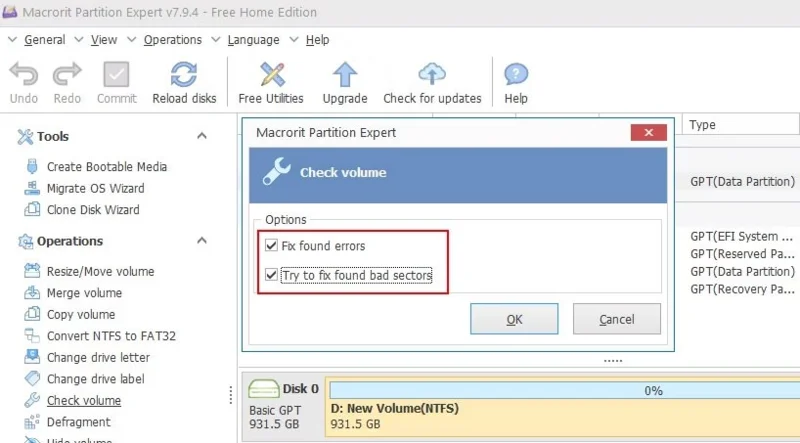
5. Select Fix found errors , Try to fix found bad sectors and click OK.
Macrorit Partition Expert Volume Checker
Macrorit Partition Expert will now analyze your selected drive to check for any bad sectors and attempt to fix them.
6. Restore Windows to factory settings
If none of the fixes help, your last resort is to reinstall Windows. This will erase all data from your computer, so make sure to back up any important data.
Once you've backed up your files, check out how to factory reset Windows . Once the reinstall is complete, you'll have a "clean" device to work with and restore all of your backed up files.