Home
» PC Tips
»
How to fix WHEA Uncorrectable Error on Windows 10/11
How to fix WHEA Uncorrectable Error on Windows 10/11
Blue screen errors , also known as blue screen of death, have been around for a long time in Windows. These errors contain important information related to the sudden crash of the system. Some blue screen errors are harder to resolve than others, and WHEA Uncorrectable Error is one of them. So, this article will guide you through how to fix this error and how to prevent it from happening in the future.
WHEA_UNCORRECTABLE_ERROR (Windows stopcode 0x0000124) is a hardware error. There are several common causes of the WHEA_UNCORRECTABLE_ERROR (abbreviated as WUE) error, most of which are directly related to your system hardware:
Thermal and Voltage Issues (Overclocking and Voltage Variations)
Corrupt Windows system files or registry files
Voltage issues are a common cause of this particular Windows error. The WUE error message and stopcode 0x0000124 tell us the nature of the error, but you should look at the dump file for more information. You can find the dump file (.DMP) in C:/Windows/Minidump and it has a timestamp.
How to fix WHEA Uncorrectable Error
Run CHKDSK
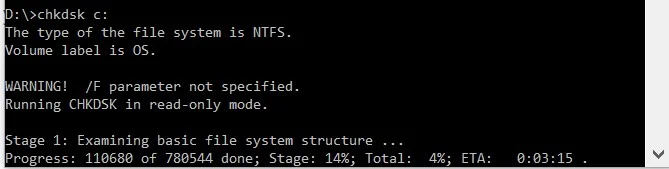
Before making any specific hardware changes, try running Windows Check Disk from the Command Prompt . CHKDSK is a Windows system tool that verifies the file system and, with certain settings, fixes problems while it runs.
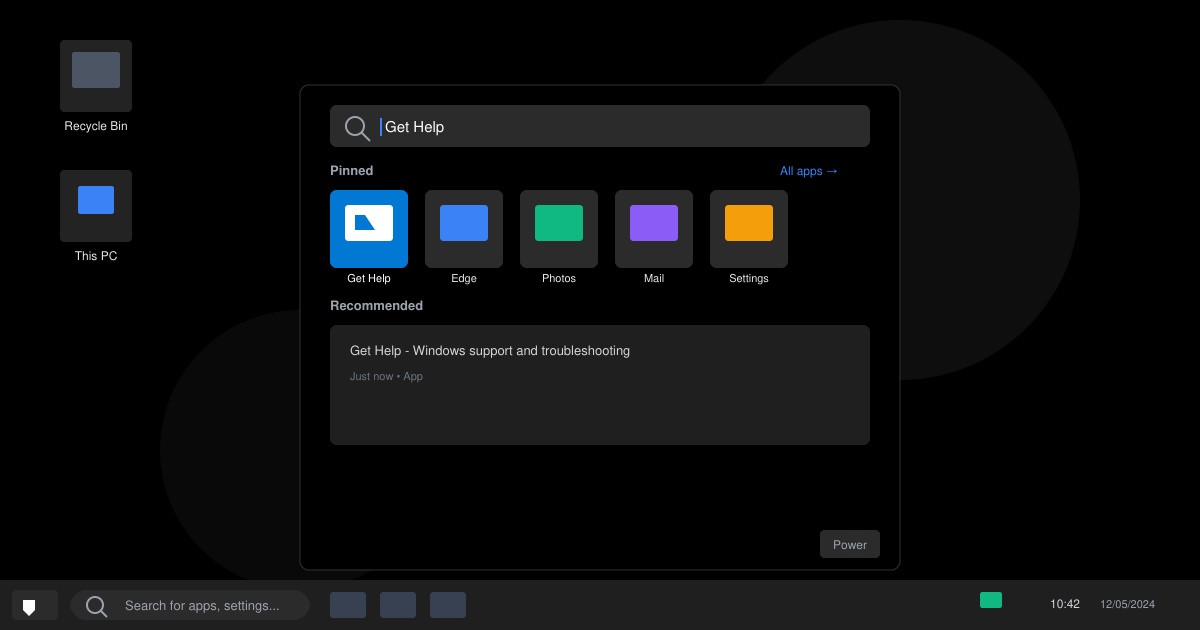
Type command prompt in the Start menu search bar , then right-click the matching result and select Run as administrator . Alternatively, you can press Windows Key + X , then select Command Prompt (Admin) from the menu. Next, type chkdsk /r and press Enter . This command will scan your system for errors and fix any problems along the way.
The WHEA_UNCORRECTABLE_ERROR error is closely related to system hardware. Before you proceed with reinstalling your system and checking your memory, check your system hardware thoroughly . Check that the cooling systems are working, that your RAM is secure in its slots, that the CPU is not loose, etc.
Reseat the memory (RAM)
Reseating memory is the process of removing memory modules from the DIMM slots and placing them back in their correct locations. Follow these steps:
Step 1. Locate the pin or screw on the guard plate.
Step 2. Pull the latch/unscrew to remove the protective plate and set aside.
Step 3. Locate the memory. Gently release the clips holding the RAM in place. Do this for all available memory modules.
Step 4 . Carefully place each memory module back into the DIMM slots on the motherboard .
Step 5. Press firmly on each side of the memory module until the retaining clips click into place.
Once the memory is safely back into the DIMM slots, you can now power on your computer to test and see if reseating the RAM resolved the issue. If your PC boots up without any issues, you have successfully fixed the problem.
Reset system overclocking
If you have overclocked your system to increase speed, this may be the cause of the WHEA_UNCORRECTABLE_ERROR error. The easiest way to fix this problem is to reset the system BIOS and remove all effects of overclocking.
You need to access the BIOS or UEFI by turning off the system, then turning it back on and pressing the BIOS/UEFI menu access key (each computer will have a different access key, but usually the F1, F2, F10, DEL and ESC keys).
Each manufacturer sets up the BIOS and UEFI differently, but the menu titles are similar. Once you're in the BIOS/UEFI menu, look for the Overclocking option. For most devices, you'll find this option in the Advanced, Performance, Frequency , or Voltage menu .
Find this menu and reset your overclocking options. This resets your system to its original state and may fix the WHEA_UNCORRECTABLE_ERROR error in the process.
Reset BIOS/UEFI settings
If you have cleared your BIOS/UEFI overclocking settings, try resetting your entire BIOS. You can find the option to reset all BIOS settings or load default BIOS settings in the BIOS menu. You can refer to the article 3 easy ways to reset BIOS settings .
Update BIOS/UEFI settings
This process will vary depending on your system's motherboard manufacturer. Some BIOS/UEFI settings can be downloaded and updated automatically using a desktop utility, but some manufacturers require the user to download the BIOS update and flash the firmware themselves.
If you don't know what motherboard information you have, you can download and run CPU-Z. Open the Mainboard tab and look for the motherboard manufacturer and model. You can see the BIOS version and other information on this tab. Once you have this information, search the Internet for instructions on updating your BIOS or refer to our article How to Upgrade Your BIOS .
Check system driver
New drivers that harm your system are much rarer than they were in the days of older computers, since Windows now handles most driver updates directly.
That doesn't mean a bad driver can't mess up your system, though. Luckily, Windows lists all driver updates in Windows Update, so you can quickly figure out what's causing the problem.
Windows 10
Sometimes drivers can have a negative impact on your system. However, these days you rarely encounter this problem because Windows 10 handles most driver updates . However, that doesn't mean it can't cause problems for your system. Fortunately, Windows 10 lists all driver updates in Windows Update, so you can quickly find the cause of the problem.
Press Windows key + I to open Settings , then select Update & Security > View update history . You can find any driver updates here. Now, type device manager in the Start menu search bar and select the best match, review the list and check for an error icon. If there are no issues, the driver is not the cause of the problem.
You can use a third-party tool to update all your system drivers at once. Check out our list of tools to fix major Windows problems .
Windows 11
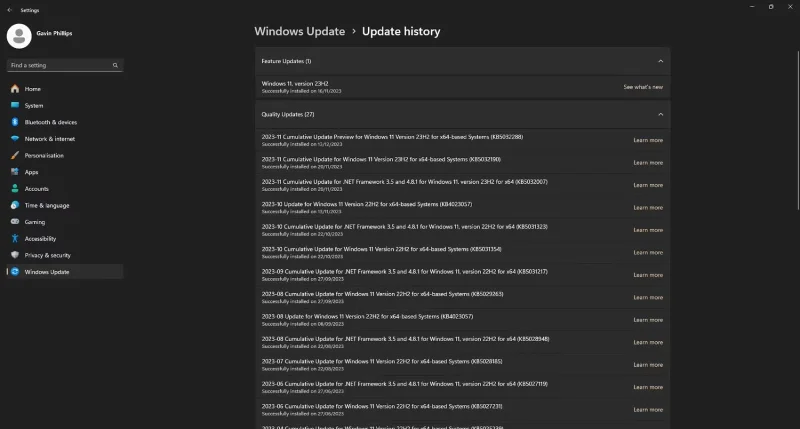
View Windows 11 update history
Press Windows + I to open Settings, then go to Windows Update > Update history . You can find any driver updates here.
Now, type device manager in the search bar in the Start menu and select the best match. Next, go down the list and check for an error icon. If there is nothing, then your driver status is probably not the source of the problem.
That means you can use a third-party tool to update all of your system drivers at once. In the list of free tools for fixing Windows problems, the first two options – IOBit's Driver Booster and Snappy Driver Installer – do exactly that.
Test your RAM with MemTest86
Windows has a built-in memory tester, called Windows Memory Diagnostic. However, it often misses problems, so we can use another tool like MemTest86 .
MemTest86 is a free, standalone memory testing tool for x86 machines. You boot MemTest86 from a USB flash drive (or bootable drive) and test your system RAM. This test will take a few hours depending on how much RAM you have installed.
For the full MemTest86 experience, you should run two complete test cycles, however according to most reports, MemTest86 can find serious RAM issues in a short time.
To create a bootable CD, download the image (ISO format), then write MemTest86 to a USB flash drive using the tool of your choice, then shut down the system. Restart the system while pressing the key to access the Boot Selection menu (usually F10, F11, DEL or ESC), then select the bootable MemTest86 USB flash drive, it will automatically test the memory. If errors are found, search the Internet for a solution to the problem.
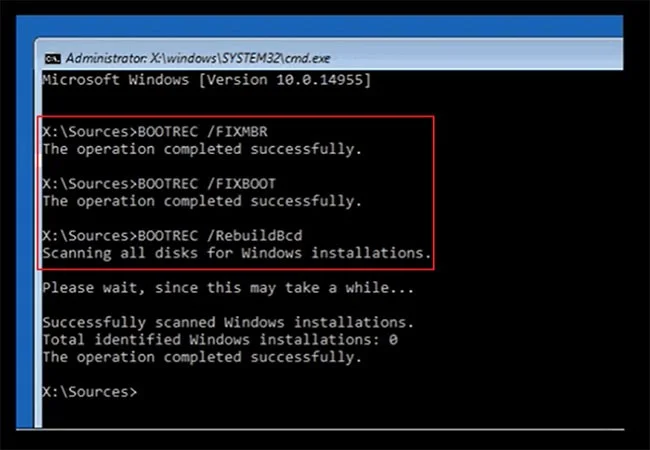
You can repair system files and MBR to fix Whea_Uncorrectable_Error. Since you are unable to boot into your system, you need to boot your computer using a Windows 10/8/7 installation DVD. If you don’t have one, you need to create one using Windows Media Creation Tool. Then follow the steps to repair MBR in Windows 10 using CMD.
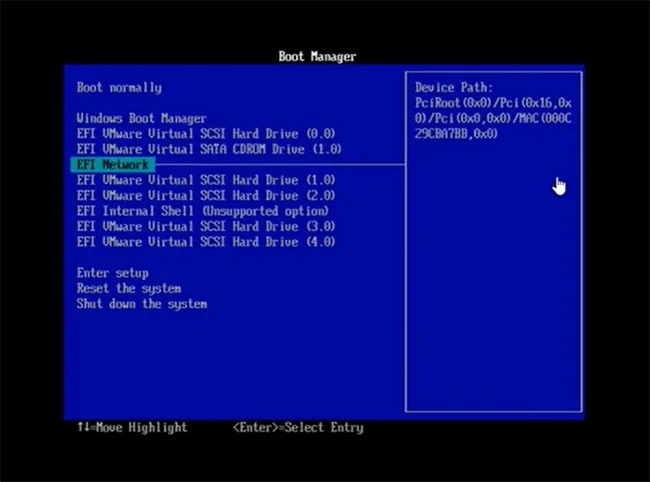
Step 1. Boot from the original installation DVD (or recovery USB)
Boot from original installation DVD (or recovery USB)
Step 2. At the Welcome screen , click Repair your computer in the lower left corner.
Note : C:\ is the Windows 10/8.1/8 installation drive.
Step 2. Type exit in Command Prompt when the process is complete and then restart your PC.
Fix error with installation disk
If your computer still won't boot, you should create a Windows 10/8/7 repair disc and fix your system. To create a repair disc, you need a healthy, bootable computer.
Step 1. Insert the CD/DVD into the connected DVD-ROM or external DVD drive.
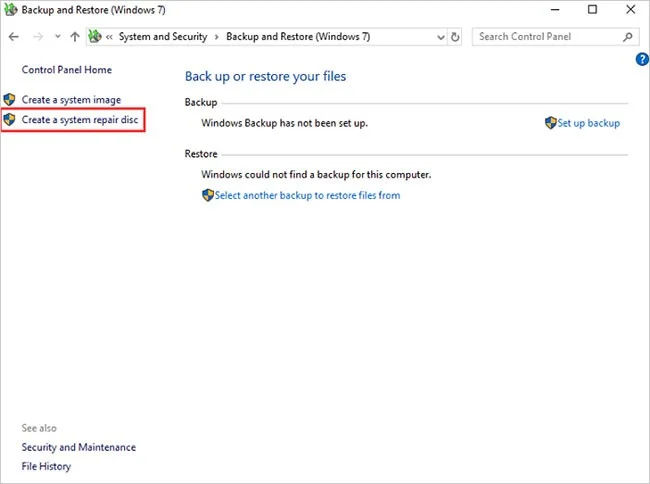
Step 2. Click "Control Panel" on your computer screen, then click "Backup and Restore (Windows 7)".
Step 3. Click "Create a system repair disc" from the left column to open the create a repair disc window. Follow the on-screen instructions to create a system repair disc.
Click "Create a system repair disc"
Step 4 . Connect the disc to the PC with the Whea_Uncorrectable_Error error and restart to boot from the DVD. You may have to change the boot settings in your BIOS, if booting from CD/DVD is not enabled.
Step 5. On the "Install Windows" screen , make the appropriate selections for language, time, and keyboard, then click "Next".
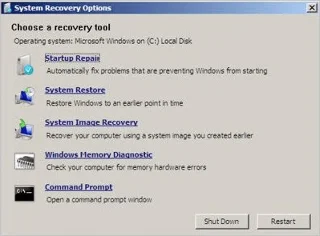
Step 6. On the next screen, click "Repair Your Computer" . Do not click "Install now". Then, click "Next" and select "Startup Repair" or whatever option you want to apply.
Select "Startup Repair"
After the steps, you can boot into your computer as usual. Then, check to see if you have resolved the WHEA Uncorrectable error. If the error persists, you can restore your system using the repair disc.
As mentioned in step 6, you have several options. If you are still having problems, select "System Restore" and follow the on-screen steps.
System Restore: Restore Windows to an earlier point in time. Choose this option if Windows 10/8/7 starts up, but something has changed since the last install or update. You'll select a restore point based on the date and time (starting with the most recent). You may lose recent program changes, but not data.
Reset Windows (last resort)
If nothing else fixes your WHEA_UNCORRECTABLE_ERROR, you can use the Windows Reset function to refresh your system.
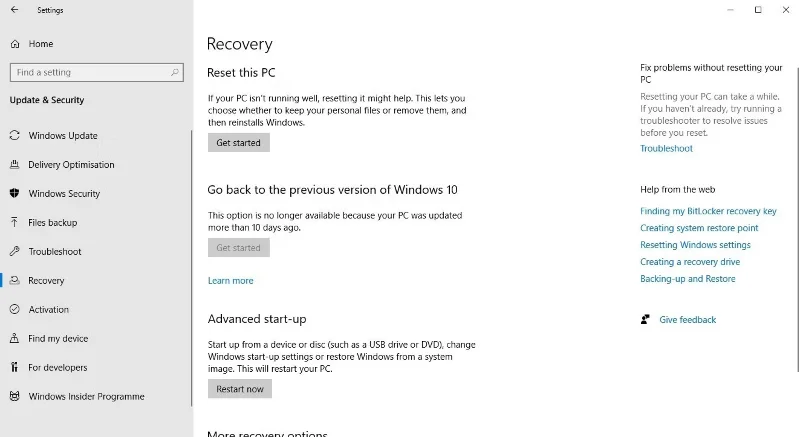
Windows 10 recovery and reset options
Resetting in Windows 10 and 11 replaces your system data with a completely fresh set of files. This should theoretically clear up any lingering issues related to WHEA_UNCORRECTABLE_ERROR while leaving most of your important files intact.
On Windows 10, go to Settings > Update and Security > Recovery , then under Reset this PC , select Get started .
On Windows 11, go to Settings > System > Recovery , then next to Reset this PC , select Reset PC .
When you press the button, your system will reboot, so back up any important files first. First, your system will reboot, then you can choose either Keep my files or Remove everything . Choosing Keep my files will preserve your files and documents but remove your installed apps, while Remove everything is the more radical option and will also wipe your files and documents.
Blue screen errors are frustrating; even more so if you don't really understand what hardware is causing the problem. The fixes above should fix your WHEA error, but keep in mind that using your hardware may cause the error to reappear.