Home
» PC Tips
»
How to know if a link is safe or not?
How to know if a link is safe or not?
Nowadays, "toxic" links appear more and more and are shared through social networks at a "dizzying" speed. Just clicking on a "toxic" link can bring potential dangers to you.
One of the most popular and widely used social networks today is Facebook. This is also one of the "paths" for hackers to share malicious links. Just click on "strange" links with an impressive title and a large number of "views", then all of the user's information will almost fall into the hands of hackers. Hackers use user information for a number of different purposes. One of the most recognizable purposes is that the user's Facebook account is "hacked".
If you accidentally click on a malicious link and your Facebook account is "hacked", you can refer to how to get your Facebook account back here .
The advice for you is that before clicking on a link, you need to make sure that the link is safe and does not contain malware. However, the problem is how to know if the link is safe or not? That is also the topic that WebTech360 will introduce to you in the article below.
1. How to check the target attribute of a link?
Before you can test whether a link is safe or not, you first need to learn how to copy the target attribute of a link. This is very important, it will tell you the URL of the website you want to test.
All you need to do is right click on the link you want to check. A menu will appear on the screen.
Select: Copy link address (if using Google Chrome browser), or Copy link location (Firefox browser) or Copy shortcut (if using Internet Explorer browser).
The target attribute of the link will be copied to your computer's memory, you can paste it anywhere.
More simply, just hover your mouse over the link, and look down at the bottom of your browser (on Windows) and see which website is currently loading, that's where you'll actually be taken when you click the link.
2. Check if the link is safe or not?
Use one of the following services and tools to check if a link is safe:
A good way to check if a link has a virus or malware is to rely on a tool from online security giant Norton.
Norton Safe Web is a free online reputation service that involves using Norton's servers to analyze websites to see how they will affect a person and their computer. Norton created this new service in an effort to combat the many online threats that exist on the Internet today, including malware, spyware, phishing, viruses, and more. Norton Safe Web is designed to help protect people from websites that attempt to collect credit card information, banking information, and/or passwords, or send malicious files that can damage a computer.
To scan a URL for malware, simply paste the URL into the check field and click the search button. Norton Safe Web will display community ratings and reviews of the site. If you want to give your input, you can create an account and join the community of link checkers.
As well as a browser-based link checker, Norton Safe Web offers two additional tools:
Norton Safe Search Extension is an enhancement to the Chrome address bar that adds quick safe search functionality to the browser.
Norton Home Page Extension brings safe search to all search engine results.
Both options will check the safety of links before you click them – ideal for safe browsing.
Norton Safe Web relies on community feedback to monitor the Internet. This means that Internet users rate various websites on how they work, whether anything suspicious happens while on these websites, etc. Anyone who visits the Norton Safe Web website can access this information by clicking on the “Community Buzz” tab on the site; there, users will see various websites and whether they have been labeled “OK” by Norton and rated highly by the community.
Website owners can submit their sites to Norton Safe Web, where Norton will audit and help improve the quality of their sites so visitors can feel secure when they visit their sites. Website owners will receive the Norton Security Seal when their sites are verified as legitimate businesses, using best-in-class SSL certificates, and daily malware scans. Once certified, these sites will appear in search results for Norton Identity Safe, Norton Safe Search, and Norton Security users.
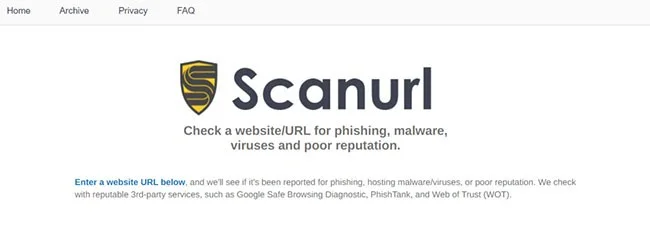
ScanURL is an independent site that takes care to send your link queries over a secure HTTPS connection . Although the spam link checker is ad-supported, the results are still very good. You can also provide an explanation of where you saw the URL to help other users avoid it.
ScanURL consults Google Safe Browsing Diagnostic, PhishTank, and Web of Trust, then provides information about the Whois record of the queried website. The results returned will immediately tell you whether you should visit the website or not, along with ScanURL's recommendation. Avoid the website if the results list it as dangerous.
Several websites (including some of the options in this list) and tools are checked by ScanURL when it compares the results. Once the ScanURL results page has loaded, a permanent URL is applied. You can copy and paste this content to share with friends, family, or relevant people for their reference. Very handy!
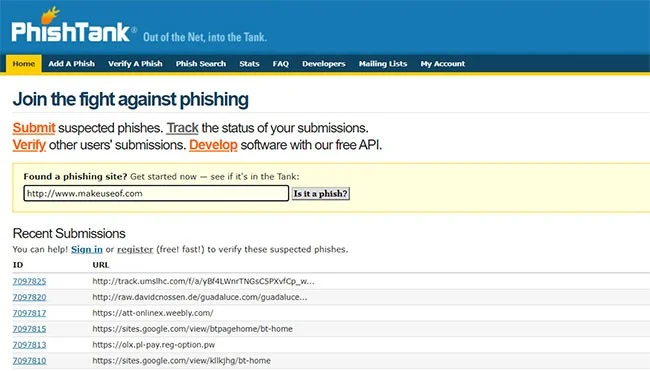
Instead of focusing on malware, PhishTank lets you know if a link is safe or if it takes you to a phishing site.
When you enter a URL that you suspect is phishing, PhishTank will check it. If the link is already in the database, you will get immediate results. If not, the site will provide a tracking number. Checking a phishing link is not as simple as automatically checking some malware links…
PhishTank is operated by OpenDNS. Anyone can contribute to the site and verify links submitted by other users.
Check if a link is safe with Google Transparency Report
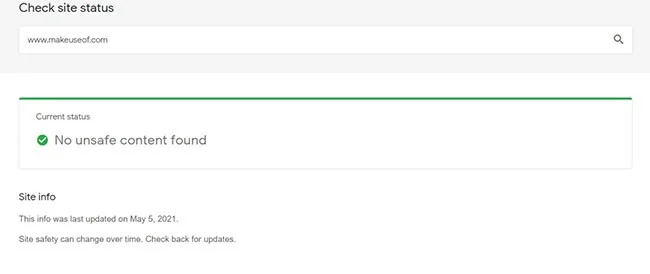
Google also offers a useful link checking service. Transparency Report provides a standard field where you can enter the URL you're interested in. Seconds later, the results—which Google's web crawler has compiled—will tell you whether the site is trustworthy.
Along with malware, Google Transparency Report will warn you about phishing risks.
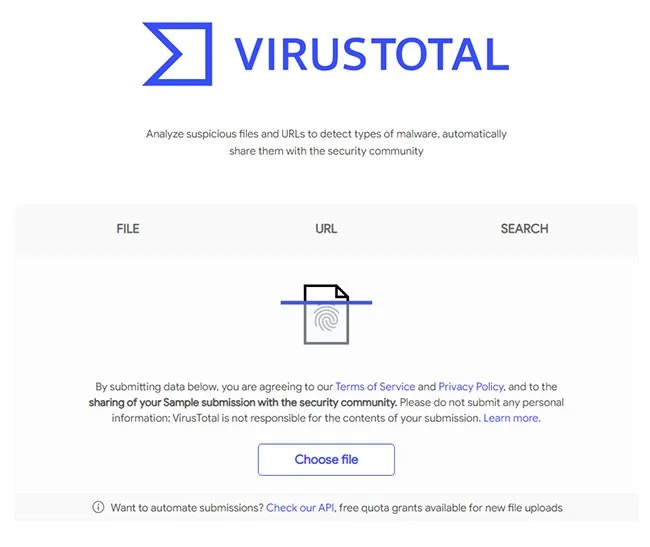
Offering a browser-based, multi-functional scanner, VirusTotal analyzes “suspicious files and URLs for malware types.” The scan results are then shared with the cybersecurity community. Just visit the site, click on the URL, then paste the link and search.
VirusTotal can also check the safety of links in its Android and Windows apps. For developers, VirusTotal offers public and private APIs. While limited to non-commercial projects, they can be used to create your own file and link scanners for your website.
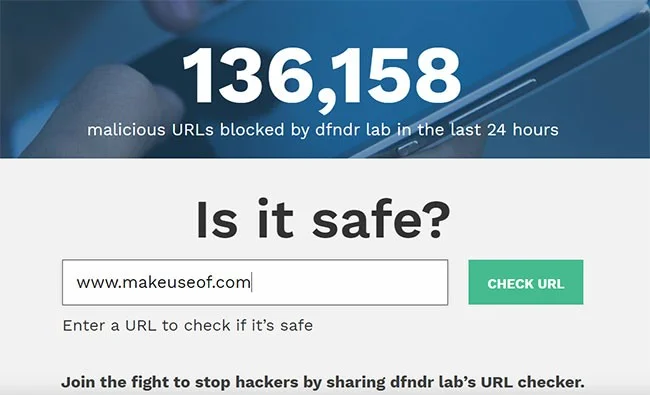
The easy-to-use PSafe Dfndr Lab tool lets you check the safety of a link with just one click.
Simply copy the URL you are querying from an email, website, instant message, etc… into the search engine. Click Check URL to see the results.
If the site is found in the database, you will know whether you can trust it or not. If not, or if no data about the site is found, you will be advised to be cautious: "If you do not 100% trust the URL or site, you should not click on it."
Unlike the other link checkers listed here, PSafe Dfndr Lab relies on Machine Learning technology to detect “potentially unsafe URLs.”
Additionally, links are cross-referenced with suspected URLs from other resources, while internal analysis is performed if other tests are inconclusive.
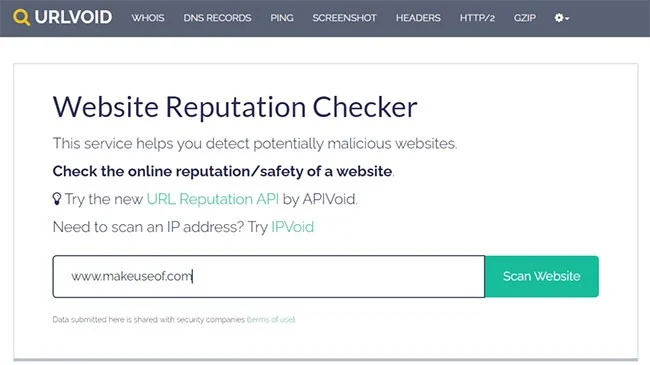
Finally, there's URLVoid, a tool that helps you "detect potentially malicious websites." As with the other tools, just enter a suspicious URL and wait for the site to check. You'll find information about the URL and its history.
A list of the services URLVoid uses to deliver results is also displayed, with popular names including Avira, BitDefender, and PhishTank.
If you need to scan IP addresses , URLVoid offers a companion service, IPVoid. For developers, URLVoice also offers the void API so you can create your own link safety checker.