Home
» Discover
»
How to Make Easy Last-Minute Halloween Costumes on a Tight Budget
How to Make Easy Last-Minute Halloween Costumes on a Tight Budget
The easiest last-minute Halloween costumes on a tight budget start with clothes you already wear and one detail that makes the idea recognizable. A complete outfit you can walk, sit, and stay comfortable in is more useful than an ambitious project that needs another shopping trip.
The four options below use ordinary clothes and small, removable additions. Choose the one closest to your existing wardrobe. You do not need every accessory shown, a new pair of shoes, or a full face of makeup to make the idea work.
Choose your costume before you spend anything
Pull out a few possible base outfits, including shoes and the coat you might actually wear. Check your craft supplies next: paper or lightweight card, scissors, a pencil, and suitable tape or glue. If children are helping, an adult should handle cutting and check that attached pieces are secure.
Set a total spending limit before opening a shopping app. For example, a $10 USD cap is an illustrative personal budget, not a claim about current store prices. Include tax, travel, delivery charges, and missing supplies in that limit. If a costume needs several purchases, switch to a different idea.
What you already own
Costume to try
Main finishing detail
Black top and pants
Black cat
Two triangular ears on a headband
Bright or patterned shirt and comfortable pants
Tourist
Folded paper map and an existing hat
Plaid shirt and jeans
Scarecrow
Soft hat and optional fabric patches
Apron and everyday clothes
Artist
Cardboard palette with paper color spots
These can require no new spending when you already have the clothes, accessories, and supplies. That condition matters: buying a headband, adhesive, scissors, and paper just to make one pair of ears may defeat the budget.
Four easy last-minute Halloween costumes to make
1. Black cat: black clothes and simple paper ears
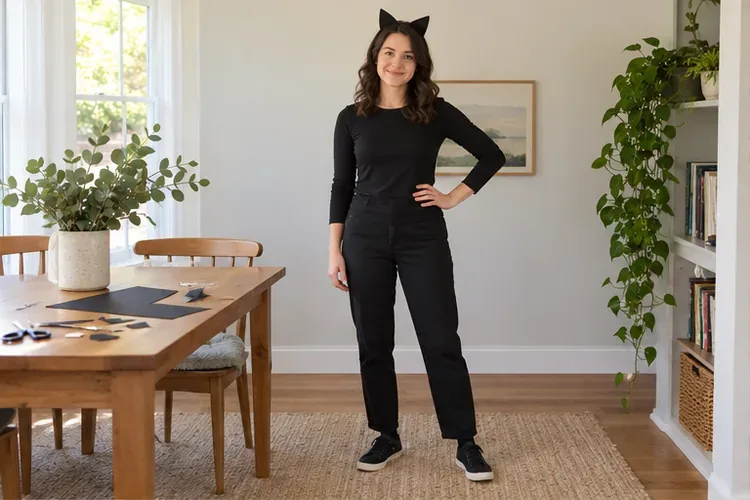
A black outfit and small paper ears form a simple cat costume without a tail or face paint.
Start with: a black shirt, black pants or leggings, comfortable shoes, an existing headband, and black card or paper.
Draw two triangles with a small rectangular tab along the bottom of each. Cut them out, fold the tabs, and fasten those tabs around the headband with tape. Keep the ears small enough to stand upright. If you only have white paper, color the paper before attaching it; keep craft markers away from your skin.
Put on the outfit and check the ears in a mirror. The headband should stay in place when you turn your head without squeezing. Skip the tail: the ears provide the main cue, and a trailing accessory adds construction work. Makeup is optional. For outdoor wear, add visibility measures rather than relying on an all-black outfit to be seen.
2. Tourist: a patterned shirt, hat, and folded map
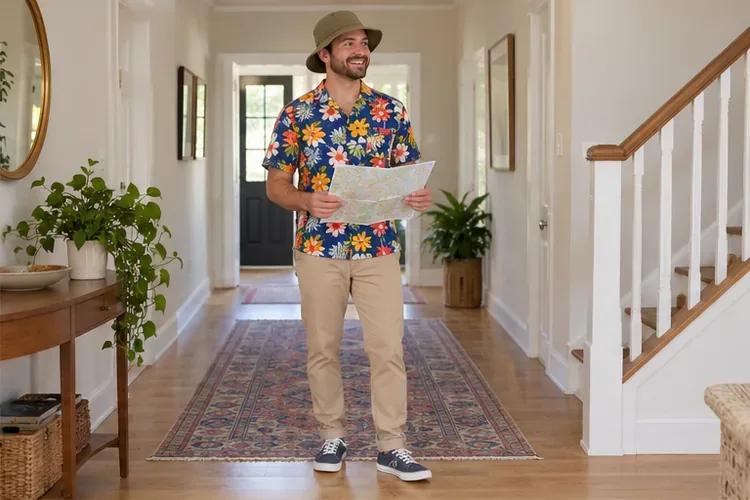
A patterned shirt, an existing hat, and a paper map provide the main details for a tourist costume.
Start with: a floral or brightly patterned shirt, comfortable pants, walking shoes, a hat you own, and a paper map.
Wear the patterned shirt as the focal point and fold the map so it is easy to hold. An old travel leaflet works, or you can draw a simple imaginary street map on scrap paper. This is a costume prop, so it does not need to be accurate navigation material.
A bucket hat or sun hat adds another visual cue if one is available. There is no need to buy a camera, novelty luggage, or vacation accessories. For a group, each person can wear a different bright shirt and share the map. If you need both hands free, keep the folded map in a pocket and let the shirt and hat carry the look.
3. Scarecrow: plaid, denim, and removable patches
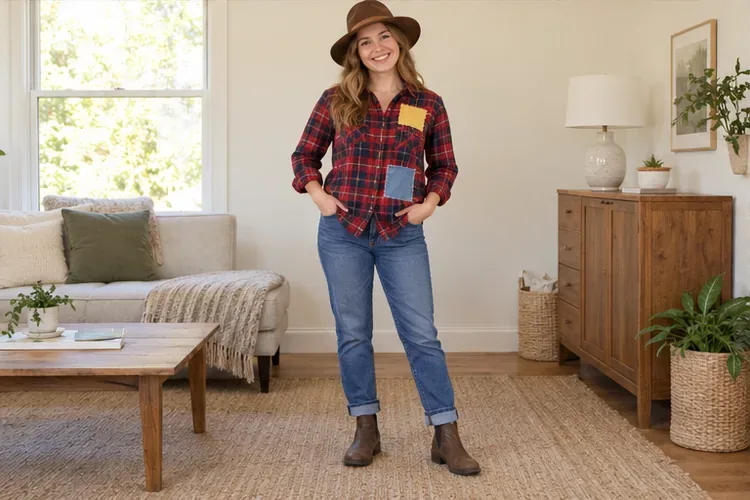
Plaid, denim, a soft hat, and optional flat patches suggest a scarecrow without loose straw.
Start with: a plaid shirt, jeans, sturdy shoes, a soft brimmed hat, and optional fabric scraps.
Wear the plaid shirt with the jeans and hat. For extra definition, cut two contrasting fabric squares and attach them flat to the shirt with fabric tape intended for that use, following its directions. Test it on a hidden area first. If you do not have suitable tape, skip the patches rather than buying a package for one evening.
A borrowed shirt should stay unaltered unless its owner agrees to the change. Do not stuff sleeves or pant legs with loose straw. The color combination and hat can suggest a scarecrow without scratchy filling or dangling pieces. If the outfit looks too much like everyday clothing, make the patches the one optional detail you prioritize.
4. Artist: an apron and a dry cardboard palette
A dry cardboard palette adds an artist theme to ordinary clothes and an apron.
Start with: everyday clothes, an apron, lightweight cardboard, colored paper, scissors, and glue or tape.
Cut a rounded oval from a clean piece of packaging, trimming away sharp corners. Cut several small circles of colored paper and attach them to the cardboard as pretend paint spots. Hold the finished palette by its edge. The apron and palette give the outfit a clear theme without buying paint.
Keep everything dry: real paint adds mess, drying time, and the possibility of staining clothes or furniture. A striped shirt is one option, but a plain shirt works too. Skip an easel, beret, and brush unless they are already available. If carrying the palette becomes inconvenient, set it down for activities that need both hands.
Check whether the costume is finished enough
Before adding more details, try the outfit as you will actually wear it. Use this short quality check:
Recognition: can another person understand the idea without a long explanation? If not, improve the main cue rather than adding several unrelated accessories.
Movement: walk, sit, bend, and put on your coat. Remove anything that slips, catches, or prevents ordinary movement.
Durability: gently check the ears, patches, or palette pieces. Reattach loose parts using suitable materials, or leave them off.
Practicality: make sure you can use your phone, carry what you need, and manage bathroom breaks.
If the outfit only works while standing still for a photo, simplify it. Recognition and comfort are better stopping points than trying to reproduce every detail of an elaborate costume.
Keep safety in the budget
The U.S. Consumer Product Safety Commission's Halloween guidance recommends well-fitting costumes, clear vision, and reflective details for low light. Keep hems off the ground, wear shoes that fit, and add reflective tape or carry a flashlight for outdoor trick-or-treating. Keep clothes and paper accessories away from open flames; ordinary closet clothes are not automatically flame resistant.
For new costume pieces, check for a flame-resistant label, while remembering that it does not mean fireproof. CPSC's costume safety checklist explains this distinction. A brighter outer layer can change a dark costume's appearance, but being visible takes priority.
Last-minute planning is also a reason to skip unfamiliar face paint. The FDA recommends testing planned makeup 24–48 hours in advance. If you cannot allow that time, choose a version without new makeup. FDA's novelty makeup guidance also advises using only products intended for skin and following eye-area restrictions. Craft paint, markers, and glue belong on props, not faces.
When borrowing or thrifting makes sense
Borrowing one missing hat or apron may be more practical than buying a complete costume. If you have time for a store visit, make a list with one priority item and a firm spending limit. Goodwill's costume planner offers clothing-based ideas, but local inventory and prices need checking.
If the needed item is unavailable or exceeds your limit, change the costume instead of expanding the shopping list. Stop when the outfit is recognizable, comfortable, and ready for the setting you will be in.