Home
» Discover
»
The Ultimate Guide to Decorating Your Front Porch for Halloween
The Ultimate Guide to Decorating Your Front Porch for Halloween
You set out a few pumpkins, hang a ghost, and add some lights, but the porch still looks cluttered—or barely decorated once the sun goes down. The problem is often placement: several small objects compete for attention, while the doorway and the route to it get lost.
The most useful approach to decorating your front porch for Halloween is to build around one focal point, repeat a small color palette, and keep a clear, well-lit entrance. Follow these four stages, from planning the space to checking the finished display after dark.
1. Clear the porch and plan around the entrance
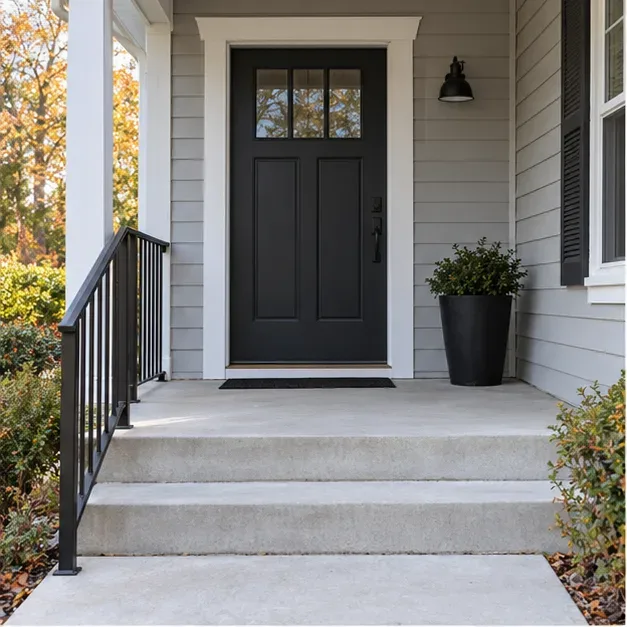
Before buying decorations, remove anything that does not need to be there. Sweep away loose leaves, move unused furniture, and check that the doormat lies flat. Open both the front door and any storm or screen door fully. Their swing determines where floor decorations can go.
Next, walk from the sidewalk or driveway to the door. That route should stay obvious, with steps, handrails, and the doorbell easy to reach. The U.S. Consumer Product Safety Commission's Halloween guidance recommends removing obstacles from lawns, steps, and porches before trick-or-treaters arrive.
Plan the walking route first, then use the remaining space for decorations.
Choose a mood and a short shopping list
Pick one direction rather than buying every Halloween motif you like. These combinations are starting points, not rules:
Porch style
Color palette
Main elements
Classic Halloween
Orange, black, and cream
Pumpkins, a dark wreath, and bat silhouettes
Soft and welcoming
Cream, muted orange, and warm light
Uncarved pumpkins, seasonal plants, and lanterns
Haunted entry
Black, gray, and one accent color
A bold door decoration and one securely positioned character
Inventory what you already own before setting a spending limit. Existing planters and outdoor lanterns can do much of the work. A compact starter display might use one wreath, three pumpkins of different sizes, and one outdoor-rated battery lantern. Those quantities are a design example, not a requirement.
Measure the available space and think about storage, too. A large prop is a poor bargain if it blocks the entrance or has nowhere to go in November. If you rent or have association rules, check the applicable decorating and attachment restrictions before purchasing anything that needs installation.
2. Give the door one clear focal point
The focal point is the feature your eye notices first. On a small porch, make it a wreath, a door hanging, or a compact arrangement of weather-resistant silhouettes beside the door. On a larger porch, a single substantial prop can work, provided it stays outside the walking route.
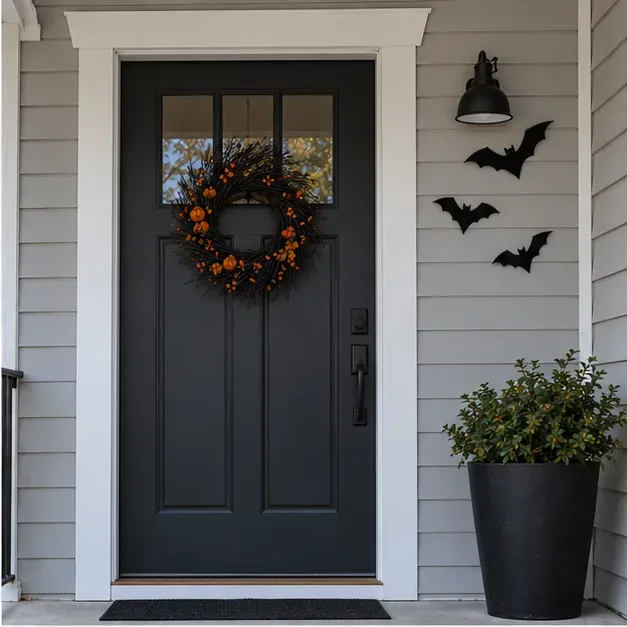
For an easy Halloween front porch decor scheme, pair a black wreath with orange accents and a few rigid bat shapes. Repeat those colors in the pumpkins or planters below. Check the arrangement from the sidewalk: the main feature should be recognizable without relying on tiny details.
A wreath and a small group of bat silhouettes create a focused doorway display.
Use attachments suited to the surface
Choose hangers, clips, or removable hooks that the manufacturer specifies for the surface, outdoor exposure, and decoration weight. A hook that works indoors on smooth tile may not hold on textured siding in cold or wet weather. Follow the preparation and curing instructions, and test finish compatibility in an inconspicuous spot.
Do not cover the peephole, doorbell camera, house number, or door hardware. Keep decorations away from light fixtures and other heat sources. An over-door hanger also needs enough clearance for the door to close and latch normally; if it pinches the weather seal, use another approved mounting method.
3. Arrange pumpkins and props beside the walking route
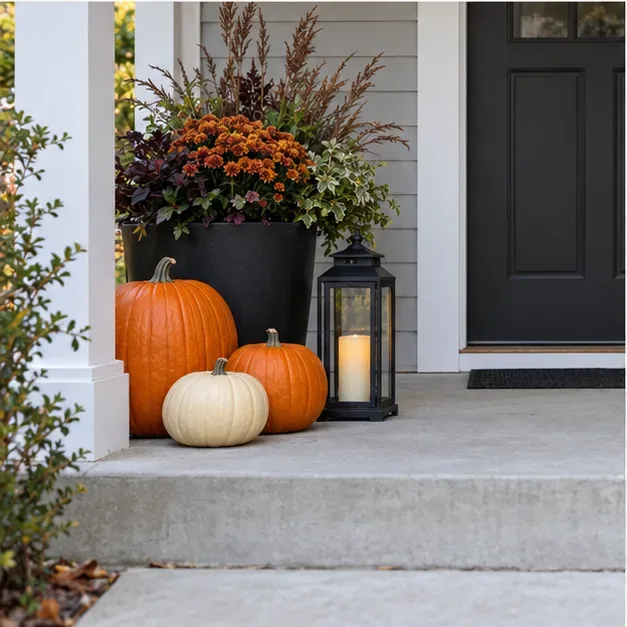
Build one deliberate grouping instead of scattering small items across the porch. Start with the largest pumpkin or planter at the back, then place smaller pumpkins in front without creating an unstable stack. Different heights help the arrangement read as a group.
Use a side corner or alcove with enough room for the display. Keep pumpkins and lanterns off stair treads, and leave handrails unobstructed. If the porch is too narrow for floor decor, keep the decoration on the door or an appropriate wall surface.
Group pumpkins in a side area while leaving the approach to the door open.
Choose materials for the actual exposure
A covered porch can still receive windblown rain. Check the labels on faux pumpkins, fabric figures, lanterns, and battery compartments rather than assuming that a roof makes indoor decorations suitable. Bring vulnerable pieces inside when conditions exceed their stated use.
Real pumpkins: Set them on a stable surface, inspect them regularly, and remove any that become soft, moldy, or leaky. Their useful life varies with condition and weather; do not plan around a guaranteed number of days.
Faux pumpkins and rigid props: Use products intended for their location and secure them according to their instructions. Lightweight hollow pieces need particular attention in wind.
Fabric and paper: Keep indoor-only pieces inside. Do not leave loose fabric trailing into the route or hanging where visitors will brush against it.
Dried plants and cornstalks: Treat them as combustible decorations and keep them away from heat. Do not surround lighting equipment with dry filler.
For a rental-friendly display, reuse stable planters and freestanding decorations that require no permanent attachment. For a tight budget, improve the arrangement before adding more objects: moving three pumpkins into one clear grouping may solve the problem better than another bag of props.
4. Add lighting that makes the display and entrance visible
Start with practical light. Turn on the porch light and check that visitors can see changes in level, the landing, and the threshold. Decorative purple or orange light can add atmosphere, but it should not leave the stairs dark or shine directly into an approaching visitor's eyes.
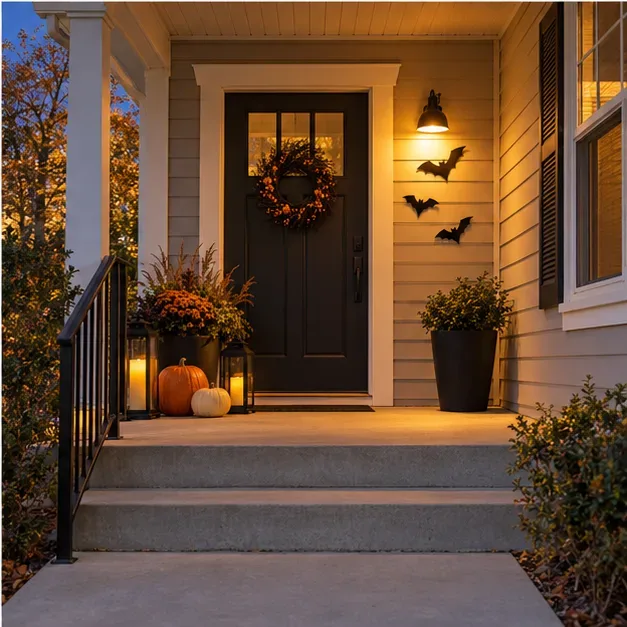
Then add a small amount of accent lighting. An outdoor-rated battery lantern beside the pumpkins or a battery-operated light inside a jack-o'-lantern can highlight the display without a flame. The NFPA's 2024 Halloween fire safety tip sheet recommends battery-operated candles or glow sticks in jack-o'-lanterns, keeping decorations away from heat, and leaving exits clear.
Check the finished porch after dark so the decorations and stair edges remain visible.
Check every powered decoration before connecting it
For plug-in lights, the CPSC's holiday decorating guidance recommends safety-tested lights, checking for damaged wiring and sockets, using extension cords rated for their intended use, and connecting outdoor lights to GFCI protection. A ground-fault circuit interrupter, or GFCI, helps protect against electric shock.
Use lights and cords labeled for outdoor use in the conditions where they will operate.
Discard light strings with frayed or bare wires, cracked sockets, or loose connections.
Follow each product's connection and load limits; do not assume every light string permits the same number of connected sets.
Plan cords around the perimeter, away from foot traffic and moving doors. If a cord must cross the entrance route, change the layout or use suitable battery lighting.
Use clips designed for the product, and follow the instructions for supporting lights and protecting connections from weather.
If you cannot confirm a suitable power source, keep the display unpowered or use outdoor-rated battery decorations. Elaborate lighting is optional; a usable entrance is essential.
Fix the most common porch decorating problems
What you notice
Likely design issue
What to change
The porch looks busy.
Too many competing themes or scattered objects
Keep one main motif and consolidate the floor decor into a side grouping.
The decorations disappear at night.
The focal point has too little light or blends into the background.
Check the porch light, add suitable accent lighting, or use a lighter contrasting element.
The entrance feels cramped.
Decorations occupy the door swing or approach.
Remove floor pieces and use a simpler door display.
Props shift or sag.
Attachments or materials do not suit the weight, surface, or weather.
Take the piece down and correct the mounting method before displaying it again.
Check the result from a visitor's point of view
Inspect the porch in daylight and again after dark. Walk the entire approach, open the door, and look at the display from the sidewalk. A quick photo can reveal clutter or an unbalanced grouping that is less obvious while you are standing beside it.
Can you identify the main decoration immediately?
Are the steps, handrail, threshold, and doorbell easy to see and use?
Can someone approach and turn away without stepping around pumpkins, cords, or hanging fabric?
Does the door open fully and latch properly?
Are the decorations stable, suitable for the weather, and separated from heat sources?
Are the house number and any doorbell camera unobstructed?
Recheck after wind or rain and before welcoming trick-or-treaters. Remove damaged pieces and fallen leaves promptly. When the season ends, let reusable decorations dry before packing them away, and label lighting and attachment supplies for next year. The finished porch should feel festive from the street and straightforward to use up close.