Would Europe Be Drawn into a Hypothetical U.S.-Israel-Iran Nuclear War? NATO Rules Explained

A guide to NATO Articles 4 and 5, UN self-defense rules, and why consultation does not mean automatic European entry into war.
Daikin air conditioner timer is one of the useful features that users often use to set the timer to turn on the air conditioner before coming home or turn off the air conditioner while sleeping. The following article will guide you how to set the timer for old Daikin air conditioner models (usually products before 2017) and new generation Daikin air conditioners, please refer to it.
Daikin air conditioner timer
Old Daikin air conditioner remote controls often have a slide-out keyboard below, the screen always displays parameters even when the air conditioner is not working and there is no light.
The timer mode on this Daikin air conditioner will operate according to real time or time markers. Therefore, before setting the timer to turn off or on the air conditioner, you must adjust the time displayed on the remote control screen:
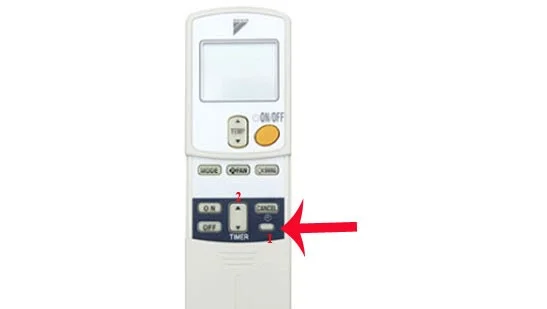
Step 1: Press the clock button on the TIMER frame.
Step 2: Press the up/down arrow button on the TIMER frame to adjust the time to the correct real time.
Step 1: Press the ON button on the TIMER frame.
Step 2: In the TIMER frame, use the up/down arrows to adjust the time to turn on the air conditioner.
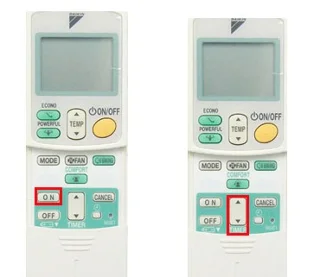
If there are no up or down arrows on the remote control, to change the timer, continue pressing the ON TIMER button.
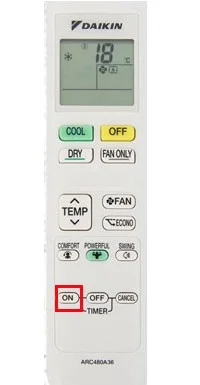
Step 3: Finally, press the ON button again to confirm the time.
Step 1: On the TIMER frame, press the OFF button.
Step 2: Use the up/down arrows to adjust and select the time to turn off the air conditioner.
Step 3: To confirm the time, press the OFF button again.
First, on the TIMER frame, press the ON button, then press the CANCEL button.
In the new generation of Daikin air conditioner models, the timer will turn on/off according to a period of time, not a real time point. For example, turn off after 8 hours of setting, turn on after 1 hour of setting time.
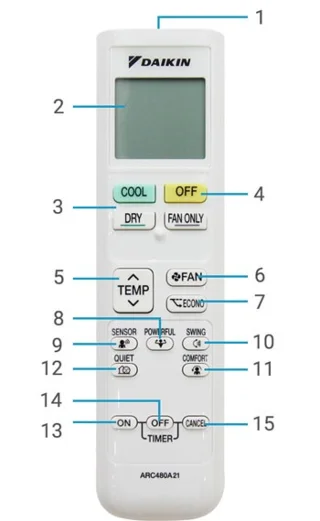
| 1. Signal transmitter | 6. Fan speed and airflow setting buttons | 11. Comfortable blowing mode button |
| 2. Screen | 7. Power saving button | 12. Quiet operation button |
| 3. Mode selection button | 8. Enhanced Activity Button | 13. Timer off button |
| 4. Off button | 9. Smart eye sensor button | 14. Timer button to turn on the machine |
| 5. Temperature control knob | 10. Wind direction adjustment knob | 15. Timer mode cancel button |
Timer on
Press the ON TIMER button continuously until the control screen shows the desired air conditioner on time, then stop.
Timer off
Press the OFF TIMER button continuously until the control screen shows the desired air conditioner off time, then stop.
Cancel appointment
To cancel all timer modes, press the CANCEL button.
A guide to NATO Articles 4 and 5, UN self-defense rules, and why consultation does not mean automatic European entry into war.
Assess claims about Iran in six steps, distinguishing uranium enrichment, weapons development and verified possession.
Understand nuclear decision authority in six steps, including US civilian control and the limits of public information about Israel.
A guide to official 2026 evidence on Hormuz shipping disruption, Iran-related claims, confirmed incidents, and what remains uncertain.
A source-based guide to nuclear escalation risks, UN Charter rules and NATO Article 5 in a strictly hypothetical Iran scenario.
Use five steps to prepare for an outage; nuclear and EMP scenarios are hypothetical, and official shelter instructions come first.
Use 5 defensive steps to verify a cyber disruption, protect household accounts, and avoid mistaking an outage for war.
Use these 5 steps to assess climate effects from a hypothetical Iran strike, compare model assumptions, and avoid unsupported predictions.
Explore six steps for reading research on climate, food and ecosystem recovery after a hypothetical nuclear conflict.
Build a practical fallout preparedness kit in six steps, with sealed food and water, a radio, medical supplies and shelter guidance.