Home
» How to
»
Instructions for running Mac applications on Windows 10
Instructions for running Mac applications on Windows 10
Have you ever liked a feature of certain software but realized it was only for Mac? While the software for Windows is plentiful, sometimes it still lacks some applications that have great functionality on macOS.
If you're running a Windows 10 system, you have several ways to run Mac apps on that device. Here is a guide to run the Mac app on Windows 10 completely free.
Instructions for running Mac applications on Windows 10
Step 1: Create a macOS virtual machine
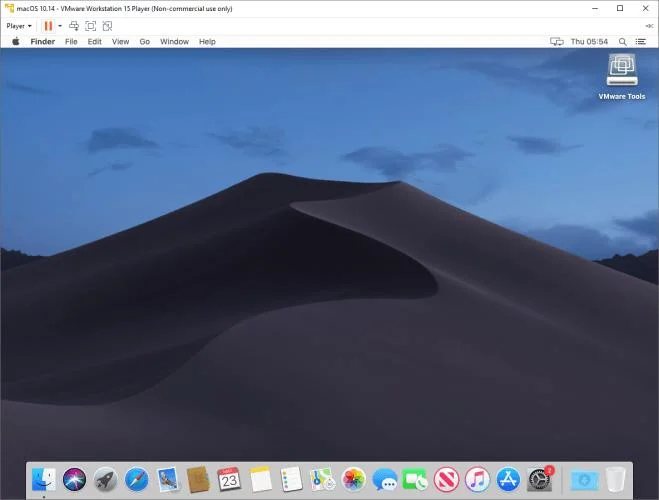
The easiest way to run Mac applications on a Windows 10 computer is through a virtualized environment. Note: this process is quite time consuming but is the best method for everyone.
First, you need to download the virtualized macOS image for the CPU, the virtual machine type, and the desired version of macOS. After the download is complete, right click, extract the necessary tools. Next, you run the virtual machine creation software (for example, VirtualBox ) to run macOS on Windows 10 .
Step 2: Log in to your Apple account
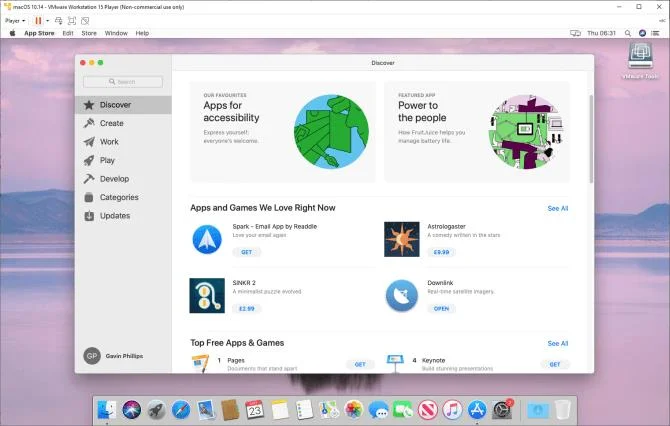
Here, download and use the Apple app similar to the regular macOS operating system. You still need to sign in to your Apple account to download & use the app on the App Store.
Step 3: Download the first macOS application
When you log in, you can access the App Store and install most desired macOS software in the virtual machine.
Select App Store from the Dock at the bottom of the screen. You may need to enter your Apple ID information again.
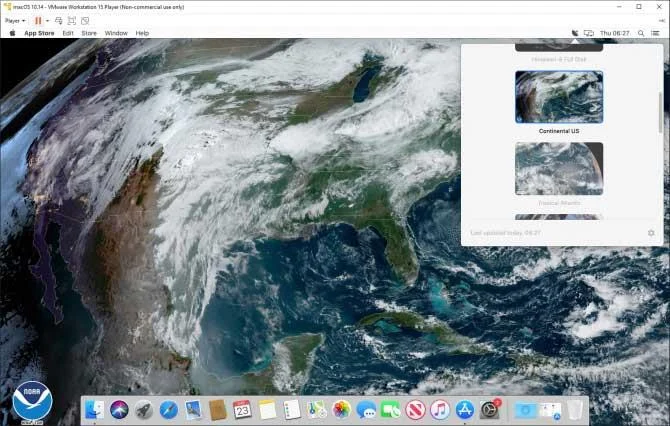
Find the macOS application you want to download. Click Get> Install . After the installation is complete, select Open to open that app. Below is an example of using Downlink to automatically update your computer wallpaper with satellite images.
Step 4: Save the macOS virtual machine session
Saving macOS virtual machine state is very easy. Why is that? Because you are using a virtual drive. Any changes you make on the virtual machine are saved to this hard drive so next time you can continue using the Apple app in the virtual macOS environment on Windows.
The best way to close this virtual operating system is within the macOS system itself. Both VirtualBox and VMware have the option to shut down the system with the command line, but with physical hardware, it can generate errors. In fact, abruptly closing the virtual machine may damage the virtual drive.
Select the Apple logo in the upper right corner, then press Shut Down . The operating system will close in the correct order, then the virtual machine will close.
Snapshot or Power Off?
Snapshot is convenient when you want to try something but it can harm a virtual machine. A snapshot allows you to restore the virtual machine to the previous state and choose the location you left off. Unfortunately, the free version of VMware doesn't have this functionality.
However, you should not rely on snapshots to back up virtual machine activities or replace the way you close the virtual machine with the macOS Shut Down option.
Apple app not running fast?
Is the macOS virtual machine not working well or the downloaded Mac application is not running as expected?
You need to remember that the virtual machine you run is not capable of processing by the server. This is because the virtual machine is sharing the server's system resources. You can own a powerful server with a significant amount of RAM and an Intel i9 multi-core processor, but the virtual machine never reaches the performance of the main server.
Should I update my macOS virtual machine?
The answer is no. If you update your macOS virtual machine on VirtualBox or VMware, chances are it will stop working.
Due to the nature of the virtual machine configuration, the update process is not the same as the normal macOS installation on hardware. MacOS virtual machine patches and troubleshooting that work in certain versions may not be compatible with the latest updates.
Of course, you can try but remember that you will likely lose everything done in the virtual machine.
Running a macOS virtual machine to use the Apple app is not a method for everyone. Even if you run it on a computer with more than 4GB of RAM, your experience will certainly be affected. Older devices can hardly meet the requirements of creating macOS virtual machines.
Therefore, you can use the cloud-based macOS environment. It is primarily for Apple and macOS app development, but you can still run the app if you want. The downside of this form is the cost of service, latency between the system and the cloud server.
The above is the simplest and most effective way to run Mac applications on Windows . Hope the article is helpful to you.