Kayem Foods Meat Recall: How to Check Your Products and What to Do
Updated October 19, 2026. If you have packaged meat or poultry from Kayem Foods in your refrigerator or freezer, compare the package with the official recall list before eating it. The U.S. Department of Agriculture’s Food Safety and Inspection Service (FSIS) announced a Class I recall on October 17 for approximately 1,584,361 pounds of ready-to-eat meat and poultry products that may have experienced temperature abuse during storage. If the brand, product description, UPC, and lot code match a listed item, do not eat it: FSIS says to throw it away or return it to the place of purchase.
The recall covers products made from approximately March 31 through October 7, 2026, and shipped to retail and food-service locations nationwide and in Hong Kong. Kayem’s October 16 notice says the products were stored and shipped between June 7 and October 14 after a cooling-system malfunction at a warehouse caused temperature deviations. The recall is about possible improper temperature control; the notices do not identify a specific pathogen or confirm that every affected package was contaminated. FSIS reported no confirmed illnesses linked to the products when it issued its announcement.
| What to know | Official recall information |
|---|---|
| Company | Kayem Foods Inc., Chelsea, Massachusetts |
| Products | Selected ready-to-eat meat and poultry items, in various weights |
| Production dates | Approximately March 31–October 7, 2026 |
| Reason | Possible temperature abuse during storage |
| USDA establishment numbers | EST. M/P 7839; EST. P 20935A; EST. M 9520 |
| Immediate action | Do not consume a matching product; discard it or return it to the store |
How to check a Kayem Foods product
Do not use the product name or the word “Kayem” alone as your test. The company’s affected-product list identifies items by brand, item description, UPC, and lot code. Open the current Kayem Foods recall notice and linked product list, and compare your package against the entries. FSIS also provides a product and UPC list (PDF) and recall label images (PDF).
- Gather packages from the refrigerator and freezer. Check ready-to-eat meat and poultry, including unopened items. The recall list includes products in different weights, so do not rule out a package just because its size differs from another package you remember buying. A product may be marketed under a brand shown on the official list rather than with Kayem as the most prominent name.
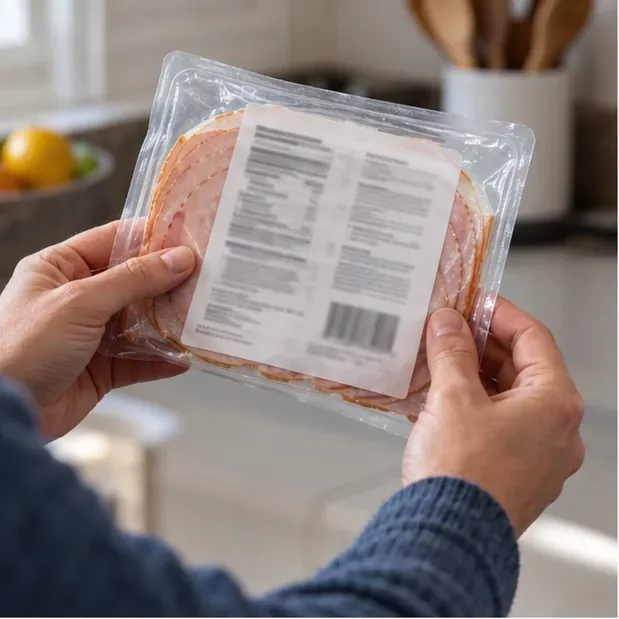
Hands turn a sealed package so its printed label can be checked. - Match the product details, not just the brand. Compare the exact brand and item description, the UPC digits, and the lot code with the official list. A UPC identifies a product version; the lot code helps distinguish a particular production run. Read the entry carefully because similar names, package sizes, or flavors can have different identifiers. If one detail is hard to read, take a clear photo of the label before contacting the company or retailer.
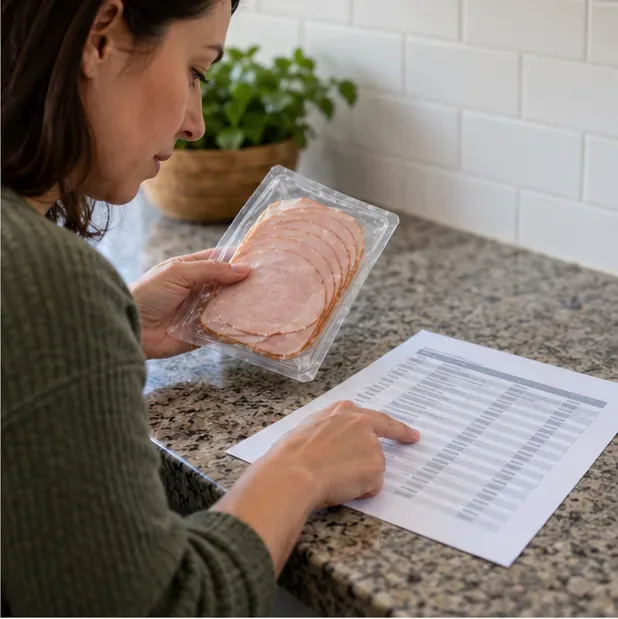
A shopper compares package details with the official recall list. - Use the date and establishment number as cross-checks. The production window is approximately March 31 through October 7, 2026, but a date inside that window is not enough by itself to confirm a match. The FSIS notice says recalled packages bear one of three numbers inside the USDA mark of inspection: “EST. M/P 7839,” “EST. P 20935A,” or “EST. M 9520.” Look for the mark and compare the number, then confirm the brand, item, UPC, and lot code against the list. A matching establishment number alone should prompt a careful product-list check; it is not a substitute for matching the complete entry.
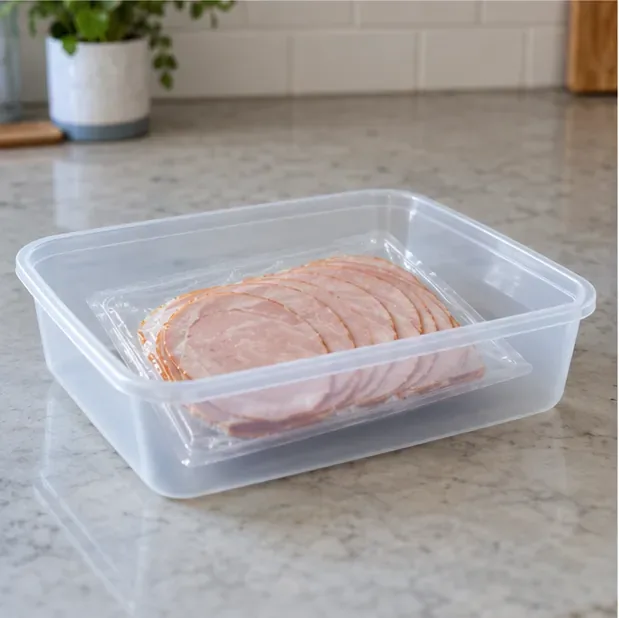
Keep a possible match separate from food being prepared while you verify its codes. - If the identifiers are unclear, pause and ask. Do not taste the product to decide whether it is safe. Contact Kayem Foods Customer Service at 800-426-6100 or info@kayem.com, or ask the store where you bought it to help match the package to the notice. Until you can confirm it is not listed, leave it unopened and do not serve it.
What to do if your package matches
Stop using it, even if it is unopened, refrigerated, frozen, or looks normal. The official instruction is not to consume a recalled item. Do not try to make it safe by cooking or reheating it. Either discard the product or return it to the place of purchase, as FSIS directs. If you are unsure how the store handles returns, call first and explain that the item is part of the Kayem Foods recall. Keep the package away from food that will be eaten, and wash your hands after handling it.
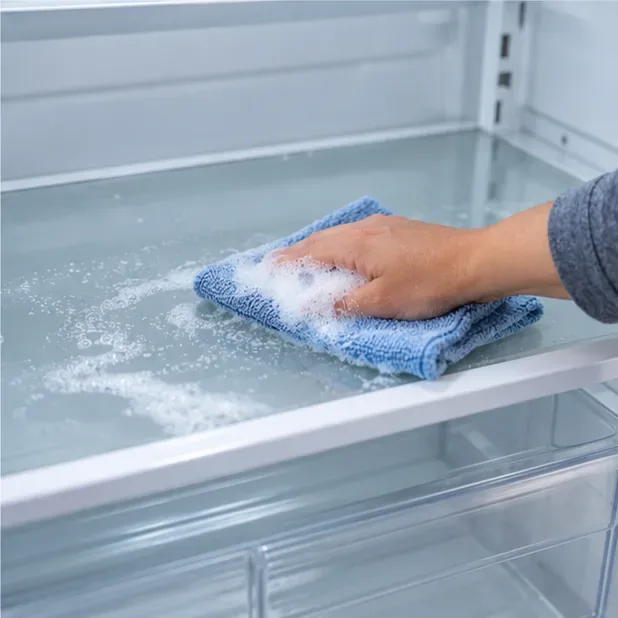
If the package leaked or its contents touched a refrigerator shelf, counter, utensil, or cutting board, clean the contact area. FoodSafety.gov advises washing refrigerator shelves, counters, cookware, and utensils with hot, soapy water, then sanitizing surfaces as directed. Follow the label on your sanitizer; do not mix cleaning products. The recall notice describes possible temperature abuse, not confirmed contamination, so cleaning is a precaution when there has been contact or a spill.
If someone has already eaten it
FSIS said no confirmed illnesses were linked to the products at the time of its October 17 announcement; that statement describes the agency’s information at that time, not a guarantee that no later reports will occur. Eating a recalled item does not by itself prove someone will become ill. If a person develops symptoms or is worried, contact a health-care provider and mention the recall, the product name, and when it was eaten. Save a photo of the label or note the UPC and lot code if the package is still available.
The CDC lists diarrhea, stomach cramps or pain, nausea, vomiting, and fever among common food-poisoning symptoms. Seek medical care for severe symptoms such as bloody diarrhea, diarrhea lasting more than three days, a fever over 102°F, vomiting so frequent that liquids cannot be kept down, or signs of dehydration such as very little urination, dry mouth, or dizziness when standing. For an illness or product problem, consumers can also contact the USDA Meat and Poultry Hotline at 888-674-6854; the FSIS notice lists its online consumer complaint form for reporting meat, poultry, or egg product concerns.
Why this recall is broader than a single Kayem package
FSIS classified this as a Class I recall, its highest health-risk category. The agency defines Class I as a situation in which there is a reasonable probability that using the product will cause serious adverse health consequences or death. That classification reflects the potential risk from the recall conditions; it does not mean that illnesses have been confirmed. The specific concern in the announcement is that ready-to-eat meat and poultry products may have been held in a warehouse cooler that experienced temperature deviations.
Because the affected items went to retail and food-service locations nationwide, checking only one store or one state is not a reliable shortcut. The official notice says products were also shipped to Hong Kong. If you purchased a deli item, catered meal, or food-service product and cannot see its original package, ask the seller whether it can verify the product against the current recall list. Retail distribution lists may be posted by FSIS as they become available, so revisit the agency’s Kayem Foods recall page for updates.
Quick checklist
- Check the current Kayem and FSIS recall lists before eating the product.
- Compare brand, item description, UPC, lot code, and the USDA establishment number.
- If the full product entry matches, do not eat it; discard it or return it to the place of purchase.
- Clean and sanitize any shelf or surface that contacted a leaking package.
- Call Kayem at 800-426-6100 or contact a health-care provider if you have questions or symptoms.
Official sources: USDA FSIS recall notice 026-2026; Kayem Foods voluntary recall notice; FoodSafety.gov recall guidance; and CDC food-poisoning symptoms and when to seek care.