Format Factory is a powerful and versatile video management software. Especially the feature to convert videos to many free formats. You can take advantage of Format Factory to back up data on your computer as well as change the media file format, even reduce the file size.
Large files not only take up hard drive memory but also make the machine run slow, difficult to send as email attachments as well as stored in the cloud. With Format Factory , users can balance two factors - both reducing the size of the compact file and ensuring video quality when watching on a PC. To do this, you need to pay attention to the file quality settings in Format Factory software.
Why do I need to adjust the video quality settings?
When you adjust video quality settings, you will reduce the file size (by converting the video to a more optimal format), expand the memory but keep the video quality at an acceptable level. However, you need to remember that Format Factory can not upgrade the video or audio quality compared to the original file, it can only be maintained or reduced. The video you shoot is the best. You can convert the file to a new format and keep the same quality as the original file with Format Factory.
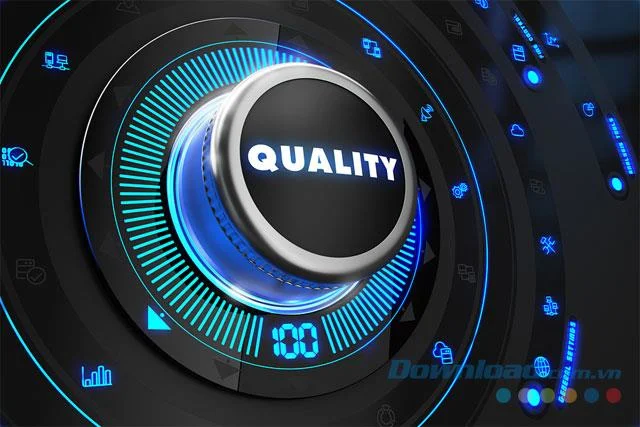
The meaning of the numbers
When processing video, you need to understand a few basic standards to know how they will affect the quality of the output. Video quality is measured by resolution. Screen resolution is the number of pixels (pixels) on the screen to create the image. The higher the resolution means the more pixels and then the picture or video will be of good quality, sharp and vivid. Low resolution corresponds to a low number of pixels per square inch, which results in poor image quality. That's why you can't use file conversion tools to upgrade video or image quality. The number of pixels is fixed in the original file. You can only maintain the same number of pixels or reduce them when processing files.
The type of TV we usually use, not HD TV, will have a resolution of 320x240. That means there are 320 pixels wide and 240 pixels from top to bottom (height). Most DVDs sold outside the US have a resolution of 720x480 while HD TV is 1920x1080.
You can completely reduce the size of AVI file (one of the formats that Format Factory supports) to 320x240. Then there will be a clear difference between the 320x240 video and the DVD you buy.
Set video quality on Format Factory
To set video quality in Format Factory, open the software and select Format . Drag and drop the file you need to convert into the box at the top of the screen. Go to Change Render Settings and select the desired setting. Note that each video will vary in quality depending on the source file. Click Start to begin the conversion process. Format Factory will handle the remaining steps.
Thus, when using Format Factory, you not only convert the video format but also need to care about the output video quality. Format Factory allows customizing these parameters to get the right video format and consistent quality. Wish you have fun watching movies with Format Factory!